Journal title (In Regional) களஞ்சியம் - சர்வதேச தமிழ் ஆய்வு இதழ்
Journal title (In English) KALANJIYAM – International Journal of Tamil Studies
Publication language Tamil (தமிழ்), English, Abstract and References in English
Abbreviated key-title: KALANJIYAM - KIJTS
Publishing frequency Quarterly (February, May, August, and November)
E-ISSN 2456-5148
DOI registered Tamil Journal
Vol. 3 No. 01 (2024): Kalanjiyam Feb 2024
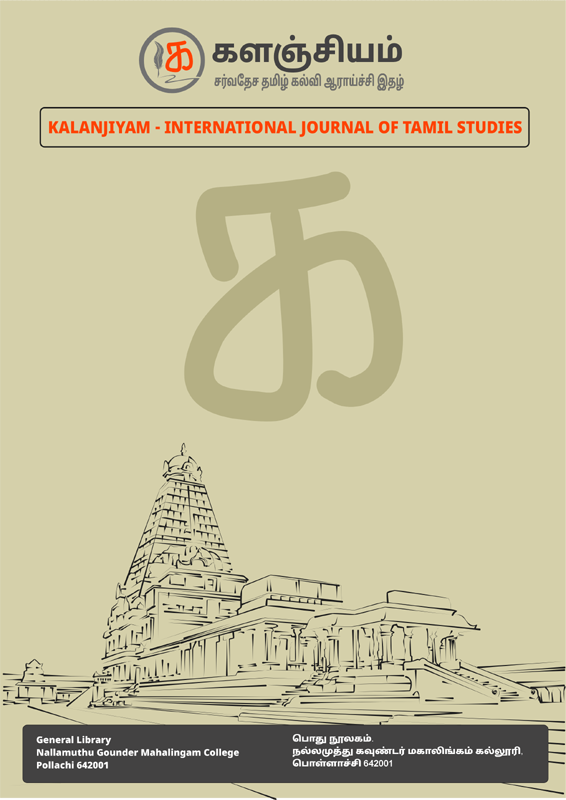
களஞ்சியம் சர்வதேச கல்வி மற்றும் ஆராய்ச்சி இதழ் Feb 2024
Kalanjiyam - International Journal of Tamil Studies Feb 2024
Articles
-
The Hospitality Depicted in Periyapuranam: A Reflection on Traditions, Human Life, and Religion VEERAKANNAN S, Nallamuthu Gounder Mahalingam College, Pollachi 642001 e-Mail: ngmcollegelibrary@gmail.com Mob: 9788175456
VEERAKANNAN S Deputy Librarian, Nallamuthu Gounder Mahalingam College, Pollachi IndiaThe Periyapuranam, an important text in Tamil literature, not only serves as a biographical account of the Shaivite saints known as the Nayanars but also offers deep insights into the societal norms, values, and traditions of ancient Tamil Nadu. Among these, the theme of hospitality stands out as a significant facet, encapsulating the relationship between individuals, communities, and the divine. This paper explores the various dimensions of hospitality depicted in the Periyapuranam, examining how it interweaves with human life, religious practices, and cultural traditions.
Views: 17 Downloads: 117 1VEERAKANNAN S (1)- (1) Deputy Librarian, Nallamuthu Gounder Mahalingam College, Pollachi, India
A Study of the Medical Heritage of Ancient Tamilagam VEERAKANNAN S, Nallamuthu Gounder Mahalingam College, Pollachi 642001 e-Mail: ngmcollegelibrary@gmail.com Mob: 9788175456
S. Veerakannan Deputy Librarian, Nallamuthu Gounder Mahalingam College, Pollachi IndiaThe Tamil region, known as Tamilagam, has a rich and diverse cultural history, with a significant contribution to various fields, including medicine. This paper aims to explore the medical heritage of ancient Tamilagam, focusing on its historical texts, practices, and influences that have shaped traditional medicine in southern India. By examining ancient texts, archaeological evidence, and cultural practices, this study highlights the significance of ancient Tamil medicine concepts and their impact on contemporary healthcare practices.
Pages: 23-32Views: 4 Downloads: 04 0S. Veerakannan (1)- (1) Deputy Librarian, Nallamuthu Gounder Mahalingam College, Pollachi, India
23-32பாநயங்களில் உரிச்சொல் பயன்பாடு (நான்மணிக்கடிகை) ஆய்வாளர் : மு.விஜயலட்சுமி (Ph.D.Ref.No.MKU22FFOL10317), முழுநேர முனைவர் பட்ட ஆய்வாளர், தி ஸ்டாண்டர்டு ஃபயர்ஒர்க்ஸ் இராஜரத்தினம் மகளிர் கல்லூரி (தன்னாட்சி), சிவகாசி – 626 123. மின்னஞ்சல் முகவரி : vijayalakshmisfr@gmail.com நெறியாளர்: முனைவர் ப.மீனாட்சி, தமிழ்த்துறை உதவிப் பேராசிரியர், முதுகலை மற்றும் தமிழாய்வுத்துறை, தி ஸ்டாண்டர்டு ஃபயர்ஒர்க்ஸ் இராஜரத்தினம் மகளிர் கல்லூரி (தன்னாட்சி), சிவகாசி - 626 123.
மு.விஜயலட்சுமி (Ph.D.Ref.No.MKU22FFOL10317), முழுநேர முனைவர் பட்ட ஆய்வாளர் ஸ்டாண்டர்டு ஃபயர்ஒர்க்ஸ் இராஜரத்தினம் மகளிர் கல்லூரி (தன்னாட்சி), சிவகாசி – 626 123. Indiaகருத்துப் பரிமாற்றத்தில் மொழியின் பங்கு குறிப்பிடத்தக்கது . அம்மொழி சொற்களின் கூட்டிணைப்பினால் வடிவம் பெறுகின்றன. அச்சொற்களினை பயன்பாடு மற்றும் பொருண்மையின் அடிப்படையில் நான்கென இலக்கண நூலார் வகுத்துரைக்கின்றனர். பெயர்ச்சொல், வினைச்சொல், இடைச்சொல், உரிச்சொல் என்னும் நால்வகைச் சொற்களுள் ஒன்றாக உரிச்சொல் விளங்குகிறது. எழுத்து, சொல், பொருள் ஆகிய மூன்றனுக்கும் இலக்கணம் வகுத்த தொல்காப்பியர் சொல்லதிகாரத்தில் உரியியலில் உரிச்சொல்லிற்கான இலக்கணத்தையும் உரிச்சொற்களையும் அவ்வுரிச்சொற்களுக்கானப் பொருண்மையினையும் குறிப்பிட்டுள்ளார். தொல்காப்பியத்தில் மொத்தம் 120 உரிச்சொற்கள் இடம்பெற்றுள்ளன. பாக்களில் இடம்பெற்றுள்ள நயங்களே பாடல்களுக்கு அழகு சோ்க்கின்றன. சொற்களை அடிப்படையாகக் கொண்டே நாம் நயங்களை கணக்கிடுகிறோம். அவ்வகையில் உரிச்சொற்களும் நயங்களுக்காகப் பயன்படுத்தப்பட்டுள்ளன. பதினெண் கீழ்க்கணக்கு நூல்களுள் அறத்தினைப் போதிக்கும் வகையில் அமைந்த நூலான நான்மணிக்கடிகையில் உரிச்சொல் எவ்வாறு நயங்களுக்காகப் பயன்படுத்தப்பட்டுள்ளன என்பதை ஆராய்வதாக இக்கட்டுரை அமைகின்றது.
Pages: 46-58Views: 3 Downloads: 13 1மு.விஜயலட்சுமி (Ph.D.Ref.No.MKU22FFOL10317), முழுநேர முனைவர் பட்ட ஆய்வாளர் (1)- (1) ஸ்டாண்டர்டு ஃபயர்ஒர்க்ஸ் இராஜரத்தினம் மகளிர் கல்லூரி (தன்னாட்சி), சிவகாசி – 626 123. , India
46-58குருசேத்திர போரில் கிருஷ்ணரின் வியூகம் ராஜதந்திரம் மற்றும் தலைமைத்துவமத்தின் பங்கு - ஓர் ஆய்வு Parvathi, head of the department Latha Mathavan arts and science college, latha mathavan nagar, kidaripatti, madurai - 625 301, tamilnadu, india
Parvathi, Head of the Department Latha Mathavan arts and science college, latha mathavan nagar, kidaripatti, madurai - 625 301, tamilnadu, india IndiaThe 'Kurukshetra War' is described in the Indian epic 'Mahabharata' as a conflict between two groups of relatives of the Indian kingdom known as the Kauravas and the Pandavas for the throne of Hastinapuri. Lord Krishna decided not to join the war and not to take up arms. In a last ditch effort to bring peace to the war, Krishna asked Duryodhana to return Indraprastha to the Pandavas, but Duryodhana said he would not give the land to the Pandavas. Duryodhana, after warnings from all the elders, publicly ordered his soldiers to arrest Krishna. Krishna smiled and showed his divine form, emitting intense light. When war was declared and the two armies faced each other, Arjuna was in a dilemma and he felt weak and sick at the prospect of killing his entire family. Arjuna turned to Krishna for divine advice and teachings. Krishna instructed him on his duty. This dialogue forms the Bhagavad Gita, one of the most revered religious and philosophical texts in Hinduism. Krishna reminded him that it was a battle between justice and injustice and that it was Arjuna's duty to support the cause of sin. Lord Krishna helped the Pandavas to succeed in establishing dharma. This essay shows how Krishna's participation in the war and his kingly strategy helped the Pandavas.
'குருக்ஷேத்திரப் போர்' இந்திய இதிகாசமான 'மகாபாரதத்தில்' ஒரு மோதலாக விவரிக்கப்பட்டுள்ளது, இது ஹஸ்தினாபுரியின் சிம்மாசனத்திற்காக கௌரவர்கள் மற்றும் பாண்டவர்கள் என்று அழைக்கப்படும் இந்திய இராச்சியத்தின் உறவினர்களின் இரண்டு குழுக்களுக்கு இடையில் சண்டையிட்டது.கிருஷ்ண பரமாத்மா போரில் ஈடுபட வேண்டாம் என்றும் ஆயுதங்களை எடுக்க வேண்டாம் என்றும் முடிவு செய்தார். போரில் அமைதியைக் கொண்டுவருவதற்கான கடைசி முயற்சியாக, கிருஷ்ணர் துரியோதனனிடம் இந்திரப்பிரஸ்தத்தை பாண்டவர்களுக்குத் திருப்பித் தருமாறு கேட்டுக் கொண்டார், ஆனால் துரியோதனன் பாண்டவர்களுக்கு நிலம் கொடுக்க மாட்டேன் என்று கூறினார். துரியோதனன் அனைத்து பெரியவர்களின் எச்சரிக்கைக்குப் பிறகும், கிருஷ்ணனைக் கைது செய்யும்படி தனது வீரர்களுக்கு து பகிரங்கமாக உத்தரவிட்டார். கிருஷ்ணர் சிரித்துக்கொண்டே தனது தெய்வீக வடிவத்தைக் காட்டினார், தீவிர ஒளி வீசினார்.போர் அறிவிக்கப்பட்டு, இரு படைகளும் ஒன்றையொன்று எதிர்கொண்டபோது, அர்ஜுனன் ஒரு இக்கட்டான நிலையில் இருந்தான், மேலும் அவன் தனது முழு குடும்பத்தையும் கொல்லும் வாய்ப்பில் பலவீனமாகவும் நோய்வாய்ப்பட்டவனாகவும் உணர்ந்தான். அர்ஜுனன் தெய்வீக ஆலோசனை மற்றும் போதனைகளுக்காக கிருஷ்ணரிடம் திரும்பினான். கிருஷ்ணன் அவனுடைய கடமையை அவனுக்கு அறிவுறுத்தினான். இந்த உரையாடல் இந்து மதத்தில் மிகவும் மதிக்கப்படும் மத மற்றும் தத்துவ நூல்களில் ஒன்றான பகவத் கீதையை உருவாக்குகிறது. இது நீதிக்கும் அநீதிக்கும் இடையிலான போர் என்றும், பாவத்தின் காரணத்தை ஆதரிப்பது அர்ஜுனனின் கடமை என்றும் கிருஷ்ணர் அவருக்கு நினைவுபடுத்தினார். தர்மம் நிலைபெற வெற்றிபெற கிருஷ்ண பரமாத்மா பாண்டவர்களுக்க்கு உதவினார். போரில் கிருஷ்ணனின் பங்களிப்பும் அவரின் ராஜா தந்திரமும் எவ்வகையில் பாண்டவர்களுக்கு துணை புரிந்தன என்பதை இக்கட்டுரை புலப்படுத்துகிற து
Pages: 104-115Views: 2 Downloads: 12 1Parvathi, Head of the Department (1)- (1) Latha Mathavan arts and science college, latha mathavan nagar, kidaripatti, madurai - 625 301, tamilnadu, india
104-115தொல்காப்பிய மெய்ப்பாட்டியல் கோட்பாட்டின் அடிப்படையில் நற்றிணை அகப்பாடல்கள்: ஓர் விரிவான வாழ்வியல் மற்றும் இலக்கியத் திறனாய்வு Narrinai Akam Poems Based on Tholkappiyam’s Theory of Meyppattiyal: A Comprehensive Life and Literary Criticism
Dr. Siva. Mullaimalar Principal & Head of the Department of Tamil, Imayam Arts and Science College, Vaniyambadi – 635751, IndiaNarrinai, which is counted first among the Sangam literature, is an unparalleled Tamil literary treasure that vividly depicts the subtle emotions and states of love in human inner life ($Akam$). Tamil grammatical tradition defines ‘Meyppadu’ (physical manifestation of emotion) as the expression of deep emotions arising within the minds of the characters ($Akamaandhar$) through their outer bodily organs and behavior.
In his Poruladhikaram, Tholkappiyar established a dedicated chapter called ‘Meyppattiyal’, where he detailed the eight primary emotions ($Enbehar\ Meyppadugal$), their source contexts ($Nilaikkalangal$), and the psychological states ($Avathai$) appearing in love characters, applicable to both theatrical Tamil ($Naadaka\ Thamil$) and literary Tamil ($Iyat-Thamil$).
Based on the theory of Meyppattiyal formulated by Tholkappiyar, this research paper comprehensively analyzes how emotions are employed with poetic finesse and psychological vitality across the 400 $Akam$ poems in Narrinai. It analyzes with evidence how the eight primary emotions—Laughter ($Nagai$), Sorrow ($Azhugai$), Disgust/Inferiority ($Ilivaral$), Wonder ($Marudkai$), Fear ($Acham$), Pride ($Perumidham$), Anger ($Veguli$), and Joy ($Uvagai$)—along with their corresponding 32 source contexts, align with the landscape-based backgrounds ($Thinai$) and the speeches/monologues of the characters.
Furthermore, by comparing Tholkappiyar’s Meyppattiyal with the Wheel of Emotions theory proposed by modern Western psychologist Robert Plutchik, this paper establishes the excellence of Sangam poets in portraying human emotions as well as their underlying life values.
Pages: 116-125Views: 0 Downloads: 00 0Dr. Siva. Mullaimalar (1)- (1) Principal & Head of the Department of Tamil, Imayam Arts and Science College, Vaniyambadi – 635751,, India
116-125Journal Info
Information
ADDITIONAL MENU
- Editorial Policies
- Peer Review Policy
- Peer Review Process
- Open Access Policy
- License agreement
- Licensing Policy
- Article Processing Fee
- Recommended Reviewer
- Complaint Policy
- Ethical & Malpractice Policies
- Advertising Policy
- Licenses, Copyright & Permissions
- Peer Review & Publication Policies
- Article Retraction & Withdrawal Policy
- Policies on Conflict of Interest and Informed Consent
- Privacy Statement
- Editorial Policies
- PLAGIARISM POLICY
Contact Address
Submit & Technical Contact
S.VEERAKANNAN
E-Mail: editorial.kalanjiyam@ngmc.org
Mobile: 9788175456
NGM College, 90, Palghat Road, Pollachi 642001, Tamilnadu, INPublisher
Kalanjiyam - International Journal of Tamil Studies
களஞ்சியம் - சர்வதேச தமிழ் கல்வி ஆராய்ச்சி இதழ்
Dept of Library and Information Science & Dept of Tamil,
Nallamuthu Gounder Mahalingam College,
90, Palghat Road, Pollachi 642001, Tamilnadu, INDIA
Publisher Website: https://www.ngmc.org/
Kalanjiyam களஞ்சியம் - சர்வதேச தமிழ் கல்வி ஆராய்ச்சி இதழ் eISSN: 2456-5148 - Dept of Library and Information Science & Dept of Tamil, NGM College, Pollachi 642001