
Journal title (In Regional) களஞ்சியம் - சர்வதேச தமிழ் ஆய்வு இதழ்
Journal title (In English) KALANJIYAM – International Journal of Tamil Studies
Publication language Tamil (தமிழ்), English, Abstract and References in English
Abbreviated key-title: KALANJIYAM - KIJTS
Publishing frequency Quarterly (February, May, August, and November)
E-ISSN 2456-5148
DOI registered Tamil Journal
Vol. 4 No. 02 (2025): Kalanjiyam May 2025
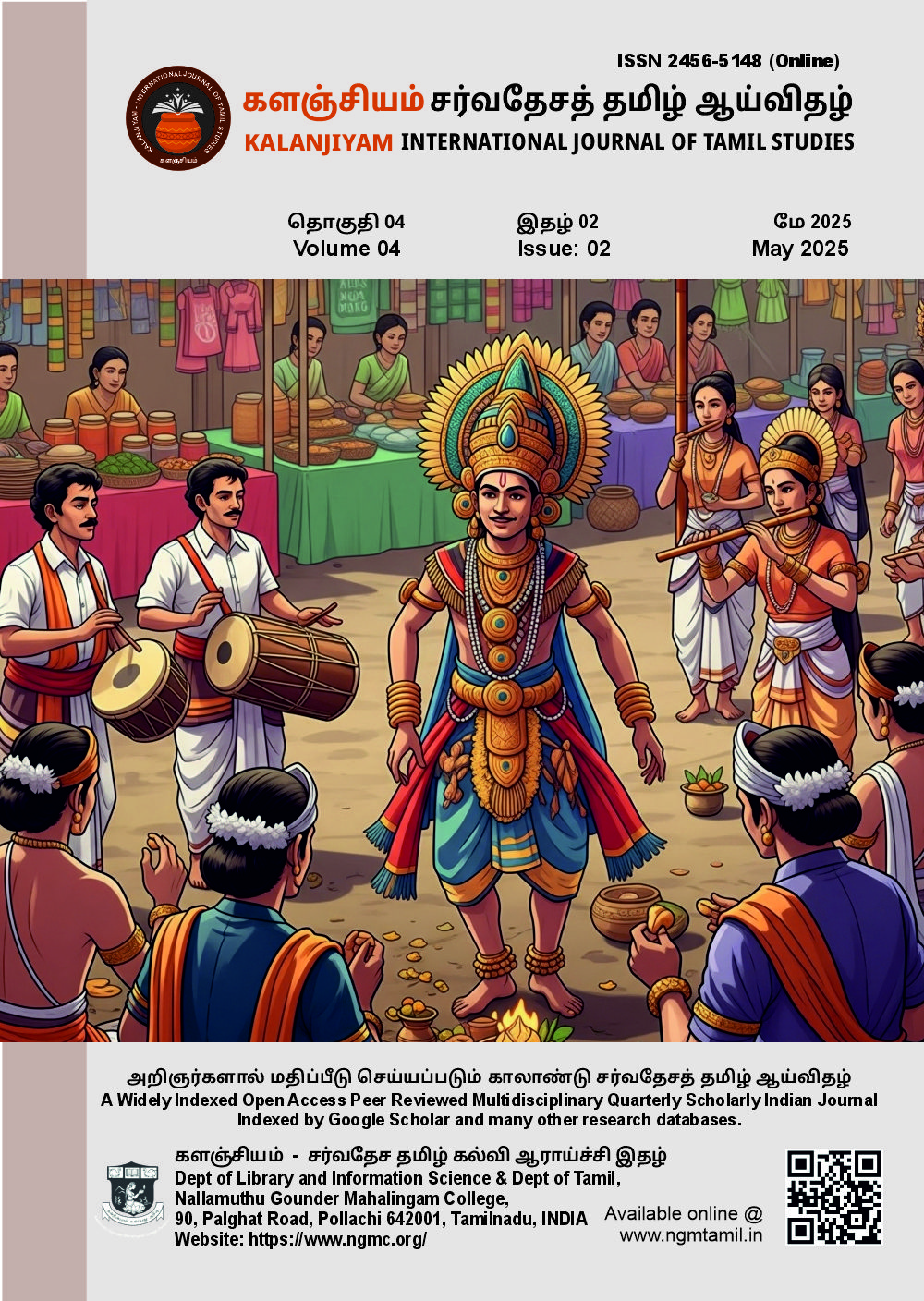
களஞ்சியம் ஆய்விதழின் நான்காம் தொகுதி, இரண்டாம் இதழ் (மே 2025) வாசகர்களை வந்தடைவதில் பெருமகிழ்ச்சி அடைகிறோம். இந்த இதழ் கல்வி, இலக்கியம், வரலாறு, பண்பாடு, சமூகவியல் எனப் பல்முனைப் பார்வைகளை முன்வைக்கும் ஆழமான ஆய்வுக் கட்டுரைகளைக் கொண்டுள்ளது.
இந்த இதழின் சிறப்பம்சங்கள்:
- கல்வி மற்றும் தொழில்நுட்பம்: சமகாலக் கல்வியியல் சவால்களில் ஒன்றான "வகுப்பறைக் கற்பித்தலில் தகவல் தொடர்புத் தொழில்நுட்பத்தை ஒருங்கிணைத்தல்" குறித்த ஆய்வு, இன்றைய கல்விச் சூழலுக்கு அவசியமான ஒன்றாகும்.
- வரலாற்றுப் பதிவுகள்: "சப்பானியர் ஆட்சிக் காலத்தில் புலம்பெயர்ந்த தமிழர்களின் நிலை" குறித்த வரலாற்றுப் பதிவு, கடந்த காலத்தின் வலிமிகுந்த பக்கங்களை மீட்டுணரச் செய்கிறது.
- பழங்குடி மற்றும் பண்பாட்டு ஆய்வுகள்: மலையரையர் மற்றும் கொல்லிமலை மலையாளி பழங்குடி மக்களின் வாழ்வியல் சடங்குகள், பழக்கவழக்கங்கள், நம்பிக்கைகள் குறித்த விரிவான ஆய்வுகள், தமிழ் மக்களின் பன்முகப் பண்பாட்டுப் பாரம்பரியத்தை வெளிப்படுத்துகின்றன. குறிப்பாக, "சின்ன அரயத்தி" புதினத்தின் வழியே மலையரையர்களின் சடங்கு முறைகளும், பழக்கவழக்கங்களும் ஆராயப்பட்டுள்ளது.
- பழந்தமிழ் மற்றும் பக்தி இலக்கியம்: "நெய்தல் திணையில் வருணன் வழிபாடு" குறித்த ஆய்வு பழந்தமிழர் வாழ்வியலையும், "திருவாசகப் பதிப்புகளில் சிவபுராணம்" குறித்த ஆய்வு சைவ சமய மரபுகளையும் தொன்மையையும் பக்தி இலக்கியத்தின் ஆழத்தையும் பறைசாற்றுகின்றன.
- நவீன இலக்கியம் மற்றும் வாழ்வியல்: கவிஞர் வைரமுத்துவின் சிறுகதைகளில் உள்ள கதைக்கருக்கள் பற்றிய பகுப்பாய்வும், "அகத்தில் அறம்" எனும் வாழ்வியல் விழுமியங்களை ஆராயும் கட்டுரையும் நவீன இலக்கியப் போக்கையும், மனித மாண்புகளையும் எடுத்துரைக்கின்றன.
ஒவ்வொரு கட்டுரையும் துறைசார் நிபுணர்களால் ஆழமான ஆய்வுக்கு உட்படுத்தப்பட்டு, புதிய கோணங்களை முன்வைக்கின்றன. இந்த இதழில் உள்ள கட்டுரைகள், ஆய்வாளர்களுக்கும், மாணவர்களுக்கும், பொது வாசகர்களுக்கும் பயனுள்ள தகவல்களை வழங்கி, அறிவுத் தேடலைத் தூண்டும் என நம்புகிறோம்.
படித்துப் பயன் பெறுமாறு கேட்டுக் கொள்கிறோம்.
நன்றி,
ஆசிரியர் குழு, களஞ்சியம் ஆய்விதழ்
Articles
-
இலக்கியங்களில் கனவு Dreams in Literature
Dr. J. Kaveri Assistant Professor, Department of Tamil, V.V. Vanniaperumal College for Women, Virudhunagar. IndiaDreams in literature are employed as a means to express the dreamer's state of mind, emotions, desires, and fears. Dreams play a significant role in numerous literary works, utilized across various forms such as narratives, poetry, and drama. As an integral part of literature, dreams are used to set the stage for a work, introduce a turning point, or foreshadow the story's conclusion. In poetry, dreams serve as a central theme, a means to convey emotions, or to imbue a poem with new meaning. Within dramatic works, dreams constitute a key element, utilized to reveal characters' emotions or to foreshadow the play's resolution. Furthermore, such dreams are employed in literature as a narrative device to indicate future events in advance. This study, therefore, aims to investigate the manner in which dreams are presented and manifested in literary works..
இலக்கியங்களில் கனவுகள் என்பது, கனவு காண்பவரின் மனநிலை, உணர்ச்சிகள், ஆசைகள், பயங்கள் போன்றவற்றை வெளிப்படுத்தும் ஒரு வழியாகப் பயன்படுத்தப்படுகிறது. கனவுகள் பல இலக்கியப் படைப்புகளிலும் முக்கியப் பாத்திரத்தை வகிக்கின்றன, அவை கதை, கவிதை, நாடகம் என பல வடிவங்களில் பயன்படுத்தப்படுகின்றன. கனவுகள் இலக்கியத்தின் ஒரு பகுதியாக பயன்படுத்தப்பட்டு, படைப்பின் தொடக்கத்தை முன்வைக்கவோ, ஒரு திருப்பத்தை ஏற்படுத்தவோ, அல்லது கதை முடிவை வெளிப்படுத்தவோ பயன்படுகிறது. கனவுகள் கவிதையின் கருப்பொருள், உணர்ச்சிகளை வெளிப்படுத்த, அல்லது கவிதைக்கு ஒரு புதிய அர்த்தத்தை கொடுக்கப் பயன்படுத்தப்படுகின்றன. கனவுகள் நாடகத்தின் ஒரு முக்கிய பகுதியாக, கதாபாத்திரங்களின் உணர்ச்சிகளை வெளிப்படுத்தவோ, அல்லது நாடகத்தின் முடிவை வெளிப்படுத்தவோ பயன்படுத்தப்படுகின்றன. இத்தகைய கனவுகள் என்பது இலக்கியங்களில் பின்னர் நிகழ இருப்பதை முன்னரே உணர்த்தும் ஓர் உத்தியாகவும் பயன்படுத்தப்படுகின்றது. அவ்வகையில் இலக்கியங்களில் கனவுகள் வெளிப்படுத்தியிருக்கும் பாங்கினை ஆய்வதாக இவ்ஆய்வு அமைகின்றது.
Pages: 149-153Views: 0 Downloads: 00 0Dr. J. Kaveri (1)- (1) Assistant Professor, Department of Tamil, V.V. Vanniaperumal College for Women, Virudhunagar., India
149-153வகுப்பறைக் கற்பித்தலில் தகவல் தொடர்புத் தொழில்நுட்பத்தை ஒருங்கிணைத்தல் Integrating Information and Communication Technology into Classroom Teaching
Arulmathi Lenin Tamil University IndiaThis article discusses the place of information and communication technology in today's classroom. Information and communication technology has taken a place that is not available today in today's classrooms. It discusses how information and communication technology can be integrated into everyday classroom teaching and Internet assessment. It also discusses the necessary Internet etiquette for students using the Internet. In general, this article discusses the place of information and communication technology in today's classrooms and discusses the special features of the Student Learning Space platform developed by the Singapore Ministry of Education for Singapore students.
Pages: 70-76Views: 0 Downloads: 00 0சப்பானியர் ஆட்சிக் காலத்தில் புலம்பெயர்ந்த தமிழர்களின் நிலை The situation of Tamil migrants during the Japanese occupation
Palthamburaj Kingston Assistant Professor, Asian Languages & Cultures Academic Group, Tamil Language & Culture Division, National Institute of Educatio, Nanyang Technological University, Singapore Singapore , Logeswary Arumugum SMK Pokok Sena, Penang SingaporeThis study examines the political, economic, and social conditions of Malaysian Tamils under Japanese rule from 1941 to 1945. The primary objective is to analyze the challenges faced by the Tamil community during this period and understand the transformations they underwent. This research employs historical analysis, archival research, and oral history as primary methodologies. The study is framed using Postcolonial Theory, Diaspora Theory, and Marxist Analysis. The paper is structured into five key sections: (1) Introduction, (2) Historical Context, (3) Impact of Japanese Rule, (4) Theoretical Analysis, and (5) Conclusion. Under Japanese rule, Malaysian Tamils experienced severe exploitation and resistance. Their working conditions deteriorated, education was restricted, and cultural identities were suppressed. However, they demonstrated resilience and adaptability in overcoming adversities.
Pages: 77-86Views: 0 Downloads: 00 0Palthamburaj Kingston (1), Logeswary Arumugum (2)- (1) Assistant Professor, Asian Languages & Cultures Academic Group, Tamil Language & Culture Division, National Institute of Educatio, Nanyang Technological University, Singapore
- (2) SMK Pokok Sena, Penang, Singapore
77-86நெய்தல் திணையில் வருணன் வழிபாடு NEITHAL THINAIYIL VARUNAN VALIPADU
P .GURUMOORTHI Kalaignar Karunanidhi Government Arts College, Tiruvannamalai – 606603, Affiliated To Thiruvalluvar University, Serkkdu, Vellore, 632115 India , Dr.S.VAITHEESWARAN epartment Of Tamil, Kalaignar Karunanidhi Government Arts College, Tiruvannamalai – 606603. IndiaIt is known from the Sangam literature that the Tamils structured their living environments very well. They divided the land into five parts and divided them into Land related Items the first, the second, and the third. They divided life into internal and external. In this way, this article explains the worship of Varuna, the god of weaving, which was practiced in the Sangam period and the current worship of Varuna..
Pages: 88-96Views: 0 Downloads: 00 0P .GURUMOORTHI (1), Dr.S.VAITHEESWARAN (2)- (1) Kalaignar Karunanidhi Government Arts College, Tiruvannamalai – 606603, Affiliated To Thiruvalluvar University, Serkkdu, Vellore, 632115, India
- (2) epartment Of Tamil, Kalaignar Karunanidhi Government Arts College, Tiruvannamalai – 606603., India
88-96சின்ன அரயத்தி புதினத்தில் மலையரையர்களின் சடங்கு முறைகள் Ritual Practices of the Malayarayars in the Novel "Chinna Arayathi"
முனைவர் து.நீலாதேவி Assistant Professor, Department of Tamil Studies Holy Cross College (Autonomous), Tiruchirappalli - 620 002 IndiaRituals hold a very important place among cultural identities. They reveal the uniqueness and tradition of a society. Rituals intertwined with various stages of human life are important, such as birth rituals (rituals performed when a child is born), puberty rituals (rituals performed when a girl reaches puberty), marriage rituals (rituals performed during marriage), divorce rituals (rituals performed during divorce), pollution rituals (rituals observed during sad occasions), and death rituals (rituals performed after death). We can learn about how these rituals are performed among tribal people, what their unique characteristics are, and what their social significance is through the novel "Chinna Arayathi." The aim of this study is to explore the role of these rituals in the lives of the Malayarayars and how they reflect their beliefs and lifestyles. Rituals are considered to be the most important cultural symbols. Rituals related to human life include birth rituals, puberty rituals, marriage rituals, divorce rituals, purification rituals, and death rituals. The methods used by these rituals among tribal people are known from the Chinna Arayathi Pudinam.
Pages: 97-107Views: 0 Downloads: 00 0முனைவர் து.நீலாதேவி (1)- (1) Assistant Professor, Department of Tamil Studies Holy Cross College (Autonomous), Tiruchirappalli - 620 002, India
97-107அகத்தில் அறம் Agaththil Aram
Dr. V. Jayapunithavalli, M.A,(NET,JRF) Ph.D IndiaSangam literature divides the lives of the people of the Sangam period into two categories: internal life and external life. Sangam literature divides stories about domestic life into internal life and stories about gifts, war, heroism, and rule into external life. Among these, internal life is when a man and a woman fall in love and enjoy each other. Thus, the feelings they experience between themselves, i.e., internal, are called internal by ancient Tamil literature. The oldest Tamil grammar book available to us today, Tolkappiyam, explains internal and external life in detail in its content. In Sangam literature, internal life is a literary genre that expresses the love between a hero and a heroine. It is called manalathu, and it focuses on pleasure in domestic life.
Pages: 108-113Views: 0 Downloads: 00 0Dr. V. Jayapunithavalli, M.A,(NET,JRF) Ph.D (1)- (1) India
108-113வைரமுத்து சிறுகதைகளில் கதைக்கரு Themes in Vairamuthu's Short Stories
கு.மோகன லட்சுமி Ph.D. Research Scholar (Reg. No: CRE/TAM22PNOV288/2022), Karuppanna Mariyappan College, Muthur, Tirupur District, Tamil Nadu 638105 IndiaLiterary works serve as invaluable mirrors to the past and present, faithfully reflecting the prevailing emotions, anxieties, and aspirations of the people, as well as the significant social, political, and cultural shifts that shape their world. Literary writers, acting as keen observers and interpreters of their times, portray the environment they inhabit and the pressing problems occurring within their society through the unique lens of their individual artistic styles. This depiction of the lived experience and its attendant challenges inherently forms the core theme and underlying message conveyed in their creative endeavors. Vairamuthu, a multifaceted personality in the Tamil literary field, distinguished as a renowned poet, accomplished novelist, celebrated film lyricist, and insightful essayist, has enriched the literary landscape with his diverse talents. His short stories, often overlooked amidst his other achievements, powerfully demonstrate that he possesses a rare and captivating flair for crafting compelling narratives within the concise and impactful format of the short story. This article aims to delve into the thematic depths of Vairamuthu's short stories, analyzing the recurring motifs, underlying social commentary, and profound observations about human nature that permeate his collection of short-form fiction. By examining these themes, we hope to gain a deeper understanding of Vairamuthu's literary vision and his contribution to the rich tapestry of Tamil literature.
Pages: 114-124Views: 0 Downloads: 00 0கு.மோகன லட்சுமி (1)- (1) Ph.D. Research Scholar (Reg. No: CRE/TAM22PNOV288/2022), Karuppanna Mariyappan College, Muthur, Tirupur District, Tamil Nadu 638105, India
114-124சின்ன அரயத்தி புதினத்தில்; மலை அரையர் இனக்குழு மக்களின் பழக்க வழக்கங்கள் மற்றும் நம்பிக்கைகள் Chinna Arayathi Novel Customs And Beliefs Of The People Of The Mountain Araiyar Ethnic Group
முனைவர் து.நீலாதேவி Assistant Professor, Department of Tamil Studies Holy Cross College (Autonomous), Tiruchirappalli - 620002 IndiaThe Tribal People Are The Witnesses To The Many Hierarchical Developments .That Have Occurred In The Ancient Social Culture Of Mankind. Literatures Are The Fields That Record Human Life. The Lifestyles Of The Tribal People Have Been Recorded As Documents In The Form Of Fiction Literature, One Of The Literary Forms Of Fiction. By Studying Them, It Is Possible To Know The Ancient Social Development Of The Tamil Nation. Studies On The Tribes Recorded In Literature Are Scarce In The Context Of Tamil Studies. This Study Aims To Shed Light On The Lives Of The Tribal People Featured In The Tamil Ethnographic Novel.
Beliefs And Customs Emerged .At The Time Of The Emergence, Of The Human Race. They Are Intertwined In Human Life And Whatever Action A Human Being Takes, All Those Actions Have The Character Of Expressing The Customs Of The Ethnic Groups To Which He Belongs.
Pages: 125-133Views: 0 Downloads: 00 0முனைவர் து.நீலாதேவி (1)- (1) Assistant Professor, Department of Tamil Studies Holy Cross College (Autonomous), Tiruchirappalli - 620002, India
125-133கொல்லிமலை மலையாளி பழங்குடி மக்களின் வாழ்வியல் சடங்குகள் The Lifestyle Rituals of the Malayali Tribal people of Kolli hills
முனைவர் சு.அனுலெட்சுமி Assistant Professor, Department of Tamil Studies Holy Cross College (Autonomous), Tiruchirappalli - 620 002 IndiaThe Kurinji land is the most important of the ancient Tamil lands. The people who have been carrying out their livelihoods based on this land are the tribal people. Although there are various types of people living in the world, the tribal people are the ones who have followed the most ancient culture in the long evolution, but today's modernizing environment is changing the uniqueness of the cultural traditions of these tribal people and making them live a monotonous life. However, there are some tribal communities in the world that have the power to maintain their own lifestyle traditions in the face of such attacks. By identifying and studying these tribal communities, it is possible to restore their ancient cultural identities. It is noteworthy that the Malayali tribal community is preserving its tribal traditions in today's Tamil environment. In this way, this article is based on documenting the lifestyle rituals of the people.
Pages: 134-140Views: 0 Downloads: 00 0முனைவர் சு.அனுலெட்சுமி (1)- (1) Assistant Professor, Department of Tamil Studies Holy Cross College (Autonomous), Tiruchirappalli - 620 002, India
134-140திருவாசகப் பதிப்புகளில் சிவபுராணம் Sivapuranam in the editions of Thiruvasagam
க.வடிவேலு Ph.D. Scholar Reg. No: 06379, Department of Rare Manuscripts, Faculty of Manuscriptology, Tamil University, Thanjavur India , த. கண்ணன் Research Guide, Department of Rare Manuscripts, Faculty of Manuscriptology, Tamil University, Thanjavur. IndiaThis study focuses on Manikkavasagar's revered Thiruvasagam, a profound devotional work within the Saiva tradition. Celebrated for its deeply moving verses that are said to "melt the heart," Thiruvasagam captivates not only Saivites but also adherents of other faiths, transcending religious boundaries. A notable example is the Christian missionary G.U. Pope, who, deeply affected by its spiritual essence, translated it into English, underscoring its universal and divine appeal.The transformative power of Thiruvasagam is further attested by prominent Tamil saints and scholars. Sivaprakasar, in his Nanmanimalai, marvels at its capacity to soften even a "stone heart," leading to emotional and spiritual awakening. Ramalinga Adigal extends this impact, positing that even birds and wild animals are moved to spiritual insight by its verses. Sundaram Pillai similarly highlights its ability to purify the mind and evoke profound devotion. The widely known proverb, "Those unmoved by Thiruvasagam are unmoved by anything," further accentuates its unparalleled emotive and spiritual force.The primary objective of this research is to analyze selected editions of Sivapuranam, the introductory and significant poem within Thiruvasagam. This study will undertake a comparative examination of four specific editions: G.U. Pope's edition, the Saiva Paripalana Sabai's publication, M. Subramania Mudaliar's edition, and N. Kandasamy Pillai's edition..
இந்த ஆய்வு, சைவ மரபில் ஒரு ஆழ்ந்த பக்தி நூலாகப் போற்றப்படும் மாணிக்கவாசகர் அருளிய திருவாசகத்தை மையப்படுத்துகிறது. "நெஞ்சை உருக்கும்" எனப் புகழப்படும் இதன் பாடல்கள், சைவர்களை மட்டுமல்லாமல், பிற மதத்தினர் மனதையும் கவர்ந்திழுத்து, மத எல்லைகளைக் கடந்து நிற்கின்றன. இதற்கு ஒரு குறிப்பிடத்தக்க சான்றாக, கிறித்தவ மதப் பிரச்சாரகர் ஜி.யு. போப், திருவாசகத்தின் ஆன்மீக சாரத்தால் பெரிதும் ஈர்க்கப்பட்டு, அதை ஆங்கிலத்தில் மொழிபெயர்த்தார். இது அதன் உலகளாவிய மற்றும் தெய்வீக ஈர்ப்பை மேலும் எடுத்துக்காட்டுகிறது.
திருவாசகத்தின் மாற்றியமைக்கும் ஆற்றல், புகழ்பெற்ற தமிழ்ச் சான்றோர்கள் மற்றும் அறிஞர்களாலும் உறுதிப்படுத்தப்பட்டுள்ளது. சிவப்பிரகாசர் தனது நான்மணிமாலையில், திருவாசகம் ஒரு "கல் நெஞ்சையும்" மென்மையாக்கி, உணர்ச்சிகரமான மற்றும் ஆன்மீக எழுச்சியை ஏற்படுத்தும் அதன் திறனை வியந்து போற்றுகிறார். இராமலிங்க அடிகளார் இத்தாக்கத்தை மேலும் விரிவுபடுத்தி, அதன் பாடல்களால் பறவைகள் மற்றும் வன விலங்குகள் கூட ஆன்மீக நுண்ணறிவு பெறுவதைக் குறிப்பிடுகிறார். சுந்தரம் பிள்ளையும் இதேபோல், திருவாசகம் மனதைத் தூய்மைப்படுத்தி, ஆழ்ந்த பக்தியைத் தூண்டும் அதன் திறனைச் சிறப்பித்துக் கூறுகிறார். "திருவாசகத்துக்கு உருகாதார் ஒரு வாசகத்துக்கும் உருகார்" என்ற பரவலாக அறியப்பட்ட பழமொழி, அதன் இணையற்ற உணர்ச்சி மற்றும் ஆன்மீக ஆற்றலை மேலும் வலியுறுத்துகிறது. இந்த ஆராய்ச்சியின் முதன்மை நோக்கம், திருவாசகத்தின் தொடக்க மற்றும் மிக முக்கியமான பாடலான சிவபுராணத்தின் தேர்ந்தெடுக்கப்பட்ட பதிப்புகளை ஆய்வு செய்வதாகும். ஜி.யு. போப் பதிப்பு, சைவ பரிபாலன சபை வெளியீடு, எம். சுப்பிரமணிய முதலியார் பதிப்பு மற்றும் ந. கந்தசாமிப் பிள்ளை பதிப்பு ஆகிய நான்கு குறிப்பிட்ட பதிப்புகளின் ஒப்பீட்டு ஆய்வை இம்முயற்சி மேற்கொள்ளும்..
Pages: 141-148Views: 0 Downloads: 00 0க.வடிவேலு (1), த. கண்ணன் (2)- (1) Ph.D. Scholar Reg. No: 06379, Department of Rare Manuscripts, Faculty of Manuscriptology, Tamil University, Thanjavur, India
- (2) Research Guide, Department of Rare Manuscripts, Faculty of Manuscriptology, Tamil University, Thanjavur., India
141-148மாணிக்கவாசகரின் ஞானத்தழிசை: ஞானப் பாடல்கள்: ஒரு உயிர்-பிரபஞ்சக் கண்ணோட்டம் Manikkavasagar’s Gnanathalisai:Verses of Wisdom: A Biocosmic Worldview
Prof. Sarada Thallam Department of English, Sri Venkateswara University, Tirupati 517 502 IndiaManikkavasagar, a seminal figure in Tamil Saivite devotional literature, offers profound spiritual insights through his magnum opus, Tiruvachagam. Among its numerous hymns, Gnanathalisai, literally "Verses of Wisdom," stands out for its deep philosophical exploration. This paper argues that Gnanathalisai articulates a comprehensive biocosmic worldview, wherein the human experience, natural phenomena, and the vastness of the cosmos are intricately interconnected and steeped in divine immanence. Through an analytical examination of key thematic elements within Gnanathalisai, this study reveals how Manikkavasagar portrays the human body as a microcosm of the macrocosm, views nature as an explicit manifestation of the divine, and delineates the cycles of existence within a spiritually unified cosmic order. The paper concludes that Gnanathalisai not only serves as a guide for spiritual liberation but also fosters a holistic understanding of reality that resonates with contemporary ecological and holistic thought.
தமிழ்ச் சைவப் பக்தி இலக்கியத்தில் ஒரு முக்கியப் புள்ளியான மாணிக்கவாசகர், தனது தலைசிறந்த படைப்பான திருவாசகம் மூலம் ஆழ்ந்த ஆன்மீக நுண்ணறிவுகளை வழங்குகிறார். அதன் பல பதிகங்களுக்கிடையே, "ஞானப் பாடல்கள்" என்று பொருள்படும் ஞானத்தழிசை, அதன் ஆழ்ந்த தத்துவ ஆராய்ச்சிக்காக தனித்து நிற்கிறது. இந்தக் கட்டுரை, ஞானத்தழிசை ஒரு விரிவான உயிர்-பிரபஞ்சக் கண்ணோட்டத்தை வெளிப்படுத்துகிறது என்று வாதிடுகிறது. இதில், மனித அனுபவம், இயற்கை நிகழ்வுகள், மற்றும் பிரபஞ்சத்தின் பரந்த தன்மை ஆகியவை சிக்கலாக ஒன்றோடொன்று இணைக்கப்பட்டு, தெய்வீக வியாபகத்தில் ஊறிப்போயுள்ளன. ஞானத்தழிசைக்குள் உள்ள முக்கிய கருப்பொருள் கூறுகளை பகுப்பாய்வு செய்து ஆராய்வதன் மூலம், மாணிக்கவாசகர் மனித உடலை பேரண்டத்தின் ஒரு சிற்றளவாக (microcosm) எவ்வாறு சித்தரிக்கிறார், இயற்கையைத் தெய்வீகத்தின் வெளிப்படையான வெளிப்பாடாகக் கருதுகிறார், மற்றும் ஆன்மீக ரீதியாக ஒன்றிணைந்த அண்ட வரிசைக்குள் (cosmic order) இருப்பின் சுழற்சிகளை எவ்வாறு விளக்குகிறார் என்பதை இந்த ஆய்வு வெளிப்படுத்துகிறது. ஞானத்தழிசை ஆன்மீக விடுதலைக்கான ஒரு வழிகாட்டியாக மட்டுமல்லாமல், சமகால சூழலியல் மற்றும் முழுமையான சிந்தனையுடன் ஒத்துப்போகும் யதார்த்தத்தைப் பற்றிய ஒரு முழுமையான புரிதலையும் வளர்க்கிறது என்று இந்தக் கட்டுரை முடிவு செய்கிறது.
Pages: 154-160Views: 0 Downloads: 00 0Prof. Sarada Thallam (1)- (1) Department of English, Sri Venkateswara University, Tirupati 517 502, India
154-160சங்க இலக்கியத்தில் கானக் குறவர்கள் Kaanak Kuravargal in Sangam Literature
முனைவர். ப.மகேஸ்வரி Assistant Professor, Department of Tamil (Aided), Nallamuthu Gounder Mahalingam College, Pollachi. Bharathiar University IndiaIn mountainous regions, indigenous people, living as ancient tribal communities, have continuously inhabited their ancestral lands for generations without any displacement. These specific communities, identified by names such as Kaanavar, Punavar, Malai Kuravar, Malaivedan, and Malasar, resided in small settlements, groups, and hamlets within the hills and their adjoining areas. It is these very people who were referred to as Kaanak Kuravargal. The people of these hill communities collected food items such as honey, tubers, and fruits. They cultivated Thinai (millet) and Aivana Nel (a type of paddy) on the hill slopes. They hunted wild animals that came to graze on their crops, utilizing dogs, bows, and arrows. They lived in huts thatched with grass and made and wore clothes from aloe fiber. This research paper aims to explore these facets of their lives.
மலைப்பகுதிகளில் தொன்மையான பழங்குடிகளாக வாழும் பழங்குடியினர் தங்கள் பூர்வீகத்திலேயே காலங்காலமாகத் தொடர்ந்து இடப்பெயர்ச்சி ஏதுமில்லாமல் அங்கேயே வாழ்ந்து வருகின்றனர். இவர்களை கானவர், புனவர், மலை குறவர், மலைவேடன், மலசர் என்ற பெயர்களில் மலையும் மலை சார்ந்த பிரதேசங்களிலும், சிறுசிறு குடிகளாக, குழுக்களாக, சிற்றூர்களில் குறிப்பிட்ட மக்கள் வாழ்ந்தார்கள். இவர்களே கானக் குறவர்கள் என அழைக்கப்பட்டனர். மலை இன மக்கள் தேன், கிழங்கு, பழம் முதலிய உணவைச் சேகரித்தார்கள். மலைச் சாரல்களில் திணை, ஐவன நெல் விவசாயம் பார்த்தார்கள். பயிர்களை மேயவந்த காட்டுவிலங்குகளை நாய், வில், அம்பு கொண்டு வேட்டையாடினார்கள். புல்லால் வேயப்பட்ட குடிசைகளில் வாழ்ந்தார்கள். கற்றாழை நாரால் ஆடை செய்து உடுத்தினார்கள் என்ற நோக்கில் இவ்வாய்வுக் கட்டுரை அமைகிறது.
Pages: 161-172Views: 0 Downloads: 00 0முனைவர். ப.மகேஸ்வரி (1)- (1) Assistant Professor, Department of Tamil (Aided), Nallamuthu Gounder Mahalingam College, Pollachi. Bharathiar University, India
161-172நற்றிணையில் சமூகக் கூறுகள்: பழந்தமிழர் வாழ்வியல் விழுமியங்களின் பன்முக ஆவணம் Social Elements in Natrinai: A Multifaceted Document of Ancient Tamil Life Values
Dr. Siva. Mullaimalar Principal & Head of the Department of Tamil, Imayam Arts and Science College, Vaniyambadi – 635751, IndiaSangam literature serves as a historical repository recording the internal (Akam) and external (Puram) lives of ancient Tamils. Among them, Natrinai, which is praised as the first text in the Ettuthokai (Eight Anthologies), centers on inner love traditions while offering incomparable historical data through the embedded social elements in its background.
This paper comprehensively examines the family structure, women's personality and social status, moral codes of love, landscape-based (Thinai) occupations, barter-based commercial economy, the culture of hospitality considered the primary virtue of ancient Tamil life, ecological values, and the political framework portrayed in the poems of Natrinai.
In particular, using literary evidence, this article analyzes how individual ethics laid the foundation for overall social stability in Sangam society, and how the relationship between nature and human beings encompassed principles of eco-feminism.
Pages: 173-182Views: 0 Downloads: 00 0Dr. Siva. Mullaimalar (1)- (1) Principal & Head of the Department of Tamil, Imayam Arts and Science College, Vaniyambadi – 635751,, India
173-182Journal Info
Information
ADDITIONAL MENU
- Editorial Policies
- Peer Review Policy
- Peer Review Process
- Open Access Policy
- License agreement
- Licensing Policy
- Article Processing Fee
- Recommended Reviewer
- Complaint Policy
- Ethical & Malpractice Policies
- Advertising Policy
- Licenses, Copyright & Permissions
- Peer Review & Publication Policies
- Article Retraction & Withdrawal Policy
- Policies on Conflict of Interest and Informed Consent
- Privacy Statement
- Editorial Policies
- PLAGIARISM POLICY
Contact Address
Submit & Technical Contact
S.VEERAKANNAN
E-Mail: editorial.kalanjiyam@ngmc.org
Mobile: 9788175456
NGM College, 90, Palghat Road, Pollachi 642001, Tamilnadu, INPublisher
Kalanjiyam - International Journal of Tamil Studies
களஞ்சியம் - சர்வதேச தமிழ் கல்வி ஆராய்ச்சி இதழ்
Dept of Library and Information Science & Dept of Tamil,
Nallamuthu Gounder Mahalingam College,
90, Palghat Road, Pollachi 642001, Tamilnadu, INDIA
Publisher Website: https://www.ngmc.org/
Kalanjiyam களஞ்சியம் - சர்வதேச தமிழ் கல்வி ஆராய்ச்சி இதழ் eISSN: 2456-5148 - Dept of Library and Information Science & Dept of Tamil, NGM College, Pollachi 642001
Sanguline Theme by Sangu Ilmu