
Journal title (In Regional) களஞ்சியம் - சர்வதேச தமிழ் ஆய்வு இதழ்
Journal title (In English) KALANJIYAM – International Journal of Tamil Studies
Publication language Tamil (தமிழ்), English, Abstract and References in English
Abbreviated key-title: KALANJIYAM - KIJTS
Publishing frequency Quarterly (February, May, August, and November)
E-ISSN 2456-5148
DOI registered Tamil Journal
Vol. 5 No. 01 (2024): Special Issue 5 2024
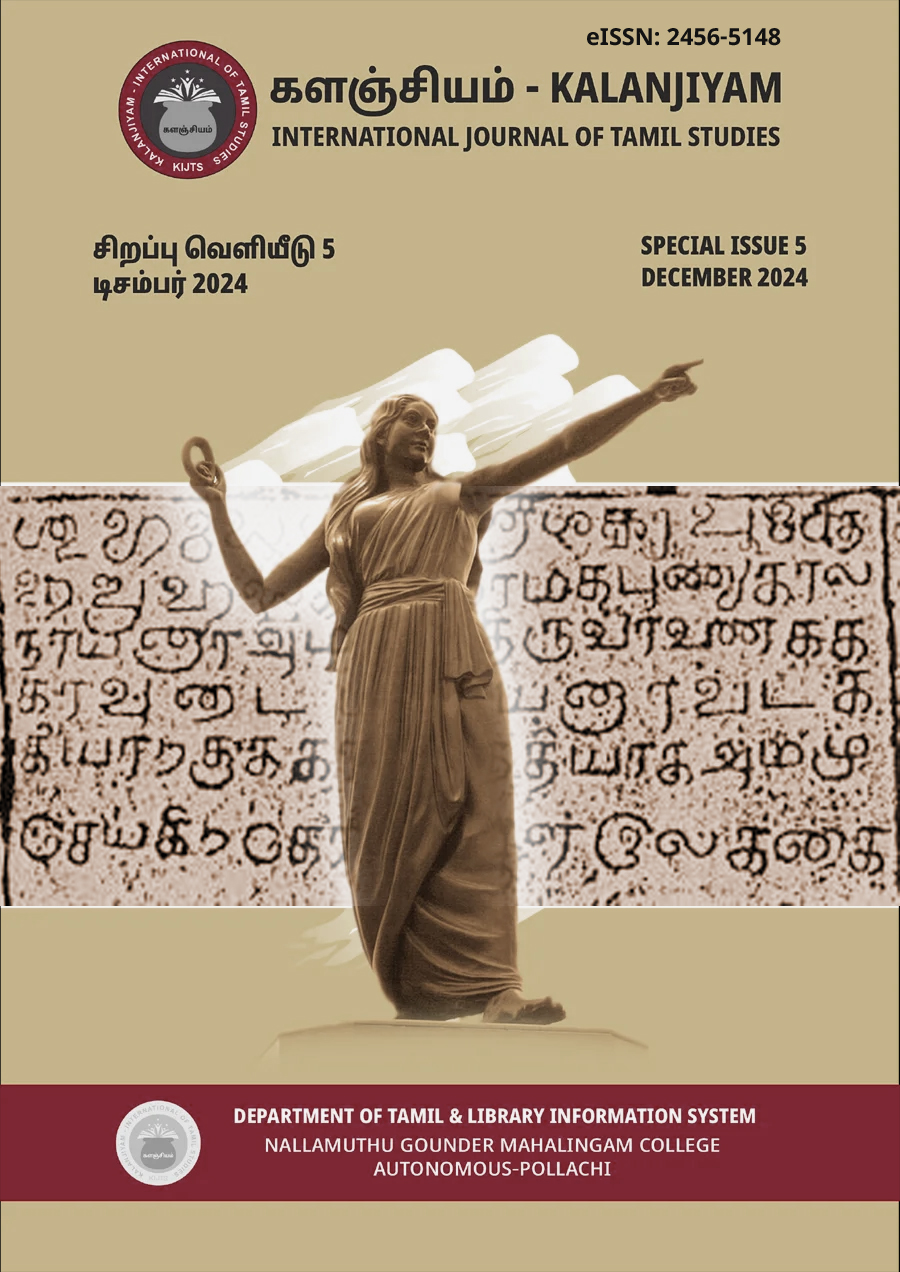
களஞ்சியம் சர்வதேச தமிழ் ஆய்விதழ் டிசம்பர் மாத சிறப்பு வெளியீடு
Articles
-
Social Thoughts in Devotional Literature பக்தி இலக்கியங்களில் சமூகச் சிந்தனைகள்
Dr. R. Tamilselvi, M.A., M.Phil, Ph.D. Assistant Professor, Valliammal Women's College, Annanagar (East), Chennai -102 IndiaThe rich tradition of Tamil Bhakti literature is profoundly rooted in the principles of devotion and social development. At the forefront of this movement were the Arulalars, who guided the people towards a life imbued with the essence of the Tamil mantra "Yanperta Inpam Peruka Evvaikam" from the Thirumanthiram (85). This paper explores the significance of the Arulalars’ teachings, particularly the phrases "Arkum Idumin Avarivar Ennanmin" and "Anbe Shivam - Makkatpaniye Mahesan Pani," emphasizing the inseparable link between spirituality, social welfare, and communal harmony. The transformative power of divine revelation, encapsulated in classical Tamil literature, serves as a guiding light in the quest for spiritual salvation while fostering an inclusive society. The Tamil spiritual landscape is characterized by a rich interweaving of devotion, social context, and intellectual heritage. Central to this landscape is the movement led by the Arulalars, esteemed religious figures who dedicated their lives to imparting wisdom and guidance for spiritual and communal wellbeing. Their teachings resonate deeply with the Tamil mantra "Yanperta Inpam Peruka Evvaikam," which emphasizes the importance of personal and collective elevation through devotion and righteousness. By interpreting the divine through a lens of social development, the Arulalars sought to inspire individuals to cultivate both their spiritual and worldly lives.
Pages: 1-5Views: 0 Downloads: 00 0Dr. R. Tamilselvi, M.A., M.Phil, Ph.D. (1)- (1) Assistant Professor, Valliammal Women's College, Annanagar (East), Chennai -102, India
1-5Thirugnanasambandar's pilgrimage in the Saiva tradition: A perspective சைவப்பண்பாட்டு மரபில் திருஞானசம்பந்தரின் தலயாத்திரை: ஓர் நோக்கு
Mr.S.Ramanarajah Sri LankaThis study is conducted to examine the impact of Thirugnanasambandar's pilgrimage on the Saiva tradition. The sources for this study are Thirugnanasambandar's thevarams, which are included in the first three of the twelve Thirumurais. The Pallava period is distinguished as a turning point in the social transformation and religious development of Saivaism. The Bhakti movement that emerged during this period had to present new plans and activities for Saiva culture and social development. Due to this, the movement used various strategies. One of them was their pilgrimages centered around temples. Such journeys became pilgrimages. Sambandar undertook pilgrimages as a planned propaganda strategy based on the reality that every profession and action has its goals. As a result of the intelligent implementation of such pilgrimages, it was possible to spread the ideas of Saivism among the self-reliant communities. These activities had a great impact on the society of that time. Therefore, the aim of this study is to identify the importance of Sambandar's pilgrimage in the Saivism tradition and the impact it had on the society.
திருஞானசம்பந்தர் மேற்கொண்ட தலயாத்திரை சைவப்பண்பாட்டு மரபில் எத்தகைய தாக்கத்தினை ஏற்படுத்தியது என்பது பற்றியதாக இவ்வாய்வு மேற்கொள்ளப்படுகிறது. பன்னிரு திருமுறைகளில் முதல் மூன்று திருமுறைகளாக இடம்பெற்றிருக்கும் திருஞானசம்பந்தரின் தேவாரங்களே இந்த ஆய்வுக்கான மூலங்களாகும். சைவசமயத்தின் சமூக மாற்றத்திற்கும் சமய வளர்ச்சிக்குமான திருப்பு முனைக் காலமாக பல்லவர் காலம் சிறப்புப் பெறுகின்றது. இக்காலத்தில் தோன்றிய பக்தி இயக்கத்தினர் சைவப்பண்பாட்டுக்கும் சமூக அபிவிருத்திக்கும் புதிய திட்டங்களையும் செயற்பாடுகளையும் முன்வைக்க வேண்டிய சூழல் உருவாகியிருந்தன. இதன் காரணமாகப் பல்வேறு உத்திகளை இந்த இயக்கம் கையாண்டது. அவற்றில் ஒன்று திருக்கோயில்களை மையமாகக் கொண்ட அவர்களின் புனிதப்பயணங்கள் ஆகும். இத்தகைய பயணங்கள் தலயாத்திரைகளாக அமைந்தன. ஒவ்வொரு தொழிலுக்கும் செயலுக்கும் குறிக்கோள்கள் உள்ளன எனும் யதார்த்த அடிப்படையில் சம்பந்தர் தலயாத்திரைகளை திட்டமிட்ட பிரசார உத்தியாக மேற்கொண்டார். இத்தகைய புனித யாத்திரைகளை புத்திசாலித்தனமாகச் செயல்;படுத்தியதன் விளைவாக தன்சார்புச் சமூகங்களிடையே சைவசமயக் கருத்துக்களைப் பரப்ப முடிந்தது. இச்செயல்கள் அக்காலச் சமூகத்தில் பெருந்தாக்கங்களை ஏற்படுத்தியிருந்தன. எனவே, சைவப்பண்பாட்டு மரபில் சம்பந்தர் மேற்கொண்ட தலயாத்திரையின் முக்கியத்தவத்துவம் மற்றும் சமூகத்தில் அது ஏற்படுத்திய தாக்கங்களை இனங்காண்பதே இந்த ஆய்வின் நோக்கமாகும்.
Pages: 6-25Views: 0 Downloads: 00 0Mr.S.Ramanarajah (1)- (1) Sri Lanka
6-25The food culture of Sangattamizhar சங்கத்தமிழரின் உணவுசார் பண்பாடு
Dr. B. Periyaswamy Dr. MGR Chockalingam Arts College, Arni, Thiruvannmalai – 632317 IndiaSanga Tamils were high in food consumption. They cooked food and ate it under different names. They knew the use of rice and considered it as a superior food in their diet. They used rice to make Tamarind, Curd rice, Lemon rice, Meat rice, Varity rice, Pongal etc. Tamils who basically consumed land-based food have been buying and eating other land-based food products by bartering the food grown in their lands for food grown in other lands. Non-vegetarian food is the message given to the guests, the host and the guests. This article also explains that Meat rice with wine (Kal) is eaten as a meal. Sanga Tamils have lived as food is medicine. It has been revealed in this study that they have a scientific view of when and how to eat food.
சங்கத் தமிழர் உணவு பயன்பாட்டில் உயரந்த நிலையில் இருந்தனர். அவர்கள் உணவுகளை சமைத்து பல்வேறு பெயரிட்டு உண்டனர். அரிசி பயன்பாட்டை அறிந்து அதனை தங்கள் உணவில் உயர்ந்த உணவாக கருதினர். சோற்றில் புலிசோறு, தயிர்சோறு, எலுமிச்சை சோறு, ஊன்சோறு, பழஞ்சோறு, பல்வகை பொங்கல் உள்ளிட்டவற்றை செய்து உண்டனர். அடிப்படையில் நிலம் சார்ந்த உணவையே உட்கொண்ட தமிழர் பண்டமாற்று முறையில் தங்கள் நிலங்களில் விளைந்த உணவை மற்ற நிலத்தில் விளைந்த உணவிற்கு பண்டமாற்றாகக் கொடுத்து பிற நில உணவுப்பொருட்களை வாங்கி வந்து உண்டிருக்கின்றனர். அசைவ உணவானது விருந்தினர்களுக்கும் புரவலர்களுக்கும் இரவலர்களுக்கும் அளிக்கப்பட்ட செய்திகள் நம்மால் அறிந்துக் கொள்ள முடிகின்றது. ஊன் சோற்றோடு கள்ளையும் உணவாக உண்டுள்ளதையும் இக்கட்டுரை விளக்கியுள்ளது. சங்கத் தமிழர் உணவே மருந்து என வாழ்ந்துள்ளனர். எப்போது எப்படி உணவு உண்ண வேண்டும் என அறிவியல் பார்வை அவர்களுக்கு இருந்துள்ளது என்பவையெல்லாம் இவ்வாய்வில் வெளிப்பட்டுள்ளது.
Pages: 26-40Views: 0 Downloads: 00 0Dr. B. Periyaswamy (1)- (1) Dr. MGR Chockalingam Arts College, Arni, Thiruvannmalai – 632317, India
26-40History of Tamil Prose and the Work of Commentators தமிழ் உரைநடை வரலாறும் உரையாசிரியர்களின் பணியும்
Professor M. Kumaraguru Arignar Anna Government College of Arts, Villupuram IndiaCommentators have occupied an equal place in the history of Tamil literature as authors. A prose commentary on a book written in one period or in the same period (in a more recent case) is called a commentary. Texts, which aim to bridge the generation gap and the gap between the writer and the reader, occupy a very important place in Tamil tradition. It can be said that these texts did to some extent the work that criticisms do today.
தமிழ் இலக்கிய வரலாற்றில் நூலாசிரியர்களுக்குச் சமமாக உரையாசிரியர்கள் இடம் பெற்றுள்ளனர். ஒரு காலத்தே எழுதப்பட்ட நூலுக்கு இன்னொரு காலத்திலோ அதே காலத்திலோ (அது அருகிய வழக்கு) எழுதப்படுகின்ற உரைநடையிலான விளக்கத்தை, உரை என்கிறோம். தலைமுறை இடைவெளியையும், எழுதியோன் படிப்போன் என்போருக்கு இடையேயுள்ள இடைவெளியையும் குறைக்கின்ற நோக்கத்தில் அமைகின்ற உரைகள், தமிழ் மரபில் மிக முக்கியமான இடத்தைப் பெறுகின்றன. இன்று, திறனாய்வுகள் செய்கிற வேலையை, அன்று இந்த உரைகள் ஓரளவு செய்தன என்று சொல்லலாம்
Pages: 41-50Views: 0 Downloads: 00 0Professor M. Kumaraguru (1)- (1) Arignar Anna Government College of Arts, Villupuram, India
41-50காரைக்காலம்மையாரும் அக்கமாதேவியும் - ஒப்பீட்டு நோக்கு Karaikalamammaiyar and Akkamadevi - A Comparative Perspective
BARATHE. S தமிழ்த்துறை, தமிழ்நாடு மத்தியப் பல்கலைக்கழகம், திருவாரூர் IndiaThis article on the famous Tamil goddess Karaikalammaiyar and the famous Kannada goddess Akkamadevi, aims to highlight the similarities in their lives, such as their time environment, religious character, their tendency to renounce home, and their status as goddesses, and the similarities in their views that in their creations they call the ruler of the world, Lord Shiva, and Lord Shiva, ‘Pichadanan’, and also the differences between the two.
ஆய்வுச் சுருக்கம்
தமிழில் புகழ்பெற்ற காரைக்காலம்மையார் மற்றும் கன்னடத்தில் அறியப்பெற்ற அக்கமாதேவி ஆகிய இருவரைப் பற்றிய இக்கட்டுரையானது, அவர்களின் காலச் சூழல், இறைப்பண்பு, இல்லறத்தை துறக்கும் போக்கு, பெண் தெய்வங்களாகப் போற்றப்படும் நிலை ஆகிய அவர்களின் வாழ்விலுள்ள ஒத்த கருத்துக்களையும், அவர் தம் படைப்புகளில் உலகை ஆள்பவன் இறைவன் எனவும், சிவபெருமான் ‘பிச்சாடனன்’ எனவும் இருவராலும் அழைக்கப்படும் ஒத்தக் கருத்துக்களையும், மேலும் இருவரும் வேறுபட்டு நிற்கும் இடங்களையும் எடுத்துரைப்பது இக்கட்டுரையின் நோக்கமாகும்
Pages: 51-60Views: 0 Downloads: 00 0BARATHE. S (1)- (1) தமிழ்த்துறை, தமிழ்நாடு மத்தியப் பல்கலைக்கழகம், திருவாரூர், India
51-60தமிழ் மொழி வரலாறும் சிறப்பும் History and importance of the Tamil language
ந. சுசீலா Government Model Girls Higher Secondary, School, Villupuram .605602 IndiaTamil is one of the major languages in the world. It is the mother tongue of many Tamil speakers. Tamil is also a classical language. Tamil is the most widely spoken language in India, Sri Lanka, Malaysia, and Singapore. According to the 1997 census, Tamil is the language spoken by 80 million (800 million) people worldwide. The purpose of this article is to briefly examine the unique features of the Tamil language.
உலகில் உள்ள முதன்மையான மொழிகளில் ஒன்று தமிழ் மொழியாகும். தமிழ் பேசும் பலரின் தாய் மொழி ஆகும். தமிழ் மொழி செம்மொழியும் ஆகும். தமிழ் மொழி இந்தியா ,இலங்கை,மலேசியா,சிங்கப்பூர் ஆகிய நாடுகளில் அதிக அளவில் பேசப்படும் மொழியாகும்.1997 ஆம் ஆண்டுபுள்ளி விவரப்படி உலகம் முழுவதிலும் 8 கோடி (80 கோடி ) மக்களால் பேசப்படும் மொழி தமிழ் மொழியாகும். தமிழ் மொழியின் சீரிய சிறப்புகளை சிறுதுளியென ஆராய்வதே இக்கட்டுரையின் நோக்கமாகும்.
Pages: 61-66Views: 0 Downloads: 00 0ந. சுசீலா (1)- (1) Government Model Girls Higher Secondary, School, Villupuram .605602, India
61-66Content of Jeeva Neerodai in Tamil Christian Magazine தமிழ்க் கிறித்தவச் சிற்றிதழ்களில் ஜீவநீரோடையின் உள்ளடக்கம்
Jesus Rayar S தமிழ்நாடு மத்தியப் பல்கலைக் கழகம் திருவாரூர்-610005 IndiaWhen Christianity was introduced in the Tamil environment, it took the literary forms of Tamil to establish itself and work in it. The magazine tradition emerged as an extension of the literary forms in the timeline. It is seen as a simple form that takes the ethics and experiences of contemporary life into account. In that situation, Jeeva Neerodai comes out as a monthly magazine that follows Christian life principles. The closeness of Christ is to improve individual morality. This magazine is doing the work of strengthening human society by telling the truth aloud and building straight thinking with the mantra of ``Say the truth and say it out loud''. Word' became man. As the Holy Bible says, the word is powerful; the words of God, the Word, are flowing in the stream of life. The Jeeva Neerodai newsletter is published by Mr. Samson Paul as a monthly magazine from Puducherry. Jeeva Neerodai is a Christian newsletter that is doing its job of highlighting Christian truths in a clear way. This study aims to introduce such a Christian narrative and examine its contents.
கிறித்தவம் தமிழ்ச் சூழலில் அறிமுகமாகிய போது தன்னை நிலைநிறுத்திக் கொள்வதற்காக தமிழின் இலக்கிய வடிவங்களினை முன்னெடுத்து அதில் செயலாற்றியது. காலவரிசையில் இலக்கிய வடிவங்களின் நீட்சியாக சிற்றிதழ் மரபு என்பது தோற்றம் பெற்றது. அது சமகாலத்திய வாழ்வின் நெறிமுறைகளினையும் அனுபங்களினையும் எடுத்தியம்பும் எளிய வடிவமாக காணப்படுகிறது. அந்நிலையில் கிறித்தவ வாழ்வியல் நெறிகளை எடுத்தியம்பும் சிற்றிதழாக ஜீவநீரோடை என்பது வெளிவருகின்றது. கிறிஸ்துவின் நெருக்கமே தனிமனித ஒழுக்கம் மேம்படச் செய்யும் என்றும், உண்மையைச் சொல் அதனை உரக்கச் சொல் என்பதனை தாரக மந்திரமாகக் கொண்டு சத்தியத்தை உரக்கச் சொல்லி மனித சமுதாயத்தை நெறிப்படுத்தி வலுப்படுத்தி நேரியச்சிந்தனையைக் கட்டமைத்திடும் பணியை இவ்விதழ் செவ்வனே செய்து வருகின்றது. வார்த்தை மனுவுருவானார். வார்த்தை வல்லமை மிக்கது என்று பரிசுத்த வேதாகமம் எடுத்துரைப்பது போல வார்த்தையான தேவனின் வார்த்தைகள் ஜீவ நீரோடையில் விரவிக் கிடக்கின்றன. ஜீவநீரோடை சிற்றிதழ் சகோ.சாம்சன் பால் அவர்களால், புதுச்சேரியிலிருந்து மாத இதழாக வெளியிடப்படுகிறது.பல்வேறு வகையான சிற்றிதழ்கள் சமகாலத்தில் வெளிவரினும் கிறித்தவச் சத்தியங்களை உள்ளவாறே எடுத்துரைக்கும் அரும்பணியை தெளிந்த நற்றமிழில் ஆற்றிவரும் கிறித்தவச் சிற்றிதழாக ஜீவநீரோடை திகழ்கிறது. அத்தகைய கிறித்தவச் சிற்றிதழினை அறிமுகப்படுத்தி அதன் உள்ளடக்கங்களினை ஆராய்வதாக இவ் ஆய்வு அமையவிருக்கிறது.
Pages: 67-73Views: 0 Downloads: 00 0Jesus Rayar S (1)- (1) தமிழ்நாடு மத்தியப் பல்கலைக் கழகம் திருவாரூர்-610005, India
67-73தொல்காப்பிய மொழியீற்று உயிரும் ஐங்குறுநூறும் Language Characteristics in Thokappiyam and Ayngurunooru
காட்வின் சுதர்சன். அ Department of Tamil, Central university of Tamilnadu, Thiruvarur - 610005, Tamilnadu, INDIA IndiaWhile the Tolkappiyam is primarily a grammar focused on poetry, it also outlines the grammatical structure of the Tamil language, tracing the evolution of letters into words and their continued existence. It emphasizes which letters are introduced into the language as they form words, encompassing themes of life and truth. Various literary works emerged both before and after the Tolkappiyam era, with ancient Tamil literature—characterized by songs and poems—showing some similarities to that time. Notably, the first of the five hundred internal texts, recognized as early Tamil literature, holds the distinction of being compiled. This study aims to explore the relationship between different literary grammars and to assess the quality of the Tolkappiyam through its letters, which it imbues with vitality. Due to the scope of this research, the focus will be specifically on the Ayngurunooru
Pages: 74-81Views: 0 Downloads: 00 0காட்வின் சுதர்சன். அ (1)- (1) Department of Tamil, Central university of Tamilnadu, Thiruvarur - 610005, Tamilnadu, INDIA
74-81Introduction to Singapore's Bilingual Policy and Tamil Education சிங்கப்பூரின் இருமொழிக்கொள்கையும் தமிழ்க்கல்வியும்: ஓர் அறிமுகம்
த. சுந்தரராஜ் Nanyang Technological University - NTU Singapore SingaporeSituated within the context of Singapore's multiracial society, this article investigates how the nation's bilingual policy fostered the growth of Tamil education. It analyzes the vital role of language policy in Singapore's overall progress, considering its social, economic, and educational consequences. Following the People's Action Party's rise to power in 1959, the emphasis on a bilingual approach—combining English with designated mother tongues—became central. Spearheaded by former Prime Minister Lee Kuan Yew, who understood the necessity of English for international trade and scientific development, this policy also aimed to maintain multiculturalism by including languages like Tamil. Consequently, the English-Tamil bilingual framework played a key role in promoting Tamil language education within the Tamil community.
சிங்கப்பூரின் இருமொழிக்கொள்கையும் தமிழ்க்கல்வியும் தொடர்பான இந்தக்கட்டுரை, சிங்கப்பூரில் உள்ள பல்லின சமூகத்தில் உருவான இருமொழிக்கொள்கை தமிழ்க்கல்வியை எவ்வாறு ஊக்கப்படுத்தியது என்பதைப் பற்றி விவரிக்கிறது. சிங்கப்பூரின் வளர்ச்சியில் மொழிக்கொள்கையின் முக்கியத்துவம் மற்றும் அதன் சமூக, பொருளாதார, கல்வி விளைவுகளை இந்த ஆய்வு விளக்குகிறது. 1959-இல் மக்கள் செயல் கட்சி ஆட்சிக்கு வந்த பிறகு, இருமொழிக்கொள்கை (ஆங்கிலம் மற்றும் தாய்மொழிகள்) முதன்மையாக வலியுறுத்தப்பட்டது. முன்னாள் பிரதமர் லீ குவான் யூ, பொருளாதார வளர்ச்சி நோக்கில் பன்னாட்டு வணிகம் மற்றும் அறிவியல் வளர்ச்சிக்கு ஆங்கிலத்தின் அவசியம் என்பதை உணர்ந்து ஆங்கிலத்தையும், பல்லினப்பண்பாட்டைக் காக்க தாய்மொழிகள் அவசியம் என்பதை உணர்ந்து தமிழ், மலாய், சீனம் ஆகிய தாய்மொழிகளையும் இணைத்து இருமொழிக்கொள்கையை உருவாக்கினார். அக்கொள்கையின் வழி தமிழர்களிடையே ஆங்கிலம்-தமிழ் என்னும் இருமொழிக்கொள்கை தமிழ் மொழிக்கல்வியை மேம்படுத்துவதில் முக்கிய பங்கு வகித்தது மிகச்சுருக்கமாக விவரிக்கிறது இக்கட்டுரை.
Pages: 67-71Views: 0 Downloads: 00 0த. சுந்தரராஜ் (1)- (1) Nanyang Technological University - NTU Singapore
67-71Udanpagaiyai Velluthal : Thalaimagal – Bharathaiyin Pen Nilai Uraiyadalgal உடன்பகையை வெல்லுதல்: தலைமகள் - பரத்தையின் பெண்நிலை உரையாடல்கள்
Professor N. Kavita Ethiraj College for Women (Autonomous), Chennai IndiaThis Research Article examines the psychological ramifications of societal structures in ancient Tamil tradition that regulated male and female bodies, particularly in the context of inheritance within a possession-based society. This emphasis on inheritance led to the prioritization of female chastity, often presented as paramount to a woman's life. Consequently, female spaces were defined and policed through a dichotomy of "chaste women" versus "common women." This research explores the psychological pressures created by this masculine-dominated social order centered on chastity and analyzes the adaptive functions women developed within it.
திணைவழிப்பட்ட நம் பழந்தமிழ் மரபில் உடைமையாக்கச் சமூகம் தலைப்பட்டபோதே, ஆண் - பெண் உடல்கள் மீதான கட்டுப்பாடுகளும் ஒழுங்குச் செயல்பாடுகளும் உடன் வரையறுக்கப்பட்டன. வாரிசுரிமை குறித்த பெரும் அக்கறை கொண்ட அச்சமூகம், பெண்ணைக் கற்பு நெறிக்குட்படுத்தி அக்கற்பை அவளது உயிரை விட உயர்ந்ததென்று அறிவுறுத்தியது. அதன்வழி கற்புக்கரசியர் - பொதுமகளிர் எனும் எதிர்வுகளைக் கொண்டதாகப் பெண் வெளி உருப்பெற்று, கண்காணிக்கப்பட்டும் வருகின்றது. இக்கட்டுரை பரத்தமைச் செயல்பாட்டில் தலைமகளும் பரத்தமையும் எதிர் எதிர் வைக்கப்படுதலில் ஆண்மையச் சமூகவெளியில் உண்டாக்கப்பட்ட உள அழுத்தங்களையும், தமக்கெனப் பெண்கள் வளர்த்தெடுத்துக் கொண்ட தகவமைப்புச் செயல்பாடுகளையும் உளவியல் ரீதியாகக் காண்கின்றது.
Pages: 72-78Views: 0 Downloads: 00 0Professor N. Kavita (1)- (1) Ethiraj College for Women (Autonomous), Chennai, India
72-78The Glory of Naladiyar நாலடியாரின் பெருமைகள்
மு. கீதா, உதவி பேராசிரியர் Annai Mira College of Engineering and Technology, Arapakkam. Ranipet District. Tamil Nadu IndiaThroughout its history, Tamil literature has been graced by countless poets, from the ancient Sangam era to contemporary times. A prominent collection within this rich tradition is the Patheenenkeezhkanakku, or eighteen minor works, which occupy a crucial position in shaping ethical and moral thought. Thiruvalluvar's Thirukkural stands as a testament to universal ethical principles, and closely following in its esteemed footsteps is Naladiyar. Written in the venpa poetic form, traditionally used for conveying moral lessons, Naladiyar is the foremost of the eleven ethical texts within the Patheenenkeezhkanakku. The very name "Naladiyar" signifies its structure, with each verse comprising four lines. The aim of this initial exploration is to delve into the significance and enduring merit of Naladiyar.
தமிழன்னைக்கு இலக்கியங்களைப் படைத்து மகுடம் சூட்டிய புலவர்கள் பலர் உண்டு. சங்க காலம் முதல் இக்காலம் வரை அப்புலவர்கள் எண்ணறறவர்களாக உள்ளனர். நீதி கூறும் இலக்கிய வரிசையில் பதினெண் கீழ்க் கணக்கு நூல்கள் சீரியஇடத்தைப் பெற்றுள்ளன. உலக மக்கள் அனைவருக்கும் திருவள்ளுவர் நீதி உரைப்பதில் தன்மையானவர் ஆகிறார், அத்திருக்குறளை அடுத்து நீதி நூல்களில் இரண்டாமிடம் பெறும் நூல் நாலடியார் ஆகும். எதையும் கூறும்போது வெண்பாக்களில் கூறுவது வழக்கம். எனவே நாலடியார் பதினெண் கீழ்க்கணக்கிலுள்ள அறநூல்கள் பதினொன்றில் முதலாவாகக் தனிப்பாடல் ஒன்றில் கூறப்பட்டுள்ளது. ஒவ்வொரு பாடலும் நான்கு அடிகளைக் கொண்டுள்ளதால் நாலடியார் என்று கொள்ளலாம். அந்நாலடியாரின் பெருமைகளை ஆய்வதே இம்முதல் இயலின் நோக்கமாகும்.
Pages: 79-89Views: 0 Downloads: 00 0மு. கீதா, உதவி பேராசிரியர் (1)- (1) Annai Mira College of Engineering and Technology, Arapakkam. Ranipet District. Tamil Nadu, India
79-89Om Shakti Magazines' Community Service ஓம் சக்தி இதழ்களின் சமுதாயப்பணி
A. Gayathri India , முனைவர். க.தனலட்சுமி IndiaCommunication is crucial in the contemporary world. While our ancestors initially communicated through basic means like light, gestures, and cave paintings, the eventual development of language provided a more efficient method for expressing human emotions. Today, we have a vast array of communication tools, including radio, television, newspapers, and the internet, which keep us apprised of news both domestically and internationally. The introduction of Western ideas significantly impacted the growth of the journalism sector. Magazines evolved from primarily religious publications to outlets that tackled broader societal issues, offering timely reporting on topics such as medicine and agriculture. The monthly magazine “Om Shakti,” published by Mahalingam Aiya’s family in Coimbatore, is an example of this evolution. This article will explore how effectively "Om Shakti" serves its intended purpose within society.
சமகாலச் சூழலில் தகவல் தொடர்பு என்பது மிக இன்றியமையாத ஒன்றாகிவிட்டது நம் முன்னோர்கள் ஆரம்ப காலத்தில் ஒளி, சைகை, ஓவியம் வரைந்து எனப் பல முயற்சிக்குப் பிறகு மொழி உருவானது. மனித மன உணர்வுகளை எளிதில் வெளிப்படுத்துவது மொழியே ஆகும். நம்மைச் சுற்றியுள்ள செய்திகளை அறிந்து கொள்வதும் வெளியூர் வெளிநாடுகளில் நடக்கும் செய்திகளைப் பற்றி தெரிந்து கொள்ள இன்று வானொலி, தொலைக்காட்சி, பத்திரிக்கை, இணையம் இன்னும் பல தொடர்பு சாதனங்கள் வளர்ச்சி பெற்று விட்டன. மேலைநாட்டினரின் வருகை, பத்திரிக்கை துறை வளர்ச்சிக்கும் பெரிதும் உதவியது. சமயத்தை மட்டுமே வெளிப்படுத்தி வந்த இதழ்கள் பின்னாளில் சமுதாயம் தழுவி எதிர்காலம; மருத்துவம், வேளாண்மை என பல்துறைகளிலும் உண்மையை உடனுக்குடன் தெரிவிக்கின்றன. அவ்வகையில் “ஓம் சக்தி” மாத இதழ் மகாலிங்கம் ஐயா அவர்களின் குடும்பம் சார்பாக கோவையை மையமாகக் கொண்டு வெளி வந்து கொண்டிருக்கிறது இவ்விதழ் சமுதாயத்திற்கு, தம் பணியைச் செய்கிறது என்பதை ஆய்வதே இக்கட்டுரையின் நோக்கமாகும்..
Pages: 90-95Views: 0 Downloads: 00 0A. Gayathri (1), முனைவர். க.தனலட்சுமி (2)- (1) India
- (2) India
90-95PONMUDI’YAR? பொன்முடி’யார்’?
முனைவர் ஜெ.காவேரி V.V. Vanniyapperumal Women's College, Virudunagar IndiaSangam literature occupies a prominent position in Tamil cultural heritage, serving as a significant repository of Tamil identity. Within this literary corpus, female poets, alongside their male contemporaries, contributed to the creative and intellectual landscape. Despite issues of preservation affecting the works of male poets, a notable body of poetry authored by women has been preserved. These poems serve as a reflection of the social dynamics prevalent in Tamil society of the Sangam period. While the exact number of female poets is subject to scholarly debate, the widely accepted figure is thirty.
தமிழ் இலக்கியத்தில் சங்க இலக்கியம் என்பது தமிழர்களின் பண்பாட்டு அடையாளங்களைச் சுமந்து நிற்கும் உயர் கோபுரமாக விளங்குகிறது. அந்த இலக்கிய மரபில் ஆண்பாற் புலவர்களைப் போல, பெண்பாற் புலவர்களும் தங்களின் படைப்பாற்றலையும் கல்விப் புலத்தையும் வெளிப்படுத்தி நின்றனர். ஆண்பாற் புலவர்களின் பாடல்கள் கிடைத்த அல்லது தொகுத்த அளவில் பெண்பாற் புலவர்களின் பாடல்கள் இல்லையென்றாலும் பெண்களின் சிற்சில பாடல்களும் காணக் கிடைக்கின்றன. அந்தவகையில், பெண்பாற் புலவர்களின் பாடல்கள் அக்காலக்கட்டத் தமிழ்ச் சமூகத்தின் செயற்பாட்டை பிரதிபலிக்கும் வகையில் பாடியுள்ளனர்.
Pages: 96-102Views: 0 Downloads: 00 0முனைவர் ஜெ.காவேரி (1)- (1) V.V. Vanniyapperumal Women's College, Virudunagar, India
96-102Journal Info
Information
ADDITIONAL MENU
- Editorial Policies
- Peer Review Policy
- Peer Review Process
- Open Access Policy
- License agreement
- Licensing Policy
- Article Processing Fee
- Recommended Reviewer
- Complaint Policy
- Ethical & Malpractice Policies
- Advertising Policy
- Licenses, Copyright & Permissions
- Peer Review & Publication Policies
- Article Retraction & Withdrawal Policy
- Policies on Conflict of Interest and Informed Consent
- Privacy Statement
- Editorial Policies
- PLAGIARISM POLICY
Contact Address
Submit & Technical Contact
S.VEERAKANNAN
E-Mail: editorial.kalanjiyam@ngmc.org
Mobile: 9788175456
NGM College, 90, Palghat Road, Pollachi 642001, Tamilnadu, INPublisher
Kalanjiyam - International Journal of Tamil Studies
களஞ்சியம் - சர்வதேச தமிழ் கல்வி ஆராய்ச்சி இதழ்
Dept of Library and Information Science & Dept of Tamil,
Nallamuthu Gounder Mahalingam College,
90, Palghat Road, Pollachi 642001, Tamilnadu, INDIA
Publisher Website: https://www.ngmc.org/
Kalanjiyam களஞ்சியம் - சர்வதேச தமிழ் கல்வி ஆராய்ச்சி இதழ் eISSN: 2456-5148 - Dept of Library and Information Science & Dept of Tamil, NGM College, Pollachi 642001
Sanguline Theme by Sangu Ilmu