
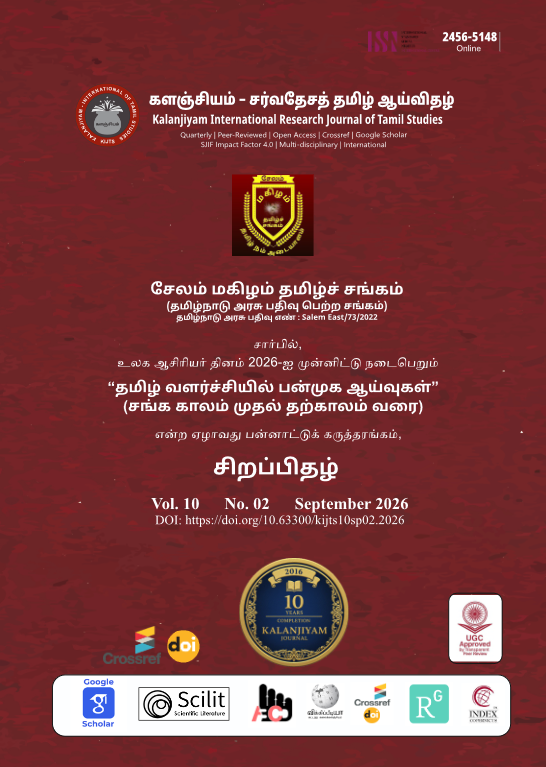
Journal title (In Regional) களஞ்சியம் - சர்வதேச தமிழ் ஆய்வு இதழ்
Journal title (In English) KALANJIYAM – International Journal of Tamil Studies
Publication language Tamil (தமிழ்), English, Abstract and References in English
Abbreviated key-title: KALANJIYAM - KIJTS
Publishing frequency Quarterly (February, May, August, and November)
E-ISSN 2456-5148
DOI registered Tamil Journal
Vol. 10 No. 02 (2026): Kalanjiyam September 2026 Special Issue
Articles
-
சேக்கிழார் கற்பிக்கும் பக்திநெறி The Path of Devotion Taught by Sekkizhar
முனைவர் சு.லலிதா தமிழ் இணைப்பேராசிரியர், வேளாளர் பொறியியல் தொழில்நுட்பக் கல்லூரி, திண்டல், ஈரோடு – 12 IndiaLiving beings have been classified based on their functions into categories ranging from those possessing a single sense to those with six senses. Having evolved from the five-sensed state to the six-sensed state, we humans ought to progress towards a 'seventh sense' rather than allowing our evolution to regress. The noble path lies in seeking and attaining true divine wisdom. Devotion, which initially arose from fear, has matured over time; today, it has reached a stage where human, social, and global unity are seen as achievable solely through devotion. Devotees like Sekkizhar, who were deeply immersed in such devotion, categorized the paths to attaining the Divine into two types: the path of intellect (Arivu Maargam) and the path of love (Anbu Maargam). This research paper examines these two paths through the lens of Sekkizhar’s Periyapuranam.
Pages: 1-9Views: 0 Downloads: 00 0முனைவர் சு.லலிதா (1)- (1) தமிழ் இணைப்பேராசிரியர், வேளாளர் பொறியியல் தொழில்நுட்பக் கல்லூரி, திண்டல், ஈரோடு – 12, India
தொல்காப்பியம் பொருளதிகாரம் களவியல்: தலைவன்–தலைவி உறவுநிலைகள் பகுப்பாய்வு Tholkappiyam, Porulathikaram, Kalaviyal: An Analysis of the Relationship Dynamics between the Hero and the Heroine
Dr. D. Muthulakshmi Assistant professor department of tamil, Shrimathi devkunvar nanalal bhatt vaishnav college for women. Chrompet , chennai 44 IndiaIn his grammatical treatise Tolkappiyam, the author Tolkappiyar articulates philosophies of life applicable to all people within the Kalaviyal (section on clandestine love) of the Porulathikaram (the section dealing with subject matter). He codifies the lifestyle of a hero and heroine who, sharing mutual affection, unite in marriage and live together. Akathinai (the genre concerning the inner life of love) comprises two phases: Kalavu (clandestine love) and Karpu (marital life). The grammarian Tolkappiyar has laid down grammatical rules governing the nature of the relationship between the hero and the heroine in both these phases. The Kalaviyal section extensively highlights details regarding the inner life of love (Akapporul) and the characteristics of the hero and heroine. Kalavu refers to the romantic bond formed between the hero and heroine in secrecy, unknown to others; in this process, the roles played by both the hero and the heroine are significant. This article, titled "Tolkappiyam Porulathikaram Kalaviyal: An Analysis of Hero–Heroine Relationship Dynamics," examines the insights provided in the Kalaviyal section to elucidate the nature of their relationship and the structural framework governing it.
Pages: 10-16Views: 0 Downloads: 00 0Dr. D. Muthulakshmi (1)- (1) Assistant professor department of tamil, Shrimathi devkunvar nanalal bhatt vaishnav college for women. Chrompet , chennai 44, India
10-16சங்கம் வளர்த்த தமிழ் Tamil Nurtured by the Sangam
அ.பாலகிருஷ்ணன் பகுதிநேர முனைவர் பட்ட ஆய்வாளர், நந்தா கலை மற்றும் அறிவியல் கல்லூரி, கூரப்பாளையம் ஈரோடு மாவட்டம், தமிழ்நாடு, இந்தியா. IndiaThe antiquity and rich literary tradition of the Tamil language were preserved and nurtured through the institutional framework known as the Sangam (Tamil Academies). Established under the patronage of the Pandya kings, three successive academies brought poets, scholars, and grammarians together to critically refine, evaluate, and develop classical Tamil literature. This paper investigates the historical evolution, socio-linguistic impact, and literary heritage of Sangam Tamil. Drawing upon ancient commentaries—particularly the Iraiyanar Akapporul Urai—alongside epigraphical evidence and classical corpuses like Ettuthokai, Pattuppattu, and Tolkappiyam, this study analyzes the structural taxonomy of the Three Sangams, their distinctive Akam (interior/love) and Puram (exterior/heroism) poetic conventions, the prominent role of women poets, and the secular humanist values embedded within this classical era.
Pages: 17-21Views: 0 Downloads: 00 0அ.பாலகிருஷ்ணன் (1)- (1) பகுதிநேர முனைவர் பட்ட ஆய்வாளர், நந்தா கலை மற்றும் அறிவியல் கல்லூரி, கூரப்பாளையம் ஈரோடு மாவட்டம், தமிழ்நாடு, இந்தியா., India
17-21ஆற்றுதல்: கலித்தொகை காட்டும் வாழ்வியல் நெறி Aatruthal: The Way of Life Portrayed in Kalithogai
பெ. சண்முகவடிவேல் முனைவர் பட்ட ஆய்வாளர், தமிழ் மேம்பாட்டுச் சங்கப்பலகை, சென்னைப் பல்கலைக்கழகம், சென்னை-600005. IndiaSangam literature serves as a vital record, illuminating the lifestyle norms and the cultural foundations of human relationships among ancient Tamils. Among these texts, *Kalithogai* offers a clear definition of the concept of *Aatruthal* (succor/support), stating, "To provide succor is to help the destitute." This line conveys that the essence of *Aatruthal* lies in empathizing with the suffering of others and standing by them when they are in need. This article examines the significance of the concept of *Aatruthal* within *Kalithogai* and elucidates how it evolves from an individual virtue into a social responsibility. Furthermore, by drawing comparisons with ethical concepts found in *Thirukkural*—such as *Eegai* (charity), *Aruludaimai* (compassion), *Oppuravarithal* (social reciprocity), and *Virundhombal* (hospitality)—the study explores the role of helping others within the Tamil ethical framework. The research establishes that *Aatruthal* transcends mere material assistance; it is a humanitarian virtue that encompasses empathizing with the sorrow of others and providing support tailored to their specific needs. Finally, in the contemporary context where individual self-interest and competitive mindsets are on the rise, the article highlights that alleviating the suffering of others and offering appropriate assistance is essential for social harmony and a humane way of life.
Pages: 22-29Views: 0 Downloads: 00 0பெ. சண்முகவடிவேல் (1)- (1) முனைவர் பட்ட ஆய்வாளர், தமிழ் மேம்பாட்டுச் சங்கப்பலகை, சென்னைப் பல்கலைக்கழகம், சென்னை-600005., India
22-29காப்பியங்களில் பழக்க வழக்கங்களும், நம்பிக்கை மரபுகளும் Customs, Practices, and Belief Traditions in Epics
திருமதி அ.ரூபாதேவி உதவிப் பேராசிரியர், ஸ்ரீ காளீஸ்வரி கல்லூரி(தன்னாட்சி), சிவகாசி. IndiaSangam literature serves as an important source for understanding the Tamil society that existed in Tamil Nadu more than two thousand years ago. The Tamil word “practice” is derived from the root word “To become accustomed” and is used to denote the meanings of habit, practice, custom, and conduct. The customs, practices, and beliefs followed and contemplated by the Tamil people have evolved over time. These customs, practices, and belief systems constitute the subject of the present study. When such practices are studied across different human communities and comparatively analysed, it becomes possible to identify their distinctive characteristics, values, and emotional dimensions. In this context, the present study examines the customs, practices, and beliefs of the Tamil people, with the aim of bringing to light the cultural conditions of Tamil society, its development of civilisation, related social practices, variations according to time, place, and circumstances, and the emergence of new practices.
Pages: 30-34Views: 0 Downloads: 00 0திருமதி அ.ரூபாதேவி (1)- (1) உதவிப் பேராசிரியர், ஸ்ரீ காளீஸ்வரி கல்லூரி(தன்னாட்சி), சிவகாசி., India
30-34எழுத்தாளர் இமையம் படைப்புகளில் நாட்டார் சமய மரபுகள் Folk Religious Traditions in the Works of Writer Imayam
கோ. கிருஷ்ணன் பகுதிநேர முனைவர் பட்ட ஆய்வாளர், தமிழாய்வுத்துறை, அரசு கலை மற்றும் அறிவியல் கல்லூரி, பெரியார் பல்கலைக்கழக இணைவு பெற்றது, பார்பிரெட்டிப்பட்டி, தருமபுரி - 636905 India , முனைவர் அ.சுபா உதவிப்பேராசிரியர், தமிழாய்வுத்துறை, அரசு கலை மற்றும் அறிவியல் கல்லூரி, பெரியார் பல்கலைக்கழக இணைவு பெற்றது, பார்பிரெட்டிப்பட்டி, தருமபுரி - 636905 IndiaFolk religious traditions refer to modes of worship that are integral to the lives of the people and are transmitted across generations through oral narratives and rituals. These traditions encompass the worship of natural elements—such as trees, stones, rivers, and mountains—as deities; the veneration of deceased ancestors as protective spirits; the traditional worship of specific deities for the protection of the family or community; and the open-air worship of guardian deities like Ayyanar, Mariyammal, and Karuppasamy, often represented by stucco sculptures. The works of the writer Imayam vividly portray the lived realities of people from the marginalized sections of society. Furthermore, these folk religious traditions are prominently featured in his writings. This research paper aims to systematically examine and highlight these aspects.
Pages: 35-43Views: 0 Downloads: 00 0கோ. கிருஷ்ணன் (1), முனைவர் அ.சுபா (2)- (1) பகுதிநேர முனைவர் பட்ட ஆய்வாளர், தமிழாய்வுத்துறை, அரசு கலை மற்றும் அறிவியல் கல்லூரி, பெரியார் பல்கலைக்கழக இணைவு பெற்றது, பார்பிரெட்டிப்பட்டி, தருமபுரி - 636905, India
- (2) உதவிப்பேராசிரியர், தமிழாய்வுத்துறை, அரசு கலை மற்றும் அறிவியல் கல்லூரி, பெரியார் பல்கலைக்கழக இணைவு பெற்றது, பார்பிரெட்டிப்பட்டி, தருமபுரி - 636905, India
35-43சங்க இலக்கியங்கள் வழி அறியலாகும் பண்டைய மக்களின் பழக்கவழக்கங்கள் Customs and practices of ancient people as revealed through Sangam literature.
முனைவர் ப. கற்பகராமன் உதவிப்பேராசிரியர் தமிழ்த்துறை, சோனா கலை மற்றும் அறிவியல் கல்லூரி, சேலம் -05. IndiaSince ancient times, the practice of naming individuals has been driven by the desire for one's lineage to endure within society. Specifically, bestowing the names of ancestors fosters the belief that they continue to live among us, transcending their physical existence. Sangam literature reveals that the custom of naming a child after the father originated from this very sentiment. This research paper examines various customs and practices—such as lighting lamps at dusk, the Madal-eru-thal ritual, Brahmins wearing the kudumi (tuft of hair), the beating of drums parai, and specific marriage, worship, and festival traditions—as they are depicted in Sangam literature.
Pages: 44-53Views: 0 Downloads: 00 0முனைவர் ப. கற்பகராமன் (1)- (1) உதவிப்பேராசிரியர் தமிழ்த்துறை, சோனா கலை மற்றும் அறிவியல் கல்லூரி, சேலம் -05., India
44-53எட்டுத்தொகை வழி அறியலாகும் சங்ககால தலைவியின் ஆளுமைப் பண்பு The personality traits of the Sangam-era heroine as revealed through the Ettuthogai anthology
முனைவர் பெ. தீபா துறைத்தலைவர் தமிழ்த்துறை, வைஸ்யா கல்லூரி, சேலம். IndiaPersonality is not a trait exclusive to men; it is a quality possessed by women as well. The ability to initiate a task and bring it to a successful conclusion is a distinct aspect of the female personality—a trait women have embodied since the Sangam era. An exemplary female leader strives for success in all her endeavors. Sangam literature, specifically the Ettuthogai (The Eight Anthologies), beautifully portrays the numerous successes achieved by women of that period. This research paper examines and elucidates the multifaceted personality of the Sangam woman through the Ettuthogai—highlighting her traits across various contexts: from the successful realization of marital goals to the pursuit of personal objectives, and demonstrating qualities such as courage, innate instincts, the capacity for cooperation, steadfast adherence to principles, communication skills, and the ability to articulate emotions.
Pages: 54-66Views: 0 Downloads: 00 0முனைவர் பெ. தீபா (1)- (1) துறைத்தலைவர் தமிழ்த்துறை, வைஸ்யா கல்லூரி, சேலம்., India
54-66தமிழ் வளர்ச்சியில் பல்துறை ஆய்வுகள் (சங்க காலம் முதல் தற்காலம் வரை) Multidisciplinary Studies in the Development of Tamil: (From the Sangam Era to the Contemporary Age)
முனைவர் இரா. அனுஷா துணை முதல்வர், ஏவிஎஸ் கலை மற்றும் அறிவியல் கல்லூரி (தன்னாட்சி), சேலம் – 636106 IndiaThis research paper provides a critical and comprehensive evaluation of the multidisciplinary evolution of the Tamil language across distinct historical periods—from the ancient Sangam age to the contemporary era of Artificial Intelligence. Tamil's classification as a classical language relies not only on its poetic heritage, but on its capacity to function as a precise medium for empirical sciences, astronomy, ecology, architecture, jurisprudence, medicine, mathematics, and computational linguistics. By embedding explicit textual citations, verse numbers, and line references from classical works such as Tolkappiyam, Purananuru, Pattinappalai, Thirukkural, Silappathikaram, and Thirumandhiram, this paper demonstrates the empirical foundation of Tamil scholarship. Furthermore, it addresses contemporary technological challenges and outlines strategies for integrating Tamil into modern machine-learning models and higher education.
Pages: 67-76Views: 0 Downloads: 00 0முனைவர் இரா. அனுஷா (1)- (1) துணை முதல்வர், ஏவிஎஸ் கலை மற்றும் அறிவியல் கல்லூரி (தன்னாட்சி), சேலம் – 636106, India
67-76ஆண்டாள் திருப்பாவை கூறும் உளவியல் கருத்துக்கள் மற்றும் சமூக ஒருமைப்பாட்டு சிந்தனைகள் - ஓர் ஆய்வு Psychological Insights and Concepts of Social Unity in Andal's Thiruppavai: A Study
முனைவர் செ. ராஜேஸ்வரி உதவித் தமிழ் பேராசிரியை, ராம்கோ தொழில்நுட்பக் கல்லூரி, IndiaThiruppavai,graced by Andal ,is a treasure chest of devotional literature. Beyond being an expression of spirituality, this text serves as a grand psychological arena that penetrates deep into the recesses of the human mind.
All thirty hymns (Pasurams) of Thiruppavai sing the glories of Lord Vishnu (Thirumal) and narrate the history of obtaining his divine grace. The core concept of this text is that it is a wonderful piece of literature denoting the penance (Nonbu) undertaken by Andal and the young girls of the cowherd community for themselves and for the people of the world to receive all kinds of excellent benefits, keeping the attainment of Lord Krishna’s (kannan) divine grace as their ultimate goal. The feeling that arises while reading this book reflects the Gita, which says, “In whatever way men approach Me, in that same way do I accept them”. The objective of this research is to analyze where and how psychological and aesthetic unification thoughts have been handled in this outstanding devotional literature
Pages: 77-83Views: 0 Downloads: 00 0முனைவர் செ. ராஜேஸ்வரி (1)- (1) உதவித் தமிழ் பேராசிரியை, ராம்கோ தொழில்நுட்பக் கல்லூரி,, India
77-83தமிழ் வளர்ச்சியில் பல்துறை ஆய்வுகள் சங்க காலம் முதல் தற்காலம் வரை Multidisciplinary Studies on the Development of Tamil: From the Sangam Age to the Present Day
திருமதி.அ.கேத்தரின் டாக்டர் என்.ஜி.பி கலை அறிவியல் கல்லூரி, கோயமுத்தூர் 641 048. IndiaThe Sangam era was defined by the interplay of Akam (the inner world of emotions and love) and Puram (the outer world of public life and valor). Various rituals were intertwined with the daily lives of the people—encompassing love, marriage, worship, warfare, agriculture, death, and hospitality. Information regarding these rituals is widely found in texts such as Tolkappiyam, Akananuru, Purananuru, Natrinai, Kuruntokai, Ainkurunuru, Kalittokai, Patitruppattu, and Pattinappalai. These rituals were not merely religious activities; they were deeply connected to social order, family relationships, beliefs regarding nature, the spirit of valor, and the remembrance of ancestors. People in different regions adopted specific customs suited to their living environments. Deeply integrated into the social fabric, communities adhered to various beliefs and the rituals associated with them. Ritualistic practices accompanied human life from birth to death. Sangam literature serves as a mirror, clearly reflecting the customs and beliefs of that ancient society. Special rituals were performed at various stages of life—from conception in the mother's womb to death—to mark and commemorate these milestones. Thus, a ritual represents a prescribed form of conduct. This research paper examines such rituals through the lens of Sangam literature.
Pages: 84-89Views: 0 Downloads: 00 0திருமதி.அ.கேத்தரின் (1)- (1) டாக்டர் என்.ஜி.பி கலை அறிவியல் கல்லூரி, கோயமுத்தூர் 641 048., India
84-89எட்டுத்தொகை உணர்த்தும் திருக்குறள் வாழ்வியல் கூறுகள் Aspects of Life in Thirukkural as Reflected in Ettuthogai
முனைவர். ஜெ.ஜெயபிரியா உதவிப் பேராசிரியர் மற்றும் தலைவர், தமிழ்த்துறை (சுயநிதிப் பிரிவு), சீதாலட்சுமி இராமசுவாமி கல்லூரி, திருச்சிரப்பள்ளி – 620002. IndiaSangam literature embodies the way of life articulated through the Tamil language under the aegis of the Sangam. Categorized into *Akam* (inner life/emotions) and *Puram* (outer life/public affairs), these works—specifically the *Ettuthogai* (The Eight Anthologies)—codify the human way of life, present it in a manner relevant to all eras, and endure by conveying the timelessness of these lived experiences. This article examines insights into life found in the distinguished *Ettuthogai* anthologies and analyzes how these themes are reflected in the *Thirukkural*.
The aim of this article is to examine elements of ancient life—specifically hospitality and generosity within domestic life, as well as politics and ethical principles suited to public life. When observing how the *Thirukkural* distills and refines the lifestyles depicted in the *Ettuthogai* anthology into concise couplets, one is prompted to investigate whether Valluvar was a poet of the Sangam era or the post-Sangam era.
Through this article, we can explore the linguistic artistry with which the poets of the Sangam era and Valluvar encapsulated—in simple couplets—the foundational elements of a virtuous life. Drawing upon the *Ettuthogai* (the Eight Anthologies), these verses illustrate key aspects of living such as noble birth, virtuous conduct, education, hospitality, valor, the nature of domestic and ascetic life, generosity, and friendship.
Pages: 90-98Views: 0 Downloads: 00 0முனைவர். ஜெ.ஜெயபிரியா (1)- (1) உதவிப் பேராசிரியர் மற்றும் தலைவர், தமிழ்த்துறை (சுயநிதிப் பிரிவு), சீதாலட்சுமி இராமசுவாமி கல்லூரி, திருச்சிரப்பள்ளி – 620002., India
90-98சங்க இலக்கியத்தில் குறிஞ்சிப்பண் Kurinjipan in Sangam literature
முனைவர் த.மலர்விழி உதவிப்பேராசிரியர்,, தமிழ் இலக்கியத்துறை, அருள் ஆனந்தர் கல்லூரி, கருமாத்தூர், மதுரை-514., அலைபேசி: 9791236301 IndiaReferences to musical modes (pans) are found in sangam literary works such as the Eattuthokai, Pathuppattu and other sangam period texts, particularly in the Arruppatai works. In this context, this study examines how the Kurinji pan is connected with the successive evolutionary development of music, as well as its transformations and the changes that occurred in the ways it was performed across different social strata.
Furthermore, the objective of this study is to examine the origin, development, transformation, and social use of the kurinji pan by drawing upon, with relevant quotations, the information concerning music, pans, landscapes,and social contexts mentioned in the Tholkappiyam. Based on references to pans found in sangam literature, the primary aim of this research article is to bring to light the musical and social evolution of the kurinji pan.
Pages: 99-105Views: 0 Downloads: 00 0முனைவர் த.மலர்விழி (1)- (1) உதவிப்பேராசிரியர்,, தமிழ் இலக்கியத்துறை, அருள் ஆனந்தர் கல்லூரி, கருமாத்தூர், மதுரை-514., அலைபேசி: 9791236301, India
99-105திருக்குறள் காட்டும் நிர்வாகச் சிந்தனைகள் – அன்றும் இன்றும் Administrative Thoughts Propounded by Thirukkural – Then and Now
சே. சுப்புத்தாய் பட்டதாரி ஆசிரியர் (அறிவியல்), அரசு மேல்நிலைப்பள்ளி, அழகியநல்லூர், விருதுநகர் மாவட்டம் – 626109, தமிழ்நாடு, இந்தியா IndiaThirukkural, acclaimed as a universal ethical classic, is a remarkable treatise that integrates the fundamental dimensions of human life, namely virtue, wealth and love. Among its three divisions, Porutpaal contains profound ideas relating to governance, leadership, administration, ministerial competence, justice, planning, efficiency, strategic timing and public welfare. The administrative principles articulated by Thiruvalluvar are not confined to the political system of his time; rather, they remain relevant to contemporary public administration, organisational management and leadership practices.
This research paper examines the administrative thoughts embodied in Thirukkural and compares them with selected principles of modern management. Particular attention is given to leadership, planning, informed decision-making, selection of competent personnel, ethical administration, justice, resource management and public welfare. The study seeks to establish that although administrative systems and technological tools have evolved over time, the fundamental values of good governance—ethics, wisdom, justice, responsibility and humanity—remain unchanged. Thus, Thirukkural continues to serve as a timeless source of administrative wisdom for both contemporary and future governance.
Pages: 106-114Views: 0 Downloads: 00 0சே. சுப்புத்தாய் (1)- (1) பட்டதாரி ஆசிரியர் (அறிவியல்), அரசு மேல்நிலைப்பள்ளி, அழகியநல்லூர், விருதுநகர் மாவட்டம் – 626109, தமிழ்நாடு, இந்தியா, India
106-114கோமல் சுவாமிநாதன் நாடக நூலில் பெண்ணியத்தின் நிலைப்பாடு (என் வீடு என் கணவன் என் குழந்தை) The Feminist Perspective in Komal Swaminathan’s Play (My Home, My Husband, My Child)
வ. மோ. சத்தியவதி விநாயகா மிஷன் கலை மற்றும் அறிவியல் கல்லூரி, பையனூர், சென்னை - 603104. Indiaபெண்ணியம் என்பது பெண்களுக்கு எதிரான சமூகம் மற்றும் பொருளாதாரம், அடக்குமுறைகளை எதிர்த்தும் அதற்குச் சமமான உரிமைகளைப் பெற்றுத் தருவதும் கடமையாகும். இந்நிலையில் கோமல் சுவாமிநாதன் தமிழின் முக்கியமான முற்போக்கு நாடக ஆசிரியர், எழுத்தாளர், இதழாளர் மற்றும் திரைப்பட இயக்குனராகத் திகழ்ந்தவர். அவரது படைப்புகளில் முற்போக்கு சிந்தனை, சமூக விமர்சனம் பெண்ணியம் மற்றும் யதார்த்தவாதத்தை வெளிப்படுத்துகின்றன.
1971 - ல் சுவாமிநாதன் ஸ்டேஜ் ஃபிரண்டஸ் என்ற நாடகக் குழுவைத் துவக்கினார். அதில் பல நாடகத்தை அரங்கேற்றினார். அதன் பின்தான் 1977 - ல் என் வீடு என் கணவன் என் குழந்தை என்ற நாடகத்தை மேடையேற்றினார். ஏன்னென்றால் மனோரமா ஆச்சி தான் ஒரு பிராமண வேடத்தில் பேசி நடிக்க வேண்டும், என்கிற தீவிர ஆர்வத்திற்காக எழுதப்பட்ட நாடகம். இந்நாடகம் முன்னூறு முறைக்கு மேல் மேடையில் அரங்கேறியது. இந்நாடகம் சின்னத்திரை தொடராகவும் வந்தது.
Pages: 115-120Views: 0 Downloads: 00 0வ. மோ. சத்தியவதி (1)- (1) விநாயகா மிஷன் கலை மற்றும் அறிவியல் கல்லூரி, பையனூர், சென்னை - 603104., India
115-120நாட்டு்ப்புறப் பாடல்களில் இசைநயங்கள் (Musical Nuances in Folk Songs)
முனைவர் கி.கீதா இணைப்பேராசிரிரர், தமிழ்த்துறை, நேரு நினைவுக் கல்லூரி, புத்தனாம்பட்டி – 621007, அலைபேசி – 9789165904 IndiaRural folk hold the belief that ‘work is divine.’ Music serves as a source of relief whenever fatigue sets in during their labor; this very music evolves into poetry and is passed down through generations. It is only among rural people that these poems can be found in their authentic form. Conversely, a film song that mocks the traditional lullaby has become a symbol of urban life. These musical expressions resonate with the innermost feelings of rural folk. Their thoughts, yearnings, dreams, aspirations, and aversions serve as reflections of their culture and customs. From the moment of birth—through growth and the journey of life—until the final passage to the cremation ground, music and song accompany every stage of existence.
Pages: 121-129Views: 0 Downloads: 00 0முனைவர் கி.கீதா (1)- (1) இணைப்பேராசிரிரர், தமிழ்த்துறை, நேரு நினைவுக் கல்லூரி, புத்தனாம்பட்டி – 621007, அலைபேசி – 9789165904, India
121-129சங்க இலக்கியங்கள் உணர்த்தும் பண்டைய கால மகளிரின் வாழ்வியல் The Lifestyle of Ancient Women as Depicted in Sangam Literature
முனைவர் மு. நளா உதவிப்பேராசிரியர் வரலாற்றுத்துறை, ஸ்ரீசாரதா மகளிர் கல்லூரி (தன்னாட்சி) சேலம் – 636016. IndiaSangam literature constitutes a significant body of ancient literary records documenting the lives of the early Tamils. Through the two major thematic categories of Akam (inner life/love) and Puram (outer life/public affairs), these texts provide a detailed account of the people's experiences—encompassing love, family life, food, clothing, occupations, agriculture, trade, hospitality, generosity, valor, politics, arts, their relationship with nature, and social culture. Works such as Akananuru, Purananuru, Natrinai, Kuruntokai, Ainkurunuru, Pattinappalai, and Porunaratruppadai serve as primary literary sources for understanding the daily lives of the ancient Tamils. These texts reveal the nature of the lives led by women during the Sangam era, acting as a mirror that reflects their commitment to truth, their unwavering adherence to righteousness (Aram), and their loving nature. This research paper aims to systematically analyze and elucidate these aspects.
Pages: 130-135Views: 0 Downloads: 00 0முனைவர் மு. நளா (1)- (1) உதவிப்பேராசிரியர் வரலாற்றுத்துறை, ஸ்ரீசாரதா மகளிர் கல்லூரி (தன்னாட்சி) சேலம் – 636016., India
130-135எழுத்தாளர் மௌனி படைப்புகளில் கதைப் பின்னனியின் தன்மைகள் Characteristics of the Narrative Setting in the Works of Writer Mouni
பெ.நித்தியா உதவி பேராசிரியர் தமிழ்த்துறை,எக்ஸல் வணிகவியல் மற்றும் அறிவியல் கல்லூரி குமாரபாளையம் நாமக்கல், IndiaA literary work does not rest solely on the author's imagination; that imagination must be grounded in a specific background—or more accurately, such a background invariably exists. An event witnessed, heard, or experienced by the author typically serves as the catalyst for writing; this is what is termed the "background." These backgrounds are categorized into three types: a "social background" arises when a socially relevant event impacts the author and prompts them to write; a "temporal background" emerges when a past or contemporary event influences the author to create; and a "historical background" applies when the author is inspired to write by a historical event. This research paper examines the works of the writer Mouni through this framework, demonstrating that his creations are indeed grounded in these three types of backgrounds.
Pages: 136-140Views: 0 Downloads: 00 0பெ.நித்தியா (1)- (1) உதவி பேராசிரியர் தமிழ்த்துறை,எக்ஸல் வணிகவியல் மற்றும் அறிவியல் கல்லூரி குமாரபாளையம் நாமக்கல்,, India
136-140சங்க இலக்கியங்கள் வழி அறியலாகும் பண்டைய சடங்குகள் Ancient rituals known through Sangam literature
முனைவர் உ நிர்மலா உதவிப்பேராசிரியர் தமிழ்த்துறை, ஏவிஎஸ் கலை மற்றும் அறிவியல் கல்லூரி (தன்னாட்சி) சேலம் -106 IndiaThe Sangam era was defined by the interplay of Akam (the inner world of emotions and love) and Puram (the outer world of public life and valor). Various rituals were intertwined with the daily lives of the people—encompassing love, marriage, worship, warfare, agriculture, death, and hospitality. Information regarding these rituals is widely found in texts such as Tolkappiyam, Akananuru, Purananuru, Natrinai, Kuruntokai, Ainkurunuru, Kalittokai, Patitruppattu, and Pattinappalai. These rituals were not merely religious activities; they were deeply connected to social order, family relationships, beliefs regarding nature, the spirit of valor, and the remembrance of ancestors. People in different regions adopted specific customs suited to their living environments. Deeply integrated into the social fabric, communities adhered to various beliefs and the rituals associated with them. Ritualistic practices accompanied human life from birth to death. Sangam literature serves as a mirror, clearly reflecting the customs and beliefs of that ancient society. Special rituals were performed at various stages of life—from conception in the mother's womb to death—to mark and commemorate these milestones. Thus, a ritual represents a prescribed form of conduct. This research paper examines such rituals through the lens of Sangam literature.
Pages: 141-147Views: 0 Downloads: 00 0முனைவர் உ நிர்மலா (1)- (1) உதவிப்பேராசிரியர் தமிழ்த்துறை, ஏவிஎஸ் கலை மற்றும் அறிவியல் கல்லூரி (தன்னாட்சி) சேலம் -106, India
141-147தமிழ் இலக்கிய வரலாற்றில் பக்தி இலக்கியத்தின் பங்களிப்பு The Contribution of Devotional Literature to the History of Tamil Literature
மு. சபரி அனந்த் உதவிப் பேராசிரியர், ஏவிஎஸ் கலை மற்றும் அறிவியல் கல்லூரி (தன்னாட்சி), சேலம் – 636106 IndiaDevotional literature holds a unique place in the history of Tamil literature. Between the 6th and 9th centuries CE, devotional songs served as a vital medium for spreading Saivite and Vaishnavite religious sentiments among the people. The Nayanmars and Alvars expressed their faith, love, sense of surrender, righteousness, and social perspectives through simple Tamil. In Saivite devotional literature, the hymns of Thirugnanasambandar, Thirunavukkarasar, Sundarar, and Manickavasagar hold great significance. Within the Vaishnavite tradition, the *Pasurams* (hymns) of the twelve Alvars are noteworthy. These literary works are not merely religious in nature; they also document aspects of language, music, art, culture, and social life.
Pages: 148-155Views: 0 Downloads: 00 0மு. சபரி அனந்த் (1)- (1) உதவிப் பேராசிரியர், ஏவிஎஸ் கலை மற்றும் அறிவியல் கல்லூரி (தன்னாட்சி), சேலம் – 636106, India
148-155Journal Info
Information
ADDITIONAL MENU
- Editorial Policies
- Peer Review Policy
- Peer Review Process
- Open Access Policy
- License agreement
- Licensing Policy
- Article Processing Fee
- Recommended Reviewer
- Complaint Policy
- Ethical & Malpractice Policies
- Advertising Policy
- Licenses, Copyright & Permissions
- Peer Review & Publication Policies
- Article Retraction & Withdrawal Policy
- Policies on Conflict of Interest and Informed Consent
- Privacy Statement
- Editorial Policies
- PLAGIARISM POLICY
Contact Address
Submit & Technical Contact
S.VEERAKANNAN
E-Mail: editorial.kalanjiyam@ngmc.org
Mobile: 9788175456
NGM College, 90, Palghat Road, Pollachi 642001, Tamilnadu, INPublisher
Kalanjiyam - International Journal of Tamil Studies
களஞ்சியம் - சர்வதேச தமிழ் கல்வி ஆராய்ச்சி இதழ்
Dept of Library and Information Science & Dept of Tamil,
Nallamuthu Gounder Mahalingam College,
90, Palghat Road, Pollachi 642001, Tamilnadu, INDIA
Publisher Website: https://www.ngmc.org/
Kalanjiyam களஞ்சியம் - சர்வதேச தமிழ் கல்வி ஆராய்ச்சி இதழ் eISSN: 2456-5148 - Dept of Library and Information Science & Dept of Tamil, NGM College, Pollachi 642001
Sanguline Theme by Sangu Ilmu