
Journal title (In Regional) களஞ்சியம் - சர்வதேச தமிழ் ஆய்வு இதழ்
Journal title (In English) KALANJIYAM – International Journal of Tamil Studies
Publication language Tamil (தமிழ்), English, Abstract and References in English
Abbreviated key-title: KALANJIYAM - KIJTS
Publishing frequency Quarterly (February, May, August, and November)
E-ISSN 2456-5148
DOI registered Tamil Journal
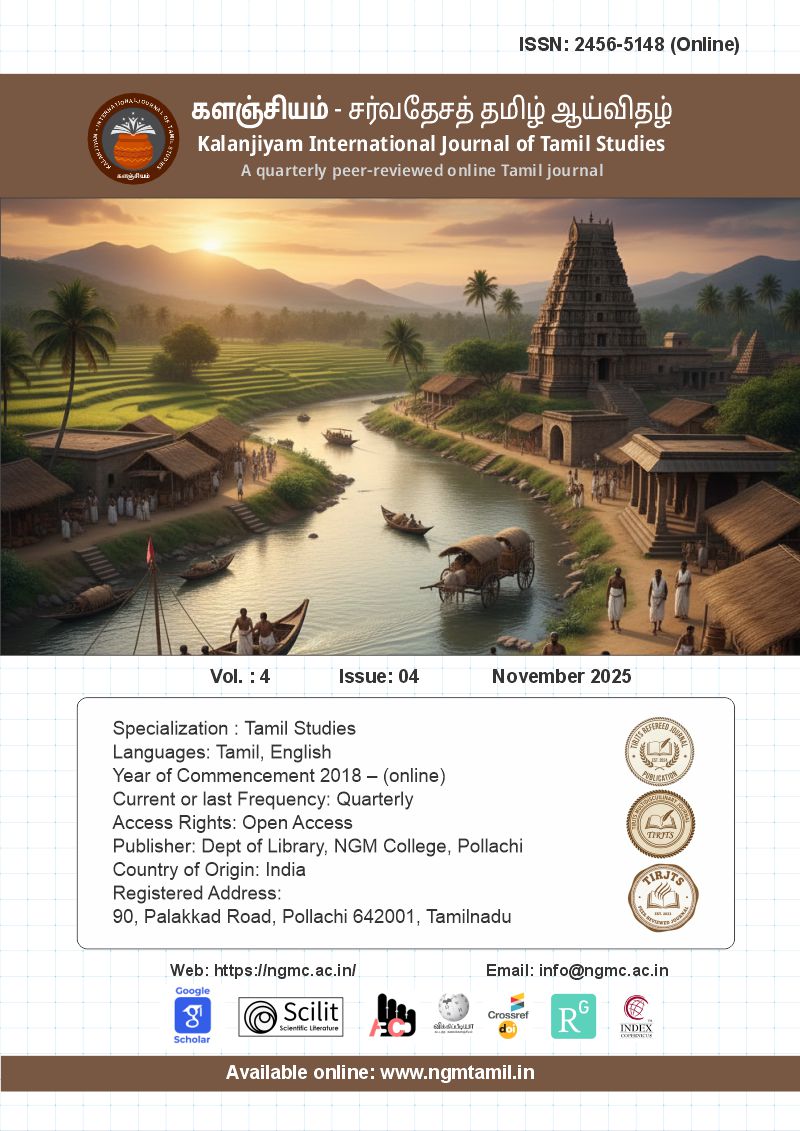
Vol. 4 No. 04 (2025): Kalanjiyam November 2025
Articles
-
குறிஞ்சி நில மக்களின் உணவுப் பண்பாடு The Food Culture of the Kurinji People
S.Anandha Shainy PhD Research Scholar, Department of Tamil, Government Women's Arts and Science College, Affiliated by Periyar University, Karimangalam, Dharmapuri India , முனைவர் சௌ. கீதா Research Guide, Principal, Government Women's Arts College, Affiliated by Periyar University, Krishnagiri IndiaHuman societies structure their way of life according to the specific ecological environment they inhabit. This adaptation process has been a continuous phenomenon spanning from ancient times to the present day. Sangam literature meticulously documents the life and culture of the Tamil people by classifying their habitat into five distinct geographical regions (Thinai), detailing the corresponding lifestyles and dietary practices. These regions are defined as: Kurinji (குறிஞ்சி): The mountainous region, Mullai (முல்லை): The forested region, Marutham (மருதம்): Fertile plains and agricultural fields, Neithal (நெய்தல்): The coastal/maritime region, Pālai (பாலை): The dry/arid region (desert-like). An analysis of these five geographical lifestyles clearly reveals that the foodways of the inhabitants possessed unique characteristics specific to their respective thinai. Specifically, this article undertakes a detailed study of the food culture of the Kurinji people—who inhabited the mountainous region and are central to the classification system known as the five Tinais of love (Anbin Ainthinai). Their culinary traditions were deeply intertwined with their natural surroundings and overall way of life, as revealed through the verses of Sangam literature.
This paper explores multiple dimensions of Kurinji food culture, including their daily sustenance, the varieties of grains, tubers, and fruits they consumed, the methods used to prepare animal meat, the specific foods eaten during rituals and festivals, and the broader socio-economic implications of these distinct dietary practices.
மக்கள் தாங்கள் வாழ்கின்ற நில சூழலுக்கு ஏற்றவாறு தம் வாழ்வியலை அமைத்துக் கொள்கின்றனர். இது பண்டைய காலம் தொட்டு இன்றுவரை நடைபெற்றுக் கொண்டிருக்கின்ற ஒரு தொடர்ச்சியான நிகழ்வாகும். சங்க இலக்கியங்கள், தமிழர்களின் வாழ்வியலை ஐந்து வகை நிலங்களாகப் பிரித்து, அதற்கேற்ற வாழ்வியல் முறைகளையும், உணவுப் பழக்கவழக்கங்களையும் விரிவாகப் படம் பிடித்துக் காட்டுகின்றன. இவை குறிஞ்சி (மலை சார்ந்த பகுதி), முல்லை (காடு சார்ந்த பகுதி), மருதம் (வளம் மிகுந்த வயல்வெளிப் பகுதி), நெய்தல் (கடல் சார்ந்த பகுதி), மற்றும் பாலை (பாலைவனம் போன்ற வறண்ட பகுதி) என வரையறுக்கப்பட்டுள்ளன. இந்த ஐவகை நில வாழ்வியலையும் ஆராயும்போது, மக்களின் உணவு முறைகள் அந்தந்தத் திணைக்கே உரிய சிறப்புத்தன்மைகளுடன் இருந்ததை தெளிவாக அறிய முடிகிறது. குறிப்பாக, அன்பின் ஐந்திணைகளில் ஒன்றாகக் கருதப்படும் குறிஞ்சி நில மக்களின் உணவுப் பண்பாடு, அவர்களின் வாழ்க்கை முறையோடும், இயற்கையோடும் பின்னிப் பிணைந்திருந்தது. சங்க இலக்கியப் பாடல்களின் வழி அறியப்பெறும் இந்த தனித்துவமான உணவுப் பண்பாடு குறித்த விரிவான ஆய்வை இக்கட்டுரை மேற்கொள்கிறது. குறிஞ்சி நில மக்களின் அன்றாட உணவுகள், அவர்கள் பயன்படுத்திய தானிய வகைகள், கிழங்குகள், கனிகள், விலங்குகளின் இறைச்சி, அவற்றைத் தயாரிக்கும் முறைகள், சடங்குகளிலும் விழாக்களிலும் அவர்கள் உண்ட உணவுகள், அவற்றின் சமூகப் பொருளாதாரத் தாக்கங்கள் எனப் பல பரிமாணங்களை இக்கட்டுரை அலசுகிறது.
Pages: 318-323Views: 0 Downloads: 0பொம்மை மனிதர்கள் சிறுகதை தொகுப்பில் வாழ்வியல் Lifestyle in the Pommai Manithargal Short Story Collection
Dr. B. Periyaswamy Assistant Professor, Department of Tamil, Dr. MGR Chockalingam Arts College, Arni, Thiruvannmalai – 632317, Tamil Nadu, India IndiaIn his collection of short stories titled Mukhilai Rajapandian's Bommai Manithargal, it was found that education is the basis of one's development, it develops virtues and gives a higher quality of giving up. Also, the dowry given at the time of marriage will lead to poverty in the girl's house, so there should be no dowry. The article has revealed that alcohol and smoke destroy the family, husband and wife affection in the family relationship, and that third party interference can lead to suspicion in the family and hence there should be no third-party interference.
முகிலை இராசபாண்டியன் பொம்மை மனிதர்கள் எனும் சிறுகதை தொகுப்பில் வழி வாழ்வியல் செய்திகளை கல்வி என்பது ஒருவரின் வளர்ச்சி அடிப்படை, அது நற்பண்புகளை வளர்க்கும், விட்டுக்கொடுக்கும் உயர்ந்த பண்பை கொடுக்கும் என்பது அறியப்பட்டது. மேலும், திருமணத்தின் போது கொடுக்கப்படும் வரதட்சணை அந்த பெண் வீட்டை வறுமைக்குள் கொண்டு செல்லும் எனவே வரதட்சனை கூடாது.குடும்ப வறுமையில் மனைவி தோளோடு தோள் நிற்கிறாள். மதுவும் புகையும் குடும்பத்தை அழிக்கும், குடும்ப உறவில் கணவன் மனைவி பாசம் குடும்ப பிணைப்பை ஏற்படுத்துகின்றது, மூன்றாம் நபர் தலையீட்டால் குடும்பத்தில் சந்தேகம் ஏற்படும் சிக்கல் விளையும் எனவே மூன்றாம் நபர் தலையீடு கூடாது ஆகியவற்றை இக்கட்டுரை வெளிப்படுத்தியுள்ளது.
Pages: 324-334Views: 0 Downloads: 0பாரதியின் வாழ்க்கைக் கண்ணோட்டம்: தத்துவ தரிசனமும் காலமாற்றக் கனவும் Bharathi's Worldview: A Philosophical Vision and the Dream of Epochal Transformation
Dr. Maheswari IndiaThis paper examines Subramania Bharathi's unique philosophical outlook and worldview. While a staunch believer in God, Bharathi deliberately refrained from defining divinity or establishing a singular theological doctrine. A comprehensive study of his diverse literary works, encompassing nationalist anthems, Vedantic poems, and other writings, reveals a profound overarching vision: one dedicated to the holistic elevation of humanity and life itself to a superior state, alongside advocating for the societal transformations necessary to achieve this. His philosophical framework is further elucidated through his distinctive usage of three pivotal terms: 'ingu' (here/in this life), 'amaranilai' (immortality/higher state), and 'kruthayugam' (a golden age). Notably, 'ingu' underscores his emphasis on achieving spiritual and humanistic progress not in an afterlife, but concretely 'in this present existence' and 'in this world'.
இந்த ஆய்வுக்கட்டுரை மகாகவி சுப்பிரமணிய பாரதியாரின் விரிந்த மற்றும் முற்போக்கான வாழ்க்கைக் கண்ணோட்டத்தை ஆய்வு செய்கிறது. பாரதி தீவிரமான கடவுள் நம்பிக்கையுடையவராயினும், கடவுளின் வடிவத்தை வரையறுக்கவோ, ஒரு குறிப்பிட்ட மதக் கோட்பாடுகளை நிலைநாட்டவோ அவர் எவ்வித முயற்சியும் மேற்கொள்ளவில்லை என்பதை மூல இலக்கியச் சான்றுகளின் மூலம் இக்கட்டுரை நிறுவுகிறது. அவரது தேசிய, வேதாந்த, மற்றும் இதரப் பாடல்களின் அடிப்படை நோக்கம், ஒட்டுமொத்த மனிதகுலமும் உயர்நிலையெய்தி ஆனந்தமாக வாழ்வதையும், அதற்குத் தேவையான சமூக மற்றும் கால மாற்றங்களையும் பற்றிய பெருங்கனவாகவே இருந்தது.
பாரதியின் தத்துவ தரிசனம் 'இங்கு' (இம்மையில்), 'அமரநிலை', மற்றும் 'கிருதயுகம்' ஆகிய மூன்று மையக் கருத்தாக்கங்களின் ஊடாக அறியப்படுகிறது. இங்கு என்ற சொல்லாடல், இந்தப் பிறவியிலேயே, இந்த உலகிலேயே நிரந்தர மகிழ்ச்சியையும் உயர்வான வாழ்வையும் அடைவதன் அவசியத்தை வலியுறுத்துகிறது. பாரதி அமரநிலை, கிருதயுகம் போன்ற உயர் சிந்தனைகளை முன்வைத்த போதிலும், அவர் இவ்வுலக வாழ்வின் மேன்மைக்கே முதன்மை அளித்தார் என்பதையும், அவரது இலட்சியம் மண்ணில் நல்ல வண்ணம் வாழ வழிசெய்வதே என்பதையும் இந்தச் சுருக்கம் சுட்டுகிறது.
Pages: 335-342Views: 0 Downloads: 0அழகின் சிரிப்பில் தழைத்தோங்கும் தமிழ் Tamil Flourishing in the Laughter of Beauty
Dr. C. Divyabharathi Assistant Professor, Department of Tamil, Sona College of Arts and Science, Salem IndiaThe epic "Azhagin Sirippu" stands as a preeminent work among the creations of the Revolutionary Poet Bharathidasan. This article delves into the multifaceted elements embedded within that epic. Grounded in the significance accorded to love and valor in literature by Tamil life values, it explains how "Azhagin Sirippu" synergistically integrates nature worship, the dignity of love, village descriptions, and the unique excellence of Tamil. In accordance with the adage, "The beauty of the inner self is reflected on the face," this work proclaims aesthetics through the smile that mirrors the happiness of the heart. Therefore, this study establishes "Azhagin Sirippu" as a work of art that simultaneously conveys the splendor of nature that man ought to admire and cherish, and the joy of the Tamil language that one should savor and experience.
புரட்சிக்கவிஞர் பாரதிதாசனின் படைப்புகளில் தலைசிறந்த ஒன்றாகத் திகழ்வது 'அழகின் சிரிப்பு' எனும் காப்பியமாகும். இக்கட்டுரை, அக்காப்பியத்தில் பொதிந்துள்ள பன்முகக் கூறுகளை ஆராய்கிறது. தமிழர்களின் வாழ்வியல் பண்புகளான காதலுக்கும் வீரத்திற்கும் இலக்கியங்கள் அளிக்கும் சிறப்பிடத்தை आधारமாகக் கொண்டு, 'அழகின் சிரிப்பு' எவ்வாறு இயற்கை வழிபாடு, காதல் மாண்பு, ஊர் வருணனை, தமிழின் தனிச்சிறப்பு ஆகியவற்றை ஒருங்கே இணைக்கிறது என்பது விளக்கப்பட்டுள்ளது. ‘அகத்தின் அழகே முகத்தில் தெரியும்’ என்ற முதுமொழிக்கேற்ப, உள்ளத்தின் மகிழ்ச்சியைப் பிரதிபலிக்கும் புன்னகையின் வழியே அழகியலை இந்நூல் பறைசாற்றுகிறது. ஆகவே, மனிதன் ரசித்துப் போற்ற வேண்டிய இயற்கையின் எழிலையும், சுவைத்து உணர வேண்டிய தமிழ்மொழியின் இன்பத்தையும் ஒருசேர உணர்த்தும் ஒரு கலைப்படைப்பாக 'அழகின் சிரிப்பு' விளங்குகிறது என்பதை இவ்வாய்வு நிறுவுகிறது.
Pages: 343-348Views: 0 Downloads: 0திருக்குறளிலும் நீதிநூல்களிலும் அறிவுடைமை பெறும் இடம் The Significance of Wisdom in Thirukkural and Ethical Texts
Dr. Sr. Gracy T Assistant Professor of Tamil (Aided), Nirmala College for Women, Coimbatore - 18. IndiaWisdom (Arivudaimai) not only stands as an individual's greatest ornament but also serves as the fundamental cause for social recognition and elevation. This study comparatively examines the prominent position accorded to the noble quality of 'Wisdom' (Arivudaimai) and its multifaceted dimensions in the Tamil ethical literatures of the Post-Sangam period, namely Thirukkural and the Pathinen Kilkanakku ethical texts. It is substantiated with evidence that wisdom is not merely informational or educational knowledge; rather, it functions as a protective fortress (Kural 421) guarding sound thought, clear action, resolute determination, and unwavering righteousness. Ethical texts establish that wisdom transcends wealth, lineage, and birth, serving as a central force determining an individual's social and inner moral elevation (Naaladiyar 248). Specifically, this study elaborates on how wisdom acts as the root of righteousness through inner moral values such as self-restraint (Nanneyri 11), dispassion/non-attachment (Thirukadugam 29), and honour/dignity (Kural 969). This research confirms that in classical Tamil literature, wisdom is considered a supreme quality that excels in three dimensions: inner morality, protection, and social elevation.
அறிவுடைமை (Wisdom) என்பது ஒரு தனிமனிதனின் மிகச்சிறந்த அணிகலனாகத் திகழ்வதுடன் 1, சமூக அங்கீகாரத்திற்கும் உயர்ச்சிக்கும் மூல காரணமாக அமைகிறது. இந்த ஆய்வு, சங்க மருவிய காலத்துத் தமிழ் அற இலக்கியங்களான திருக்குறள் மற்றும் பதினெண் கீழ்க்கணக்கு நீதிநூல்களில் 'அறிவுடைமை' என்ற உயர் பண்புக்கு வழங்கப்பட்டுள்ள முதன்மை இடத்தையும், அதன் பன்முகப் பரிமாணங்களையும் ஒப்பிட்டு ஆராய்கிறது. அறிவுடைமை என்பது வெறும் தகவல் அல்லது கல்வி அறிவு மட்டுமல்ல; அது நல்ல சிந்தனை, தெளிந்த செயல்பாடு, தீர்க்கமான உறுதிப்பாடு 1, மற்றும் நிலையான அறநெறியைக் காக்கும் ஒரு பாதுகாப்பு அரணாகவும் (குறள் 421) 1 திகழ்கிறது என்பதைச் சான்றுகளுடன் நிலைநிறுத்தப்படுகிறது. செல்வம், குலம், பிறப்பு ஆகியவற்றைக் கடந்து ஒருவரது சமூக, அக ஒழுக்க உயர்வை நிர்ணயிக்கும் மையச் சக்தியாக (நாலடியார் 248) 1 அறிவு விளங்குவதை நீதிநூல்கள் நிறுவுகின்றன. குறிப்பாக, புலன் அடக்கம் (நன்னெறி 11), விரும்பாமை (திரிகடுகம் 29), மானம் (குறள் 969) 1 போன்ற அக ஒழுக்க விழுமியங்களின் மூலமாக, அறிவுடைமை எவ்வாறு அறத்தின் வேராகச் செயல்படுகிறது என்பதை இவ்வாய்வு விரிவாக விவரிக்கிறது. இந்த ஆய்வு, தமிழ்ச் செவ்விலக்கியங்களில் அறிவுடைமை என்பது அக ஒழுக்கம், பாதுகாப்பு, சமூக உயர்வு ஆகிய மூன்று நிலைகளிலும் உச்சம் பெற்றுத் திகழும் உன்னதப் பண்பாகக் கருதப்படுவதை உறுதி செய்கிறது.
Pages: 349-361Views: 0 Downloads: 0திருக்குறளிலும் நீதிநூல்களிலும் அறிவுடைமை பெறும் இடம் The Significance of Wisdom in Thirukkural and Moral Treatises
Dr. M.A. Aleem Former Vice Principal HOD and Prof of Neurology, KAPV Government Medical College Trichy, Professor of Neurology Dhanalakshmi Srinivasan Medical College, Consultant Neurologist ABC Hospital Trichy IndiaWisdom (அறிவுடைமை) stands not only as an individual's supreme adornment but also serves as the fundamental catalyst for social recognition and advancement. This study comparatively analyzes the paramount position and multifaceted dimensions accorded to the noble virtue of 'Wisdom' (அறிவுடைமை) in post-Sangam Tamil ethical literature, particularly the Thirukkural and the Pathinen Kilkanakku moral treatises. It is substantiated with evidence that wisdom transcends mere informational or academic knowledge, manifesting as sound thought, discerning action, resolute determination, and a protective bulwark (Kural 421) safeguarding unwavering ethical principles. The moral treatises assert that wisdom functions as the pivotal force determining an individual's social and internal moral advancement, transcending distinctions of wealth, lineage, and birth (Naaladiyar 248). Specifically, this study elaborates on how wisdom serves as the very root of Dharma (righteousness) through intrinsic ethical values such as self-restraint (புலன் அடக்கம் - Nanneri 11), detachment (விரும்பாமை - Thirukadugam 29), and honor/self-respect (மானம் - Kural 969). This research affirms that in Tamil classical literature, wisdom is regarded as an exalted virtue, reaching its pinnacle across three dimensions: internal discipline, protection, and social elevation.
Pages: 362-374Views: 0 Downloads: 0புறநானூறு குறிப்பிடும் பெண்பாற் புலவர்களின் பண்புநலன்கள் CHARACTERISTICS OF FEMALE POETS MENTIONED IN THE PURANANURU
Dr.A.NASRIN Sona College of Arts and Science IndiaAncient Tamil society cultivated a profound respect for Penmai (femininity) and the foundational power of motherhood. This reverence permeated both daily life and theological practice, exemplified by the worship of the deity in diverse forms, including the feminine emanations (Thirumas and Kalaimas) and the syncretic union (Ammaiyappan). To reconstruct the lived reality of this era, the classical corpus of the Purananuru is invaluable. Specifically, the fifty-seven extant songs attributed to fifteen female poets serve as a critical mirror, reflecting the socio-cultural characteristics and emotional terrain of women in ancient Tamilakam. This review article aims to analyze and systematically explain the intricate cultural elements related to women, tracing how these foundational attributes were articulated, preserved, and given voice specifically through the compositions of female Sangam poets.
தாய்மைக்கும், அதற்கு அடிப்படையான பெண்மைக்கும் மதிப்பளித்துப் போற்றியது பண்டைய தமிழகம். தெய்வத்தைத் திருமகளாகவும், கலைமகளாகவும், அம்மையப்பனாகவும் வழிபடும் மரபுடையது. புறநானூற்றில் 15 பெண்பாற் புலவர்கள் சோந்து பாடிய 57 பாடல்களும் அக்கால பெண்களின் பண்புநலன்களை வெளிப்படுத்தும் காலக்கண்ணாடியாகத் திகழ்கின்றன. இவ்வாறு பெண்களால் இயற்றப்பட்ட பாடல்களில் உள்ள பெண்கள் சார்ந்த பண்பாட்டுக் கூறுகளை ஆராய்ந்து விளக்குவதாக இவ்வாய்வுக் கட்டுரை அமைந்துள்ளது.
Pages: 375-386Views: 0 Downloads: 0சங்க இலக்கியங்கள் வழி அறியலாகும் பண்டைய கால மக்களின் தொழில்கள் THE PROFESSIONS OF ANCIENT PEOPLE AS REVEALED THROUGH SANGAM LITERATURE
Dr.P.KARPAGARAMAN Assistant Professor, Department of Tamil, Sona College of Arts and Science, Salem – 05 IndiaThe criterion for determining the civilizational development of a country is its professional development. In this regard, the ancient Tamils were efficient in all activities, from choosing a profession to successfully taking it to a stage of development. Not only that, they were also excellent in improving their economic status through these professions. This article aims to examine and explain how ancient people organized their professions. This organization was not merely a list of jobs, but a complex, sustainable socioeconomic architecture. Their efficiency stemmed from a clear division of labor, ensuring deep specialization that fostered powerful internal trade and robust maritime links. We will delve into the rich tapestry of Sangam literature and archaeological evidence to map the intricate occupational divisions, revealing how professional roles—from farming and metallurgy to seafaring and fine arts—were not only respected but intricately woven into the very fabric of their societal hierarchy, guaranteeing both economic stability and cultural continuity for millennia.
ஒரு நாட்டின் நாகரிக வளர்ச்சியினைத் தீர்மானிக்கும் அளவுகோலாய் அமைவது அந்நாட்டின் தொழில்முறை வளர்ச்சியே ஆகும். அந்த வகையில், ஒரு தொழிலைத் தேர்ந்தெடுப்பது முதல் அதனை வளர்ச்சி நிலைக்கு வெற்றிகரமாகக் கொண்டு செல்வது வரை எல்லாச் செயல்களிலும் பழந்தமிழர்கள் திறமையுடன் செயல்பட்டனர். அதுமட்டுமின்றி, இத்தொழில்கள் மூலம் தங்களுடைய பொருளாதாரத் தரத்தை மேம்படுத்திக் கொள்வதிலும் சிறந்து விளங்கினர். பண்டைய கால மக்கள் எவ்வாறு தங்கள் தொழில்களை அமைத்துக்கொண்டனர் என்பதை ஆராயந்து விளக்குவதாக இக்கட்டுரை அமைந்துள்ளது.
Pages: 387-397Views: 0 Downloads: 0இந்தியக் கலாச்சாரம் மற்றும் பாரம்பரியம் – ஒரு கண்ணோட்டம் Indian Culture and Tradition – An Overview
Dr. Kamaraj S IndonesiaThis article aims to examine the historical perspective of India's cultural heritage. India's cultural heritage is a vast and diverse tapestry that reflects the country's history, traditions and values. It is a unique blend of different religious, linguistic and regional cultures that have evolved over thousands of years. The richness and complexity of India's cultural heritage has made it a source of inspiration for millions of Indians, and its impact can be felt in every aspect of Indian life, from art and literature to philosophy and spirituality. One of the defining features of India's cultural heritage is its diversity. The country is home to numerous ethnic groups, languages, religions, and regional cultures, each with its own unique traditions and practices. This diversity has been shaped by India's long history of migrations, invasions and assimilations.
This has resulted in a unique blend of cultures and beliefs. Another defining feature of India's cultural heritage is its spiritual and philosophical traditions. The country is home to many world religions, including Hinduism, Buddhism, Islam, Christianity and Sikhism, which have influenced its culture and society in profound ways. The teachings of Indian sages such as Buddha, Mahavira and Guru Nanak have had a lasting impact on human thought and spirituality, inspiring seekers of truth and knowledge around the world. India's cultural heritage is characterized by its artistic traditions, which have always played an important role in Indian life. From intimate sculptures in ancient temples to the vibrant colours of Rajasthani paintings, from the frenzied melodies of classical music to the lively rhythms of Bollywood songs, India's artistic traditions are a celebration of life, beauty and creativity. The country's performing arts, including dance, theatre and cinema, are renowned for their innovation, vibrancy and diversity. India's cultural heritage is not only a matter of pride and inspiration, but also provides challenges and opportunities to the country. Its diversity can sometimes lead to tensions and conflicts between different groups, while the rapid pace of change can sometimes threaten traditional practices and beliefs. However, if managed wisely, India's cultural heritage can be a powerful force for social cohesion, economic growth and sustainable development.
Pages: 398-404Views: 0 Downloads: 0செவிலித்தாயின் மெய்ப்பாட்டுணர்வுகள் The Emotional Resonance of the Foster Mother (Sevili) in Classical Tamil Literature
Dr. R. Jagan Assistant Professor Department of Languages – Tamil Division, Karpagam Academy of Higher Education, Coimbatore - 641021 IndiaThe foster mother (Ceviliththai) occupies a unique and significant position within classical Tamil Sangam Akam literature. Transcending the status of a mere servant, she is depicted as an integrated and essential member of the family, responsible for nurturing the heroine (Thalaivi) from birth with profound love and unwavering duty. As established by Tolkappiyam, her role is often doubly significant as the mother of the heroine’s companion (Thozhi), thereby establishing deep, interconnected kinship bonds between the Thalaivi, the Thozhi, and the biological mother (Nattray). This article centers on the emotional landscape of the Ceviliththai during a moment of profound crisis: her discovery of the heroine’s elopement (Udanpokku). Drawing extensively upon rules outlined in Tolkappiyam and poetic evidence from various Sangam anthologies, this study investigates the intense psychological distress and emotional turbulence experienced by the Ceviliththai. The primary objective is to meticulously examine the specific contexts and diverse forms—be they expressions of grief, deep maternal devotion, or profound anxiety over the heroine's future—in which she articulates her inner turmoil. The analysis illuminates the psychological dimensions, the particular settings that prompt her utterances (Ceviliththai Kuttu), and the crucial social reflections inherent in the Ceviliththai’s duty-bound and emotionally powerful voice, firmly establishing her role as the emotional and moral compass of the domestic space in Akam poetry.
சங்க அக இலக்கியங்களில் தலைவியின் வளர்ப்புத் தாயாக, பிறப்பு முதல் அன்புடன் போற்றி வளர்ப்பவளாக, குடும்பத்தின் மேலான நிலையிலிருந்து கடமையுணர்வோடும், பாசத்தோடும் செயல்படும் செவிலித்தாயின் பாத்திரம் தனிச்சிறப்பு வாய்ந்தது. பொருளிற்காகப் பணி செய்யும் பணிப் பெண் என்பதைத் தாண்டி, குடும்பத்தின் ஓர் அங்கமாகவே அவர் போற்றப்படுகிறார். தொல்காப்பியம் குறிப்பிடுவதுபோல், தலைவியின் தோழியின் தாயாகவும் செவிலி இருப்பதால், தலைவி-தோழி, நற்றாய்-செவிலி ஆகியோரிடையே ஆழமான, பிணைப்புடைய உறவு வெளிப்படுகிறது. இத்தகைய நெருக்கமான சமூகப் பின்னணியில், தலைவியின் மீது செவிலித்தாய் கொண்டிருக்கும் அன்பு, கடமை உணர்வு, மற்றும் உறவின் முக்கியத்துவம் மையப்படுத்தப்படுகிறது. இக்கட்டுரை, தலைவியின் உடன்போக்கினை அறிந்த செவிலித்தாயின் மன உளைச்சலையும், உணர்ச்சிப் பெருக்கையும் ஆராய்கிறது. தலைவியின் பிரிவினால் துயருறும் செவிலித்தாய், தன் வருத்தத்தையும், தலைவியின் மீதான பாசத்தையும், எதிர்காலம் குறித்த கவலைகளையும் எந்தெந்தச் சூழல்களில், எவ்வாறெல்லாம் வெளிப்படுத்துகிறாள் என்பதைத் தொல்காப்பியம் மற்றும் சங்க இலக்கியங்களின் துணையுடன் விரிவாக ஆய்வதே இக்கட்டுரையின் நோக்கம். செவிலியின் கூற்று நிகழும் இடங்கள், அதன் உளவியல் பரிமாணங்கள், மற்றும் சமூகப் பிரதிபலிப்புகள் ஆகியவை இக்கட்டுரையில் விளக்கப்படும்.
Pages: 405-411Views: 0 Downloads: 0சங்கப் பெண்புலவர்கள் பாடல்களில் ஏகாரத் தொடர் Ekara phrases of Sangam women poets
Dr. R. Hemalatha Assistant Professor, Department of Tamil, B. S. Abdur Rahman Crescent Institute of Science and Technology, Vandalur, Chennai – 600 048 IndiaThe subject and predicate form the basic parts of a sentence, serving as the foundation for various sentence types. Syntax, as Pa. Veerappan notes in Sanga Ilakkiya Nadai, studies the arrangement of language elements and their interrelations.
Syntax can be analyzed in two ways: by the length of sequences (thodar) and by their structure. Poets use short or long sequences, sound patterns, and word choices to shape their style, making alliterative, assonantal, or contrasting sequences, as well as noun, verb, finite, or participial phrases. Sometimes grammar is stretched for poetic effect, and repetition of sequences may occur.
In Sangam poetry, sequences involving subject, predicate, participles, and other syntactic elements bend and adapt to create unique expression. This paper examines such syntactic patterns in the works of Sangam women poets.
In sentence construction, noun phrases and verb phrases occupy a fundamental and essential place. Noun phrases include adjective, appositional, exclamatory, and substitute forms, while verb phrases include adverbial, participial, finite, and case-marked forms. Among these, the ēkāra phrases found in the poems of Sangam women poets are the focus of this study.
Pages: 412-417Views: 0 Downloads: 0தமிழ் மரபில் ஆற்றுப்படை இலக்கியங்களின் தோற்றுவாய் The Genesis of Āṟṟuppaṭai Literature in the Tamil Tradition
Dr. N. Aravindhakumar Assistant Professor, Department of Tamil, KPR College of Arts, Science and Research, Arasur, Coimbatore. IndiaTamil literature stands as a monumental testament to linguistic richness, consistently generating diverse literary genres that reflect evolving societal contexts. Poets (pulavars) capture lived experiences, infuse them with imagination, and align them with the emotional currents of their time, thereby creating novel literary forms. This generative process is evident from the earliest Sangam texts, which sought to represent the entirety of human existence. Tamil literary tradition fundamentally established the hierarchy of life’s cardinal virtues—Aram (virtue), Porul (wealth), Inbam (pleasure), and Veedupetu (liberation)—as the central pillars of human endeavor. However, as philosophical emphasis shifted or as poets sought brevity and immediate impact, minor literary forms (Ciṟṟilakkiyaṅkaḷ) began to emerge. These shorter works facilitated the graceful exchange of meaning without diluting the literary essence, often drawing structural and thematic cues from earlier, monumental literary prototypes. The creative writer, while addressing contemporary socio-cultural dynamics, meticulously preserves the integrity of ancestral tradition (marabu) by foregrounding specific components of older literature to forge new classifications. The Āṟṟuppaṭai (Guidance/Directive literature)—an ancient and enduring genre—exemplifies this continuous synthesis. It is a form that accommodates temporal shifts and social progress, continuously modernizing its scope while retaining its core function. This article investigates the foundational origins (thōṟṟuvāy) of Āṟṟuppaṭai literature as situated within the broader context of Tamil literary evolution.
தமிழ்மொழியின் செழுமைக்குக் காரணமாகப் பல இலக்கிய வகைகள் காலத்திற்குக் காலம் தோன்றி வருகின்றன. புலவர்கள் தாம் கண்டுணர்ந்த அனுபவக் காட்சிகளின் மீது கற்பனையைப் புகுத்தி, சூழலுக்கேற்ற உணர்வோடு புதுமையான இலக்கிய வகைகளை உருவாக்குகின்றனர். மக்களின் வாழ்வியல் உணர்வைப் பிரதிபலிக்கும் சங்கப்பனுவல் தொடங்கி, பிற்கால மரபில் உதித்த பல இலக்கியங்களிலும் இப்போக்கு அமைந்திருப்பதைக் காணலாம். வாழ்வியலில் அறத்தை முதன்மைப்படுத்தி, அறத்தின் வழி பொருளீட்டி, இன்பத்தில் திளைத்து, வீடுபேறு அடையும் நிலையை உறுதிப்பொருளாகத் தமிழிலக்கியங்கள் வகுத்துக் காட்டியுள்ளன.
உறுதிப்பொருள்கள் நான்கினுள் ஒன்றோ பலவோ குறைந்து வரவும், புலவர் தாம் கருதியதை எளிதில் பொருட்சுவை மாறாது வழங்கவும் துணைநின்றவை சிறிய அளவில் படைக்கப்பட்டு நுகரப்படும் சிற்றிலக்கியங்கள் ஆகும். அச்சிற்றிலக்கிய வகையினுள் பல இலக்கிய வடிவங்கள் பிற்காலத்தில் தோன்றியுள்ளன. அவை முன்னைய இலக்கிய வடிவங்களின் சில முதன்மைக்கூறினை அடிப்படையாகக் கொண்டு புலவர்களால் படைக்கப்பட்டுள்ளன.
சமூக மாற்றத்திற்கும் தற்கால வாழ்க்கைச்சூழலுக்கும் ஏற்றவகையில் இலக்கியம் படைக்கும் படைப்பாளன் முன்னோர் மரபினைப் பேணி, அவ்விலக்கியத்தின் சில கூறுகளை முதன்மைப்படுத்திப் புதுமையான இலக்கிய வகையாக உருவாக்குகின்றான். பழந்தமிழ் இலக்கியத்தில் அமைந்த ஆற்றுப்படை இலக்கியம் மரபுவழி வந்த இலக்கிய வகையாக இன்றளவும் திகழ்ந்து வருகிறது. ஆற்றுப்படை காலமாறுதல்களைத் தன்னுள் புகுத்தி சமூக வளர்ச்சிக்குரிய நிலையில் புதுமைக்கும் இடமளித்து வருகிறது. அத்தகைய, ஆற்றுப்படை இலக்கியத்தின் தோற்றுவாய் தமிழ் இலக்கியங்களில் அமைந்துள்ள பாங்கினை ஆராய்வதாக இக்கட்டுரை அமைகிறது.
Pages: 418-424Views: 0 Downloads: 0சங்ககால கலைஞர்களின் பொருளாதாரப் பின்னணியும் சமூகமதிப்பும் The Economic Background and Social Status of Sangam Period Artists
Dr.G.Mahalakshmi Assistant Professor, Department of Tamil, Dr. SNS Rajalakshmi College of Arts and Science (Autonomous) Coimbatore – 49 IndiaThe fundamental link between humanity and the arts is explored, positing that artistic expression is a primal, innate desire for communicating inner thought. As human societies developed, giving rise to distinct social divisions and structured communal life, the arts evolved synergistically with these internal social environments. This evolution transformed art from mere personal expression into a powerful societal mirror and medium.
This paper investigates the role of arts, particularly in the Sangam period of ancient Tamilakam, as a crucial source for understanding the culture, political dynamics, economic structures, and daily life of the society. The study specifically focuses on the biographies and social roles of Sangam-era artists, such as the Panan (male minstrel) and the Virali (female minstrel/performer). Figures like the Mannan (King) and concepts such as Naalmahikhirukkai (perhaps referring to a place of royal entertainment or assembly) are examined to establish the artists' relationship with power structures and their function as the period's primary media and chroniclers. By analyzing their lives as depicted in classical texts, the paper seeks to demonstrate how the arts served as an essential, dynamic document of Sangam socio-political life.
மனிதன் தோன்றிய நாள் முதலே கலைகளும் அவனுள் பிறப்பெடுத்தன. இயற்கையாகவே, மனிதன் தன் உள்ளத்தில் தோன்றும் எண்ணங்களை வெளிப்படுத்த வேண்டுமென்ற விருப்பம் மிகுந்தவனாகவே காணப்பட்டான். அவ்வெண்ணங்களின் வெளிப்பாடே கலைகளாகவும் உருவெடுத்தன. சமூக வாழ்வியலின் அடிப்படையில் சமூகப் பிரிவுகள் தோன்றின. அச்சமூகத்தில் அகப்புற சூழலுக்கு ஏற்றவாறு கலைகளும் பரிணமித்தன. அவ்வாறு உருவான கலைகள் சமூகத்தின் பண்பாட்டினையும், அரசியலையும், பொருளாதாரத்தையும் பிற்செயற்பாடுகளையும் விளக்குவதாக அமைந்துள்ளன. இதனை சங்ககால கலைஞர்களின் வாழ்வியலோடு ஆராய முற்படுகிறது.
Pages: 425-433Views: 0 Downloads: 0கீரனூர் ஜாகிர்ராஜாவின் நாவல்களில் விளிம்புநிலை முஸ்லிம்களின் உழைப்பும் வாழ்க்கையும்: சமூக ஒடுக்குமுறை, சாதியமயமாதல் மற்றும் பொருளாதாரப் புறக்கணிப்பு குறித்த ஓர் ஆய்வு The Labor and Life of Marginalized Muslims in the Novels of Keeranur Jagirraja: A Study on Social Oppression, Casteization, and Economic Exclusion
Dr. J. Krishna Kumari IndiaThis research paper analyzes the profession, trade, and livelihood challenges faced by people living in the margins of the Islamic community, using Keeranur Jagirraja’s novels, Meenkukai Vaasigal (The Cave Dwellers) and Meenkara Theru (The Fishmonger Street), as its foundation. The study establishes that while fundamental Islamic principles emphasize equality, a form of caste-like structure has emerged in practice within the social organization, primarily through the hereditary nature of occupations. Through narrative evidence, the paper analyzes how specific groups—such as religious institution workers (Mothinars/Muezzins), barbers (Osas), and day laborers—are oppressed both economically and socially by the elite segments of the Muslim community.
Furthermore, the paper illuminates a key practical contradiction: Zakat, the foundational economic duty in Islam, has deviated from its primary goal of protecting the vulnerable and has been reduced to a mere ritual that primarily serves to protect the wealth of the affluent. The ultimate objective of this study is to analyze, using compelling literary evidence, how the exploitation of the labor of marginalized people, the restriction of access to public education, and the denial of social recognition persist as deep structural issues. By doing so, the paper affirms the crucial contribution of the author in raising profound moral questions concerning social justice within the community.
இந்த ஆய்வுக் கட்டுரை, கீரனூர் ஜாகிர்ராஜாவின் மீன்குகைவாசிகள் மற்றும் மீன்காரத்தெரு ஆகிய நாவல்களை அடிப்படையாகக் கொண்டு, இஸ்லாமியச் சமூகத்தின் விளிம்புநிலையில் வாழும் மக்களின் தொழில், வணிகம், மற்றும் வாழ்வியல் சவால்களை ஆராய்கிறது. இஸ்லாமியக் கோட்பாடுகள் சமத்துவத்தை வலியுறுத்தினாலும், நடைமுறைச் சமூக அமைப்பில் தொழில்கள் பரம்பரைமயமாக்கப்படுவதன் மூலம் ஒருவிதமான சாதியத் தன்மை உருவாகி இருப்பதை ஆய்வு நிறுவுகிறது. சமய நிறுவனப் பணியாளர்களான மோதினார்கள், சவரத் தொழிலாளர்களான ஒசாக்கள், மற்றும் கூலித் தொழிலாளர்கள் ஆகியோர் மேட்டிமை முஸ்லிம்களால் பொருளாதார ரீதியாகவும், சமூக ரீதியாகவும் எவ்வாறு ஒடுக்கப்படுகின்றனர் என்பதை நாவல் பதிவுகளின் மூலம் பகுப்பாய்வு செய்கிறது. மேலும், இஸ்லாமியப் பொருளியலின் அடிப்படைக் கடமையான ஜகாத், விளிம்புநிலை மக்களைப் பாதுகாக்கும் தனது முதன்மை இலக்கிலிருந்து விலகி, வசதிபடைத்தோரின் செல்வத்தைப் பாதுகாக்கும் சடங்காகச் சுருங்கியுள்ள நடைமுறை முரண்களை இக்கட்டுரை விளக்குகிறது. விளிம்புநிலை மக்களின் உழைப்புச் சுரண்டல், பொதுக் கல்விக்கான தடை, மற்றும் சமூக அங்கீகார மறுப்பு ஆகியவை ஆழமான கட்டமைப்புச் சிக்கலாக நிலைத்திருப்பதை இலக்கியச் சான்றுகளுடன் ஆய்வு செய்து, சமூக நீதிக்கான தார்மீகக் கேள்விகளை எழுப்பும் படைப்பாளியின் பங்களிப்பை உறுதிப்படுத்துவதே இதன் இலக்காகும்.
Pages: 446-455Views: 0 Downloads: 0தமிழகச் சிந்தனை மரபில் சித்தர் நெறி பெறும் இடம் The Place of Siddha’s Tradition in Intellectual Tradition Of Tamil Nadu
J.Sekkizhar Ph.D Scholar, Department of Tamil, Central Univarsity of Tamil Nadu, Thiruvarur. India , Prof. Dr. S. Ravi Research Guide, Department of Tamil, Central University of Tamil Nadu, Thiruvarur. IndiaSiddhhas are those who operated on a very essential intellectual platform in our Tamil society. They were people who worked in the intellectual domain from a very ancient period and contributed to society. Their philosophy begins right from the most ancient materialistic thought.This thought grew as the tantric philosophy of the feminine principle(Penmai Kotpaadu) when early humans began to practice agriculture, and was later greatly emphasized by a group of people who are referred to in Sanskrit as the Siddhas.Although the doctrine they proclaimed was destabilized by the attacks of the Vedic Religion, the Siddha medicine – a result of their principle – and their socio – equalitarian thoughts remain essential to society even today.This article explains the definition,origin,principles,the scientific research methodologies of the Siddhas and their social contributions regarding this Siddha tradition.
சித்தர்கள் நம் தமிழ்ச்சமூகத்தின் மிக இன்றியமையாத அறிவுசார் தளத்தில் செயல்பட்டவர்கள் ஆவார்கள். அவர்கள் மிகப்பழங்காலத்திலேயே அறிவுசார் தளத்தில் செயல்பட்டுச் சமூகத்திற்கு ஆக்கப்பூர்வமாகப் பங்காற்றியவர்கள்.அவர்களுடைய நெறியானது மிகப்பண்டைய பொருள்முதல் வாதச் சிந்தனையிலிருந்தே தொடங்குகிறது.அது ஆதி மனிதன் வேளாண்மை செய்யத் தொடங்கியபோது பெண்மையக் கோட்பாட்டின் தாந்திரீகத் தத்துவமாக வளர்ந்து பின்பு ‘சித்தர்’ என்று வடமொழியில் அழைக்கப்படும் ஒரு குழுவினரால் பெரிய அளவில் வலியுறுத்தப்பெற்றது.இவர்கள் மொழிந்த கோட்பாடானது வைதீக சமயத்தின் தாக்குதலால் நிலைகுலைந்த போதிலும், அக்கோட்பாட்டின் விளைவாகிய சித்த மருத்துவமும், சமூகவியல் சமத்துவச் சிந்தனைகளும் இன்றுவரை சமூகத்திற்கு இன்றியமையாதவையாகின்றன.இத்தகைய சித்தர் நெறியின் வரையறை, தோற்றம், கொள்கை, சித்தர்களின் விஞ்ஞான ஆய்வு முறைகள்,அவர்களின் சமூகப் பங்களிப்பு முதலியவற்றை இக்கட்டுரை விளக்கியுள்ளது.
Pages: 456-465Views: 0 Downloads: 0கலைஞரின் கடிதங்களில் கவிதைநடை: திராவிட இயக்கத்தின் கருத்தியல், அரசியல் மற்றும் அறநெறி வழிகாட்டலின் ஆய்வு Poetic Prose in Kalaignar's Letters: An Analysis of the Dravidian Movement's Ideological, Political, and Ethical Guidance
D. Jebastin Ph.D. Research Scholar. Department of Rare Paper Manuscripts, Tamil University, Thanjavur - 613 010 IndiaFor over fifty years, Kalaignar M. Karunanidhi's letters to his 'udanpirappugal' (party cadres/brethren) transcended mere political communication. They served as a repository of the Dravida Munnetra Kazhagam's (DMK) policies and a psychological driving force for grassroots workers. This epistolary literature established a unique style in Tamil political discourse. This paper focuses on the use of poetic prose elements in Kalaignar's letters. It explores how poetic lines served as a powerful medium to deeply ingrained complex ideological concepts such as rationalism, social justice, integrity, and state autonomy in the minds of readers. Specifically, the study examines the impact of poetic prose in fostering resilience to electoral defeat, tactics for exposing the hypocrisy of political opponents, and the strategy of positioning welfare schemes on two levels: 'history and achievement'. The primary academic objective of this research is to elevate ordinary political activity to the sacredness of sacrifice through emotional language.
கலைஞர் மு. கருணாநிதி அவர்கள், சுமார் ஐம்பது ஆண்டுகளுக்கும் மேலாக தமது 'உடன்பிறப்புகளுக்கு' எழுதிய கடிதங்கள், வெறும் அரசியல் தகவல் பரிமாற்றங்கள் என்ற நிலையைத் தாண்டி, திராவிட முன்னேற்றக் கழகத்தின் (தி.மு.க.) கொள்கைக் களஞ்சியமாகவும், களத் தொண்டர்களுக்கான உளவியல் உந்துசக்தியாகவும் செயல்பட்டன. இக்கடித இலக்கியம் தமிழ் அரசியல் உரையாடலில் தனித்துவமான ஒரு பாணியை நிறுவியுள்ளது. இக்கட்டுரை, கலைஞரின் கடிதங்களில் காணப்படும் கவிதைநடைக் கூறுகளின் (Poetic Prose) பயன்பாட்டை மையமாகக் கொள்கிறது.1 பகுத்தறிவு, சமூக நீதி, நேர்மை, மாநில சுயாட்சி போன்ற சிக்கலான கருத்தியல் கோட்பாடுகளை வாசகர் உள்ளத்தில் ஆழமாகப் பதிய வைக்க, கவிதை வரிகள் எவ்வாறு சக்திவாய்ந்த ஊடகமாகப் பயன்பட்டன என்பது ஆராயப்படுகிறது. குறிப்பாக, தேர்தலில் தோல்வியைத் தாங்கும் மன உறுதி, அரசியல் எதிர்ப்பாளர்களின் போலித்தனத்தை அம்பலப்படுத்தும் யுக்தி, மற்றும் நலத்திட்டங்களை 'சரித்திரம் மற்றும் சாதனை' என்ற இரு தளங்களில் நிலைநிறுத்தும் உத்தி ஆகியவற்றில் கவிதைநடை செலுத்திய தாக்கம் ஆராயப்படுகிறது. உணர்வுபூர்வமான மொழியின் மூலம், சாதாரண அரசியல் செயல்பாட்டைத் தியாகத்தின் புனிதமாக உயர்த்துவதே இவ்வாய்வின் பிரதான கல்விசார் நோக்கம் ஆகும்.
Pages: 466-476Views: 0 Downloads: 0அண்டனூர் சுராவின் சிறுகதைகளில் பெண்களின் வாழ்வியல் போராட்டங்கள்: சமூக ஆவணப்படுத்தலும் விமர்சனப் பெண்ணியப் பார்வையும் The Lived Struggles of Women in Antanoor Sura's Short Stories: Social Documentation and a Critical Feminist Perspective
K. Sengodi Full-time PhD Scholar, Department of Tamil, Government Arts College (Autonomous), Kumbakonam – 612 002 Tamil Nadu India , Dr. N. Krishnaveni Research Guide, Associate Professor, Department of Tamil, Government Arts College (Autonomous), (Affiliated with Bharathidasan University), Kumbakonam – 612 002 Tamil Nadu, India IndiaThis article primarily investigates the multifaceted lived struggles faced by women within patriarchal social structures, as depicted in seven selected short stories by the 20th-century modern Tamil short story writer, Antanoor Sura. These stories include 'Aval Oru Pinju', 'Viratti', 'Oozhiyam', 'Kurali', 'Uththama Seelar', 'Paruvaththunikkai', and 'Theeyadi Aravam'. The article approaches these literary reflections from a critical feminist perspective, contextualizing them within sociological data. Specifically, it deeply analyzes central issues such as facing sexual harassment in widowhood ('Viratti'), young marriage and loss of educational rights due to poverty and social pressures ('Paruvaththunikkai'), the compulsion to resort to social media struggles despite the existence of workplace sexual harassment laws ('Uththama Seelar'), and the ultimate tragedy of refugee life ('Midhatru Thagam'). Recent social statistics, such as a 55.6% increase in child marriages in Tamil Nadu¹, the absence of Internal Complaints Committees (ICC) in 59% of organizations under the Prevention of Sexual Harassment (POSH) Act², and the significant social impact faced by widows³, confirm that Sura's short stories serve as social documents of their time. This study establishes that women's struggles are not merely personal tragedies but are, rather, the consequence of legal failures, social contradictions, and the continuation of traditional constraints.
இருபதாம் நூற்றாண்டின் நவீனத் தமிழ்ச் சிறுகதைப் படைப்பாளரான அண்டனூர் சுராவின் தேர்ந்தெடுக்கப்பட்ட ஏழு சிறுகதைகளான, 'அவளொரு பிஞ்சு', 'விராட்டி', 'ஊழியம்', 'குரலி', 'உத்தம சீலர்', 'பருவத்துணிக்கை', மற்றும் 'தீயடி அரவம்' ஆகிய படைப்புகளில் ஆணாதிக்கச் சமூகக் கட்டமைப்பில் பெண்கள் சந்திக்கும் பன்முகப்பட்ட வாழ்வியல் போராட்டங்கள் இக்கட்டுரையின் முதன்மையான ஆய்வுக்குரியன. இந்தக் கட்டுரையானது, இலக்கியப் பிரதிபலிப்புகளைச் சமூகவியல் புள்ளிவிவரங்களின் பின்னணியில் வைத்து, விமர்சனப் பெண்ணியப் பார்வையில் அணுகுகிறது. குறிப்பாக, கைம்மை நிலையில் பாலியல் சீண்டல்களை எதிர்கொள்வது ('விராட்டி'), வறுமை மற்றும் சமூக அழுத்தங்களால் இளம் வயதில் திருமணம் செய்து கல்வி உரிமையை இழப்பது ('பருவத்துணிக்கை'), பணியிடப் பாலியல் தொல்லைகளுக்கு எதிராகச் சட்டம் இருந்தும் சமூக ஊடகப் போராட்டத்தை நாட வேண்டிய நிர்பந்தம் ('உத்தம சீலர்'), மற்றும் அகதி வாழ்வின் உச்சகட்ட துயரம் ('மிடற்று தாகம்') ஆகிய மையச் சிக்கல்கள் ஆழமாகப் பகுப்பாய்வு செய்யப்படுகின்றன. அண்மைய சமூகப் புள்ளிவிவரங்களின்படி, தமிழ்நாட்டில் குழந்தைத் திருமணங்களின் எண்ணிக்கை 55.6% அதிகரித்துள்ளமை 1, பணியிடப் பாலியல் தடுப்புச் சட்டத்தின் (POSH Act) கீழ் 59% நிறுவனங்களில் உள் புகார் குழுக்கள் (ICC) அமைக்கப்படாமல் உள்ளமை 2, மற்றும் கைம்பெண்கள் எதிர்கொள்ளும் அதிகப்படியான சமூகப் பாதிப்பு 3 போன்ற தரவுகள், சுராவின் சிறுகதைகள் காலத்தின் சமூக ஆவணங்களாகச் செயல்படுவதை உறுதிப்படுத்துகின்றன. இந்த ஆய்வு, பெண்களின் போராட்டங்கள் வெறும் தனிப்பட்ட துயரங்கள் அல்ல; மாறாக, சட்டத்தின் தோல்வி, சமூக முரண்கள் மற்றும் மரபுக் கட்டுப்பாடுகளின் தொடர்ச்சி ஆகியவற்றின் விளைவே என்பதை நிறுவுகிறது.
Pages: 477-490Views: 0 Downloads: 0புறநானூற்றுச் சமூகவியலும் விழுமியப் பதிவுகளும்: இனக்குழுச் சமூகம் முதல் நிலவுடைமை அமைப்பு வரையிலான பரிணாமப் பார்வை The Sociology and Value Imprints of Purananuru: An Evolutionary Perspective from Tribal Society to a Land-owning System
Mrs. M. Bhuvaneswari Research Scholar, Reg. No: 12089/Ph.D/K8/Tamil/Part-time/July 2015, Urumu Dhanalakshmi College, Kattur, Tiruchirappalli – 620019 India , Dr. E.R. Ravichandran Research Supervisor, Principal, Urumu Dhanalakshmi College, Tiruchirappalli - 620019. IndiaPurananuru, a seminal work of Sangam literature, stands as both a historical reflection of the heroic age of the Tamil people and a repository of their cultural and ethical traditions. This research paper analyzes the various stages of social evolution as recorded in the verses of Purananuru. Specifically, it examines the transformation from an egalitarian tribal society, characterized by a classless and communal way of life, into a land-owning society where property and ownership became dominant. This transition, driven by the growth of material production and commerce, is analyzed based on the sociological frameworks defined by scholars such as Kovai Gnani, Na. Vanamamalai, and Me. Thu. Rasukumar.¹
Furthermore, the paper extensively discusses the philosophical and sociological impacts of the core values that sustained the family structure amidst these societal shifts. These include domestic valour (Manaiyil Veeram) and the perception of children as wealth (Kuzhanthai Selvam). The study also explores the socially transformative power of education¹ and the profound significance of generosity (Eegai),¹ which was revered as a fundamental duty essential for livelihood. The righteous conduct of the Sangam poets, who upheld their integrity even in poverty, serves as a testament to how these ancient Sangam-era values can fulfill the needs of contemporary society.
சங்க இலக்கியத்தின் புறநானூறு, தமிழ் மக்களின் வீரநிலைக்கால வாழ்வின் வரலாற்றுப் பிரதிபலிப்பாகவும், பண்பாட்டு மரபுநெறிகளின் பெட்டகமாகவும் திகழ்கின்றது. இந்த ஆய்வறிக்கையானது, புறநானூற்றுப் பாடல்களில் பதிவாகியுள்ள சமுதாயப் பரிணாம வளர்ச்சியின் பல்வேறு கால கட்டங்களைப் பகுப்பாய்வு செய்கிறது. குறிப்பாக, இன வேறுபாடற்ற சமத்துவ வாழ்க்கை கொண்ட இனக்குழுச் சமுதாயம், பொருள் உற்பத்தி மற்றும் வணிக வளர்ச்சியின் காரணமாக, எவ்வாறு உடைமைக்கு ஆதிக்கம் ஏற்பட்ட நிலவுடைமைச் சமூகமாக உருமாறியது என்பதை சமூகவியல் அறிஞர்களின் (கோவை ஞானி, நா. வானமாமலை, மே. து. ராசுக்குமார்) வரையறைகளின் அடிப்படையில் ஆய்வு செய்கிறது.1 மேலும், சமுதாய மாற்றங்களின்போது குடும்பக் கட்டுமானத்தை நிலைநிறுத்திய விழுமியங்களான மனையில் வீரம், குழந்தைச் செல்வம் ஆகியவற்றுடன், சமூகப் புரட்சியை ஏற்படுத்திய கல்வி 1 மற்றும் வாழ்வாதாரக் கடமையாகப் போற்றப்பட்ட ஈகை 1 ஆகிய உயர் பண்புநெறிகளின் தத்துவார்த்த மற்றும் சமூகவியல் தாக்கங்கள் விரிவாக விவாதிக்கப்பட்டுள்ளன. வறுமையிலும் செம்மை காத்த புலவர்களின் அறவாழ்வு, சங்ககால விழுமியங்கள் இக்கால சமூகத்தின் தேவைகளை எவ்வாறு பூர்த்தி செய்கின்றன என்பதை உறுதிப்படுத்துகின்றது.
Pages: 491-502Views: 0 Downloads: 0தமிழ் இலக்கண நூல்களின் இலக்காக்கம் Idealization of Tamil Grammatical texts
SHANMUGAPRIYA R Research Scholar, Department of Tamil, Central University of Tamil Nadu, Thiruvarur India , Dr. P. KUMAR IndiaThis article examines how the cultural worldview of a Tamil-speaking community is embedded in its language and reflected in its grammatical traditions. Classical Tamil grammars reveal a structural orientation grounded in an implicit idealization, long before modern linguistic theories articulated such concepts. However, this idealization varies according to the social context in which grammars are produced. During the colonial period, Tamil grammars underwent a significant shift influenced by new political and social conditions. This study compares the idealization found in traditional Tamil grammars with that of colonial-era grammars, highlighting how socio-historical changes reshaped grammatical thought.
இந்தக் கட்டுரை, ஒரு தமிழ்ப் பேசும் சமூகத்தின் பண்பாட்டு உலகப்பார்வை அதன் மொழியில் எவ்வாறு பொதிந்துள்ளது என்பதையும், அதன் இலக்கண மரபுகளில் எவ்வாறு பிரதிபலிக்கிறது என்பதையும் ஆராய்கிறது. செவ்வியல் தமிழ் இலக்கணங்கள், நவீன மொழியியல் கோட்பாடுகள் அத்தகைய கருத்துக்களை வெளிப்படுத்துவதற்கு நீண்ட காலத்திற்கு முன்பே, மறைமுகமான இலட்சியமயமாக்கலில் (implicit idealization) வேரூன்றிய ஒரு கட்டமைப்புக் கண்ணோட்டத்தை (structural orientation) வெளிப்படுத்துகின்றன. இருப்பினும், இந்த இலட்சியமயமாக்கல், இலக்கணங்கள் உருவாக்கப்படும் சமூக சூழலுக்கு ஏற்ப மாறுபடுகிறது. காலனித்துவக் காலத்தில், புதிய அரசியல் மற்றும் சமூக நிலைமைகளால் உந்தப்பட்டு, தமிழ் இலக்கணங்கள் குறிப்பிடத்தக்க மாற்றத்திற்கு உள்ளாயின. இந்த ஆய்வு, பாரம்பரியத் தமிழ் இலக்கணங்களில் காணப்படும் இலட்சியமயமாக்கலையும், காலனித்துவ காலத்திய இலக்கணங்களின் இலட்சியமயமாக்கலையும் ஒப்பிடுகிறது, இதன் மூலம் சமூக-வரலாற்று மாற்றங்கள் இலக்கணச் சிந்தனையை எவ்வாறு மறுவடிவமைத்தன என்பதை எடுத்துரைக்கிறது.
Pages: 503-514Views: 0 Downloads: 0கேரளச் சமூகத்தில் மருமக்கத்தாயப் பாலியல் உறவுகளும் அதிகாரக் கட்டமைப்பும்: வரலாற்றுப் பண்பாட்டு ஆய்வுக் கண்ணோட்டம் Sexual Relations and Power Structures in Marumakkathayam Kerala Society: A Historio-Cultural Research Perspective
Dr. Kamaraj S Linguistic Data Consortium for Indian Languages, Central Institute of Indian Languages, Mysore - 570 006 IndiaThe Marumakkathayam system (matrilineal inheritance) of Kerala was fundamentally different from the Makkathayam tradition (patrilineal inheritance) prevalent in other parts of India. This research paper moves beyond mere ethical debates regarding Marumakkathayam sexual relations to critically analyze how they were intricately interwoven with feudal power hierarchies.
According to the early views of historian Elamkulam Kunjan Pillai, Marumakkathayam was considered a consequence of the sexual dominance of the Namboothiris. However, modern research emphasizes its widespread indigenous tribal roots, practiced by various communities including the Payyanur Namboothiris, Nayars, Ambalavasis, Kuravars, and Vedars.
This system provided women with sexual autonomy and formed the foundation for securing the inheritance rights of the next generation. Nevertheless, within the caste hierarchy, the upper-caste Namboothiris labeled the 'Sambandham' (relationship) with Nayar women as 'Dasithvam' (servitude) or 'Vesi Anubhavam' (concubinage) to suit their interests while maintaining their own clan purity.
Conversely, relationships between upper-caste women and lower-caste men were viewed as an act that destroyed "caste genetic purity" and were brutally punished as "adultery." The primary objective of these regulations was the preservation of upper-caste power and purity rather than the maintenance of sexual morality.
Finally, the study discusses the pinnacle of social control over the bodies of lower-caste women—the ritualized denial of the right to wear upper garments—and the subsequent Melmundu Kalagam (Upper Cloth Revolt) of 1859 AD. The research also explains how, as Kerala society transitioned toward a patrilineal system, the sexual legacy of Marumakkathayam was redefined and stigmatized as "prostitution" within the modern sense of "morality.".
கேரளத்தின் மருமக்கத்தாய முறை (தாய்வழிச் சொத்துரிமை), இந்தியாவின் பிற பகுதிகளில் நிலவிய மக்கத்தாய மரபிலிருந்து (தந்தைவழிச் சொத்துரிமை) அடிப்படையில் மாறுபட்டதாகும். இந்த ஆய்வுக் கட்டுரை, மருமக்கத்தாயப் பாலியல் உறவு முறைகளை வெறுமனே ஒழுக்கவியல் விவாதங்களுக்கு அப்பால் நிறுத்தி, நிலப்பிரபுத்துவ அதிகாரப் படிநிலைகளுடன் அவை எவ்வாறு சிக்கலாகப் பின்னப்பட்டிருந்தன என்பதை விமர்சன ரீதியாகப் பகுப்பாய்வு செய்கிறது. வரலாற்றாசிரியர் இளங்குளம் குஞ்ஞன் பிள்ளையின் ஆரம்பக்காலக் கருத்துக்களின்படி, மருமக்கத்தாயம் நம்பூதிரிகளின் பாலியல் ஆதிக்கத்தின் விளைவு எனக் கருதப்பட்டாலும், நவீன ஆய்வுகள் பையனூர் நம்பூதிரிகள் உட்பட நாயர்கள், அம்பலவாசிகள், குறவர், வேடர் போன்ற பல்வேறு சமூகங்களால் பின்பற்றப்பட்ட இதன் பரவலான உள்நாட்டுப் பழங்குடி வேர்களை வலியுறுத்துகின்றன.1 இந்த அமைப்பு பெண்ணுக்குப் பாலியல் சுதந்திரத்தையும், அடுத்த தலைமுறையின் சொத்துரிமையைப் பாதுகாக்கும் அடித்தளத்தையும் வழங்கியது. ஆயினும், சாதிய அதிகாரப் படிநிலையில், உயர் சாதியான நம்பூதிரிகள், நாயர் சமூகப் பெண்களுடனான 'சம்பந்தம்' உறவை, தங்கள் குலத் தூய்மை குலையாமல் பாதுகாக்க, 'தாசித்துவம்' அல்லது 'வேசி அனுபவம்' எனத் தங்களுக்குச் சாதகமாக முத்திரையிட்டனர்.1 அதே சமயம், உயர் சாதிப் பெண்கள் கீழ் சாதியினருடன் உறவு கொள்வது சாதி மரபணுத் தூய்மையை அழிப்பதாகக் கருதப்பட்டு, 'விபச்சாரம்' எனக் கொடூரமாகத் தண்டிக்கப்பட்டது. இது பாலியல் ஒழுக்கத்தைப் பேணுவதை விட, உயர் சாதியின் அதிகாரத்தையும் தூய்மையையும் காப்பதையே முதன்மை நோக்கமாகக் கொண்டிருந்தது. இறுதியாக, கீழ் சாதிப் பெண்களின் உடலின் மீதான சமூகக் கட்டுப்பாட்டின் உச்சமாக விளங்கிய மேலாடை மறுப்புச் சடங்கு மற்றும் அதற்கு எதிரான கி.பி. 1859இல் நிகழ்ந்த மேல்முண்டு கலகம் ஆகியவை விவாதிக்கப்படுகின்றன. கேரளச் சமூகம் பித்ருதாய முறைக்கு மாறியபோது, மருமக்கத்தாயத்தின் பாலியல் மரபு எவ்வாறு நவீன 'சதாசார' உணர்வில் 'விபச்சாரம்' என மறுவரையறை செய்யப்பட்டு முத்திரையிடப்பட்டது என்பதையும் இந்த ஆய்வு விளக்குகிறது.
Pages: 515-524Views: 0 Downloads: 0ஐம்பெரும் காப்பியங்களில் சிலப்பதிகாரம் கூறும் வாழ்வியல் நெறிகள் Life Ethics Portrayed in Silappathikaram among the Five Great Epics
T. Shanmugam India , Dr. S. Kodiyarasu Assistant Professor, Department of Tamil, Annamalai University, Annamalai Nagar - 608002 IndiaSilappathikaram is the foremost among the five great epics of Tamil literature. Among its many distinguished features, its stylistic excellence is perhaps the most prominent. For those who study literature, the "style" (nadai) serves as the primary gateway to the heart of a work. Literary style is an indispensable tool for conveying the authentic emotions of the human soul to others. In this epic, the manner in which the poetic style is adapted to suit the diverse feelings and narratives of various characters—ranging from ruling monarchs and artists to religious scholars and common citizens—is truly remarkable and worthy of high praise.
Through Silappathikaram, the author Ilango Adigal has established various life principles such as Dharma (Aram), domestic life, moral conduct, the consequences of past deeds (Oozhvinai), and asceticism as essential ethics for living. Therefore, this research paper aims to analyze these life ethics as presented in the epic.
ஐம்பெரும் காப்பியங்களில் முதன்மையானது சிலப்பதிகாரம். சிலம்பின் சிறப்புக் கூறுகளில் நாம் முதன்மையாக நினைவில் கொள்வது அதன் நடை சிறப்பாகும். இலக்கியம் கற்போர் நெஞ்சில் அதன் நடையே வழியாய் அமையும். மனிதா்களின் உள்ளத்தின் உணா்வுகளை உள்ளபடியே மற்றவா்களுக்கு உணா்த்த இலக்கிய நடையே இன்றியமையாத ஒரு கருவியாகும். இக்காப்பியத்தில் நாடாளும் அரசா் முதல் கலைஞா்கள், சமயச் சான்றோர், சாதாரணக் குடிகள் போன்ற பலரது உணா்வுக்கும் செய்திக்கும் ஏற்ற வகையில் காப்பிய நடையினை அமைத்திருக்கும் முறை வியந்து பாராட்டத்தக்கது ஆகும். இளங்கோவடிகள் சிலம்பின் வழியாக வாழ்வியல் நெறிகளாக அறம், இல்லறம், ஒழுக்கம், முற்பிறப்பில் செய்த ஊழ்வினை, துறவறம் போன்ற செய்திகளை வாழ்வியல் நெறிகளாக அமைத்துக் காட்டியுள்ளார். எனவே இது போன்ற வாழியல் நெறிகள் பற்றி இக்கட்டுரையில் ஆராயப்படுகிறது.
Pages: 525-535Views: 0 Downloads: 0தோல் புதினத்தில் சமுதாய சிந்தனைகள் Social Perspectives in the Novel Thool
K. Anbarasi Ph.D Research Scholar, Department of Tamil Studies, Annamalai University, Annamalainagar - 608 002. India , Dr. S. Vanitha Research Guide, Assistant Professor, Department of Tamil Studies, Annamalai University, Annamalainagar - 608 002 IndiaIn the contemporary era, often characterized as the age of science, society continues to grapple with deep-seated divisions based on caste, religion, language, and political power. These structures frequently subject marginalized individuals to states of suffering and exploitation. Many novelists utilize their literary works as a platform to highlight these societal maladies and foster public awareness.
This research paper analyzes D. Selvaraj’s acclaimed novel, Thool. The study explores the social issues depicted in the narrative, specifically focusing on the hardships faced by the Dalit community and the multifaceted oppression of women. Furthermore, it examines the lived experiences of those relegated to the lower strata of society and critiques the overarching dominance and authority exercised by the capitalist class.
Pages: 536-541Views: 0 Downloads: 0ஒப்பீட்டு நோக்கில் தமிழ் – கன்னட இலக்கண நூல்கள் காட்டும் திணை - பால் இலக்கண அமைப்பு Grammatical Structure of Tinai (Classification) and Paal (Gender) as Shown in Tamil and Kannada Grammar Books: A Comparative Perspective
R. Brindha Ph.D. Research Scholar, Department of Tamil, Central University of Tamil Nadu, Thiruvarur – 610 005. India , Dr. P. Kumar Research Guide, Assistant Professor, Department of Tamil, Central University of Tamil Nadu, Thiruvarur – 610 005 IndiaLanguage is a tool used by living beings to express their thoughts. Grammar books demonstrate how language is spoken at various levels, undergoes changes, and provides a systematic structure for these linguistic elements. Such grammatical treatises have emerged in both Tamil and Kannada throughout the ages. This article examines the structure of Tinai (class/category) and Paal (gender/number) in these two languages, based on the first available grammatical works for phonology and morphology. This study investigates the systems of Tinai and Paal by taking Tolkappiyam, the most ancient grammatical work in Tamil, and Karnataka Bhashabhushanam, a work that defines the grammar for letters and words in Kannada, as its primary basis.
Pages: 542-552Views: 0 Downloads: 0சோழர் கால தேவதாசி மரபும் ஆடற்கலை வளர்ச்சியும் The Devadasi Tradition and the Development of Dance Art during the Chola Period
Dr. Thushyanthy Juliyan Jeyapragash Senior Lecturer in Bharathanatyam, Department of Dance, Drama & Theater, Swami Vipulananda Institute of Aesthetic Studies, Eastern University, Sri Lanka. IndiaThe Chola period (9th–13th centuries CE) is regarded as a golden age in Tamil history, marked by remarkable achievements in politics, economy, religion, and the arts. During this era, temples functioned not merely as centers of worship but also as institutional hubs for education, culture, and artistic production. Within this vibrant cultural milieu, the devadasi tradition emerged as a crucial foundation for the development of dance art. Known as Devaradiyars, devadasis were sacred female performers closely associated with temples and ritual practices. This study examines the role of the devadasi tradition during the Chola period in fostering the systematic growth of dance, music, abhinaya (expressive techniques), and rhythm. Adopting a historical and cultural approach, the research draws upon primary sources such as temple inscriptions, sculptural representations, and literary references from major Chola centers including the Brihadeeswara Temple at Thanjavur, the Nataraja Temple at Chidambaram, and Gangaikonda Cholapuram. These sources reveal the extent of royal patronage extended to devadasis, including land grants, remuneration, and elevated social status, which enabled the sustained transmission of artistic knowledge. The study further explores how temple festivals and ritual performances served as vital platforms for the dissemination of dance traditions within society. The preservation and transmission of karanas, angaharas, and codified modes of abhinaya across generations underscore the continuity between the devadasi tradition and the structural foundations of contemporary Bharatanatyam. Although the devadasi system faced moral and social criticism in later periods due to changing political and social contexts, its artistic contributions remain undeniable. By moving beyond reductive moral interpretations, this research re-evaluates the devadasi tradition as a dynamic and indispensable force in the historical evolution of Tamil dance culture.
Pages: 553-559Views: 0 Downloads: 0கலித்தொகையில் திருமணப் பண்பாடு: சங்க காலச் சமூக கட்டமைப்பும் வாழ்வியல் விழுமியங்களும் ஓர் ஆய்வு Marriage Culture in Kalithogai: A Study on Sangam Social Structure and Life Values
S. Tamilselvi Ph.D. Research Scholar, Department of Tamil Studies, Annamalai University. India , Dr. M. Sampathkumar Research Guide & Assistant Professor, Department of Tamil Studies, Annamalai University IndiaKalithogai stands as a magnificent literary treasure house depicting the internal life (Akam) of the ancient Tamil society. This work, which defined the ultimate grammar for culture as "Panbena Paduvathu Paadarinthu Oluguthal" (Culture is living in harmony with the ways of the world), meticulously records the marriage systems, rituals, and domestic virtues of Tamils. This article provides a detailed analysis of the marriage culture described in Kalithogai based on sociological, anthropological, and linguistic perspectives. Specifically, it discusses how the eight types of marriage systems—often considered northern traditions—align with Tamil traditions and manifest within Kalithogai. The Sangam era's matrimonial structure is comprehensively compiled here, focusing on the "Valorous Marriages" displayed through Eru Thazhuvuthal (bull-taming) in the Mullai landscape, the rituals of circumambulating the sacred fire in the Marutham landscape, and the ethical values of the Neithal landscape (Song 133). Furthermore, this paper deeply analyzes how the Tamil love life, originating in Kalavu (secret love) and stabilizing in Karpu (wedded life), transformed into a social institution, as well as the dignity of domestic life that remained steadfast even amidst poverty.
Pages: 560-570Views: 0 Downloads: 0சு.வேணுகோபால் ‘வலசை’ நாவல் முன்வைக்கும் சாமன முதுவர்கள் வாழ்வியல் The Lifestyle of the Samana Mudhuvars as Presented in Su. Venugopal's Novel Valasai
M.Vinoth PhD Research Scholar, Department of Tamil, Thiagarajar College, Madurai-09 India , Dr. R. Govindaraj Research Guide & Assistant Professor, Department of Tamil, Thiagarajar College, Madurai-09. IndiaWriter Su. Venugopal is someone who has bound land and its people as an inseparable link in modern literature. An ethnic group is a community of people who identify themselves as a distinct society based on their culture, language, history, habitat, and ancestry. The novel Valasai highlights the conditions of farmers living at the foothills of the Kongu region, the impact on animals due to human encroachment on foothill lands, and the loss of livelihood and habitat crises faced by the Mudhuvar people living in the mountains.
This novel is written entirely in the realistic spoken dialect of the Kongu region. It portrays the settlements of the Samana Mudhuvars living in the mountains and their ancestral/clan worship. It also observes how the Mudhuvar community has transitioned from their ancient occupation of hunting to agriculture, alongside detailing their dietary habits and rituals. Ultimately, the author highlights how the destruction of forests and mountains by humans for their own needs disrupts the livelihood of the Samana Mudhuvars and creates severe challenges for wildlife.
Pages: 571-578Views: 0 Downloads: 0சங்க கால ஐந்திணை உணவு வாழ்வியலும் உற்பத்தி முறைகளும்: ஓர் விரிவான சமூக-சூழலியல் புலனாய்வு Food Ecology and Production Systems of the Five Landscapes (Ainthinai) in Sangam Literature: A Comprehensive Socio-Ecological Investigation
முனைவர் ந.ஜெயசுதா Assistant Professor, N.G.M. College, Pollachi IndiaFood serves as the fundamental bedrock of human civilization. The lifestyle of ancient Tamils, as reflected in Sangam literature, presents an exemplary model of ecological harmony closely attuned to the natural geography and seasonal dynamics of the region. Under the foundational tri-fold framework (Mutharporul, Karupporul, and Uripporul) codified by Tolkappiyar, food occupies a central position among the environmental elements (Karupporul). The Sangam people categorized Tamilakam’s landscape into five distinct eco-zones (Ainthinai): Kurinji (mountainous), Mullai (pastoral), Marutham (agricultural plains), Neithal (coastal), and Palai (arid wasteland). Each landscape developed unique subsistence strategies and production modes conditioned by local resource availability, climatic variables, and labor dynamics—ranging from foraging and slash-and-burn farming (Punam) in Kurinji, pastoralism and dairy production in Mullai, wet-paddy agriculture in Marutham, maritime foraging and salt panning in Neithal, to specialized arid survival strategies in Palai. Despite these distinct regional modes, a robust system of barter (Pandamattru) integrated these eco-zones into a cohesive economic network across Tamilakam. Drawing upon Sangam literary evidence, this paper provides a comprehensive socio-ecological investigation into the dietary sources, culinary technologies, exchange networks, and environmental impacts that defined the Sangam foodways.
Pages: 446-459Views: 0 Downloads: 0அகநானூற்றில் விலங்கினச் சூழலியலும் திணைசார் வாழ்வியலும்: ஓர் விரிவான ஆய்வுரை
பா. சூரிய பிரகாஷ் முனைவர் பட்ட ஆய்வாளர், தமிழ்த்துறை, என். ஜி. எம். கல்லூரி, பொள்ளாச்சி. India , முனைவர் பா. அருள்ஜோதி உதவிப்பேராசிரியர், தமிழ்த்துறை, என். ஜி. எம். கல்லூரி, பொள்ளாச்சி. IndiaSangam literature intricately records human lifestyle and the natural environment in an inseparable and nuanced manner. Among them, Akananuru, one of the Ettuthokai (Eight Anthologies) texts, contains rich details regarding the natural behavior, habitat environment, foraging, water dependency, familial bonding, and defense mechanisms of various animal species. Animals do not merely serve as background scenery or poetic metaphors; they function as primary stakeholders in the ecosystem and as essential thematic elements (karupporul) of the tinai framework.
This paper deeply analyzes the actions and behaviors of animals such as monkeys, ants, elephants, deer, and dholes (wild dogs) through the theoretical frameworks of contemporary Ecocriticism, Deep Ecology, and Tinai Ecopoetics. Furthermore, this study demonstrates the biological insights of the Sangam Tamils, highlighting their understanding of the subtle dynamics between nature and living beings, as well as the adaptive behavioral shifts animals make in response to seasonal changes.
Pages: 579-587Views: 0 Downloads: 0புறநானூற்றில் கொடைமடமும் படைமடமும் Generosity and Martial Valour in Purananuru
Dr.B.ARULJOTHI Assistant professor, Department of Tamil, N.G.M. College, Pollachi IndiaAmong the Sangam literary works, Purananuru is an important text that records the external life of the Tamils in various dimensions. In particular, the generosity of kings, military strength, prosperity of the country, natural resources, and the life of the people are presented in the poems as interconnected aspects. Among these, kodaimadam (unstinting generosity) and padaimadam (fearless martial valour) are considered significant qualities for assessing the excellence of a king’s rule.In this article, giving without considering the worthiness, economic status, or relationship of those who approach the king for assistance is understood as kodaimadam, while the quality of acting fearlessly on the battlefield is understood as padaimadam. The poems of Purananuru employ natural elements such as rain, rivers, the sea, and waterfalls as similes for generosity. Similarly, elements such as elephants, horses, shields, armies, and acts of warfare are used to reveal the military strength of kings.Based on the selected poetic evidences, this article examines how kodaimadam and padaimadam are represented and constructed in Purananuru.
Pages: 446-453Views: 0 Downloads: 0தொல்காப்பியத்தில் திணைச் சொல்லின் வகைமைப்பாடுகளும் வினைச் சொல்லீறுகளின் பாலியல் குறியீடுகளும்: ஓர் அமைப்பியல் ஆய்வு The Classification of Tiṇai Nouns and the Gender Markers of Verbal Endings in Tolkappiyam: A Structural Study
Dr. A. Atheeswari Associate Professor, The Madura College (Autonomous), Madurai -1 IndiaThis study analyzes the structural and functional aspects of tiṇai categorization, one of the central concepts in Tamil grammar, based on the Collatikaram (section on morphology) of Tolkappiyam. The research establishes that the dichotomous classification of words into uyartiṇai (Rational Class) and akṟiṇai (Non-Rational Class) is not merely a biological division, but rather an intellectual centering rooted in the concept of 'makkaṭ cuṭṭē' (human reference/rational designation). Uyartiṇai is further subdivided into masculine (āṇpāl), feminine (peṇpāl), and common plural (palarpāl), while akṟiṇai is divided into singular non-human (oṉṟaṉpāl) and plural non-human (palaviṉpāl), totaling five gender categories (pāl).
The primary focus of this study is on the subtle grammatical contribution of the 'eleven letters' (ன், ள், ர், ப, மார், து, று, டு, அ, ஆ, வ) that function as verbal endings, clearly denoting these five pāl categories. These specific suffixes ensure tiṇai-pāl agreement within the agglutinative structure of the Tamil language. Furthermore, the study elucidates Tolkappiyar's method of 'logical determination' (tarkka rītiyāṉa varaiyaṟai), which resolves ambiguity in tiṇai or pāl through 'aṉmaik kiḷavi' (negation). This research illuminates the deep semantic and morphological structures embedded within Tamil grammar.
தமிழ் இலக்கணத்தின் மையக் கருத்தாக்கங்களில் ஒன்றான திணைப் பாகுபாட்டின் அமைப்பியல் மற்றும் செயல்பாட்டைத் தொல்காப்பியச் சொல்லதிகாரத்தை அடிப்படையாகக் கொண்டு இந்த ஆய்வு பகுப்பாய்வு செய்கிறது. உயர்திணை (Rational Class) மற்றும் அஃறிணை (Non-Rational Class) எனச் சொற்களை இருவகைப்படுத்துவது, வெறுமனே உயிரியல் பிரிவல்ல; மாறாக, 'மக்கட் சுட்டே' என்ற அறிவார்ந்த மையப்படுத்தலை அடிப்படையாகக் கொண்டது என்பதை ஆய்வு நிறுவுகிறது. உயர்திணை ஆண்பால், பெண்பால், பலர்பால் எனவும், அஃறிணை ஒன்றன்பால், பலவின்பால் எனவும் ஐம்பால்களாகப் பிரிக்கப்படுகின்றன. இந்த ஆய்வின் முக்கிய கவனம், ஐம்பால்களையும் தெளிவாக உணர்த்தும் வினைச்சொற்களின் ஈற்றில் அமையும் 'பதினேரா ரெழுத்துக்களின்' (ன், ள், ர், ப, மார், து, று, டு, அ, ஆ, வ) நுட்பமான இலக்கணப் பங்களிப்பின் மீது செலுத்தப்பட்டுள்ளது. இந்த எழுத்துகள் தமிழ் மொழியின் ஒட்டுநிலை (Agglutinative) கட்டமைப்பில் திணை-பால் ஒருமைப்பாட்டை உறுதி செய்கின்றன. மேலும், திணை அல்லது பாலில் ஐயம் ஏற்படும்போது, 'அன்மைக் கிளவி' (Negation) மூலம் ஐயத்தைப் போக்கும் தொல்காப்பியரின் தர்க்கரீதியான வரையறை (Logical Determination) முறையும் ஆய்வில் விளக்கப்பட்டுள்ளது. இந்த ஆய்வானது, தமிழ் இலக்கணத்தின் சொற்பொருள் மற்றும் உருபனியலின் ஆழமான கட்டமைப்பை வெளிப்படுத்துகிறது.
Pages: 434-445Views: 0 Downloads: 0Journal Info
Information
ADDITIONAL MENU
- Editorial Policies
- Peer Review Policy
- Peer Review Process
- Open Access Policy
- License agreement
- Licensing Policy
- Article Processing Fee
- Recommended Reviewer
- Complaint Policy
- Ethical & Malpractice Policies
- Advertising Policy
- Licenses, Copyright & Permissions
- Peer Review & Publication Policies
- Article Retraction & Withdrawal Policy
- Policies on Conflict of Interest and Informed Consent
- Privacy Statement
- Editorial Policies
- PLAGIARISM POLICY
Contact Address
Submit & Technical Contact
S.VEERAKANNAN
E-Mail: editorial.kalanjiyam@ngmc.org
Mobile: 9788175456
NGM College, 90, Palghat Road, Pollachi 642001, Tamilnadu, INPublisher
Kalanjiyam - International Journal of Tamil Studies
களஞ்சியம் - சர்வதேச தமிழ் கல்வி ஆராய்ச்சி இதழ்
Dept of Library and Information Science & Dept of Tamil,
Nallamuthu Gounder Mahalingam College,
90, Palghat Road, Pollachi 642001, Tamilnadu, INDIA
Publisher Website: https://www.ngmc.org/
Kalanjiyam களஞ்சியம் - சர்வதேச தமிழ் கல்வி ஆராய்ச்சி இதழ் eISSN: 2456-5148 - Dept of Library and Information Science & Dept of Tamil, NGM College, Pollachi 642001
Sanguline Theme by Sangu Ilmu